Why data centers in Guadalajara still haven’t taken off: the fiber and substation gap nobody names
The reality behind the silence in western Mexico
Guadalajara has everything that should make a data center hub: technical talent, a mature industrial ecosystem, a strategic geographic position between Mexico and the US West Coast, and a base of technology and electronics manufacturing firms with real demand for local processing. Yet when you compare installed capacity against Querétaro or Monterrey, the difference is structural. Guadalajara holds less than 5% of national data center capacity, while Querétaro has 72% and Monterrey 9%. The reasons aren’t market or talent — they’re physical infrastructure.
The fiber gap nobody names
The first constraint is long-haul fiber connectivity. Mexico’s carrier ecosystem is structured around three main nodes: Querétaro (US connection via the Bajío route), Monterrey (direct Texas connection), and Mexico City (Telmex’s historical hub). Guadalajara does not have an equivalent fiber corridor.
The backbone fiber connecting Guadalajara to the United States typically runs via the Guadalajara-Mazatlán-Tijuana or Guadalajara-Tepic-Tijuana route, with an intermediate hop that adds latency and failure points. For data centers that require low latency to the United States, Querétaro has a direct route via the Nuevo Laredo border, with latencies to Dallas in the 20-25 ms range. Guadalajara to Los Angeles has latencies of 35-45 ms, closer to the 40 ms that conversational AI applications require.
The National Digital Infrastructure Program has allocated federal resources to connectivity in the southeast, but the west is still waiting for the private and public investment that closes the backbone gap. CFE Telecom has deployed 63,696 km of fiber along power lines, with 5,229 LTE towers, but coverage of the backbone network toward Guadalajara for wholesale traffic isn’t comparable to Querétaro’s.
The substation gap CFE hasn’t resolved
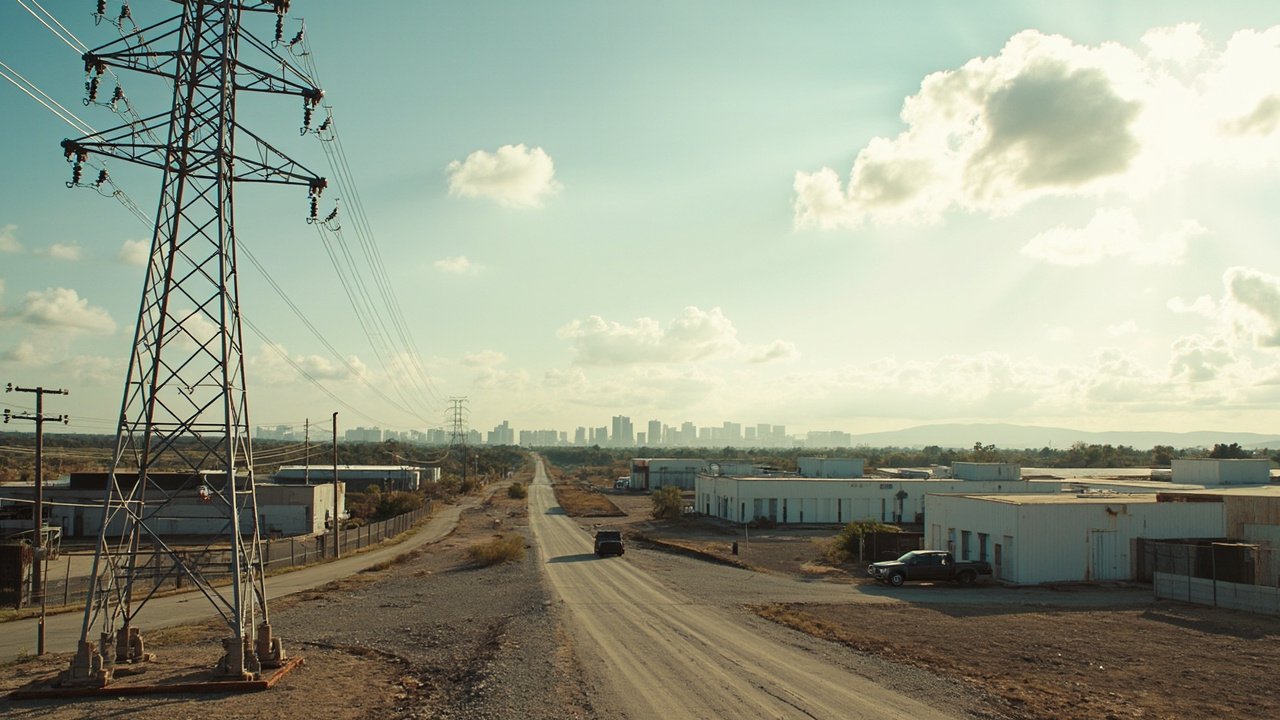
The second constraint, more critical than the fiber one, is the availability of medium-voltage substations with capacity to feed data centers of 5 MW or more. The Inter-American Dialogue report (August 2026) identified that the bottleneck for data centers in Mexico isn’t power generation — it’s the transmission and distribution capacity to deliver firm power 24/7 at the location and time required.
For Guadalajara specifically, the situation is that the metropolitan area and the industrial corridor of El Salto and northern Guadalajara do not have substations with reservable capacity for new intensive industrial loads. The local grid operates close to its nominal capacity, and CFE is prioritizing attention to existing demand over connecting new large consumers. The few substations that have margin are committed to traditional industrial projects (electronics manufacturing, automotive) and there is no operational window for data centers in the short term.
The Mexican Data Center Association (MEXDC) estimates Mexico needs approximately 1.7 GW of additional energy capacity to reach the sector’s announced investment. Querétaro concentrated USD $600 million in additional infrastructure to stabilize the electric supply in recent years. Guadalajara has not seen equivalent investment, and CFE has not announced substation projects dedicated to the west.
What this means for a Guadalajara data center project
If you’re evaluating establishing a data center in Guadalajara, the fiber and substation constraints have direct operational impacts:
- Higher latency to the United States. For clients that require low latency to California, the difference between 25 ms (Querétaro-Dallas) and 40 ms (Guadalajara-LA) is material. Conversational AI applications, trading, gaming, or distributed-system synchronization with US headquarters are affected.
- Limited energy capacity. The local grid doesn’t support data centers above 5 MW in immediate metropolitan area locations. Sites in the El Salto or Puerto Vallarta industrial corridor have medium-voltage grid access but with limited capacity and lengthy feasibility studies.
- Higher energy cost. Tariffs in the Guadalajara area of influence are typically CFE standard commercial and industrial rates (tariff HM, hourly average), with higher per-kWh cost than Bajío industrial zones where there is greater supply and competition between suppliers.
- Lower carrier diversity. Guadalajara has 2-3 Tier 1 carriers with physical presence, compared to 4-5 in Querétaro. Carrier redundancy for meet-me rooms is more limited.
What would change the picture
Three conditions would change Guadalajara’s data center hub picture:
1. Investment in direct backbone fiber to the United States via the Pacific route. If a hyperscaler operator (Google, Meta, AWS) or a Tier 1 carrier announces a submarine cable or a dedicated terrestrial route from Guadalajara to the United States, the latency gap closes and Guadalajara becomes viable for Tier III-IV loads.
2. A dedicated substation for data centers in the industrial zone. If CFE announces and builds a medium-voltage substation with reserved capacity for data centers in El Salto, Tlajomulco, or Puerto Vallarta, the energy constraint is released for industrial-scale projects.
3. A local generation plant or microgrid. A private investment in solar, natural gas, or hybrid generation in the Guadalajara area with CFE grid connection can resolve the electric bottleneck, though it adds significant CAPEX. The Nordic small-hydro model is an option, but Jalisco’s hydrology is not comparable to Norway’s.
The space Guadalajara DOES have today
Guadalajara isn’t closed to data center development — only to hyperscale. There are three niches where the city can compete today:
Edge data centers for local industry. The El Salto and northern Guadalajara industrial corridor has demand from electronics manufacturing, automotive, and services that require local edge computing. Data centers of 1-3 MW with medium-voltage utility service are viable if located in an industrial zone with reservable capacity.
Backup sites for clients with primary presence in Querétaro or Monterrey. Companies that have their primary site in the Bajío but commercial or manufacturing operations in Guadalajara may require a secondary backup site in the west. Those secondary sites typically operate at 1-2 MW, sufficient for the available electric capacity.
Sites for clients with Mexican local data residency and low dependence on US latency. Companies whose traffic is predominantly domestic (banking, retail, state government) can operate from Guadalajara without the Querétaro cost, as long as the commercial contract justifies the difference in cost and capacity.
The 2027-2030 horizon
If the announced private and public infrastructure investment for Guadalajara materializes, the picture could change:
- Tier 1 operators with Querétaro presence (KIO, Triara, Equinix, Cirion, Alestra, etc.) could expand to Guadalajara following nearshoring client demand in the west.
- Consolidation of cloud providers (AWS, Google, Microsoft, Oracle) in secondary Mexican metropolitan zones includes Guadalajara as a candidate.
- Advanced manufacturing development (semiconductors, electromobility, electronics) in Jalisco can push construction of local data center capacity.
But until the fiber and substations are developed, Guadalajara will remain more of a promise than a hub.
What your next location analysis should ask
To correctly evaluate whether Guadalajara or Querétaro is the best location for a new data center, the questions that must appear:
- What is the latency to the client’s main traffic destinations (Dallas, LA, Mexican cities)?
- How many Tier 1 carriers have physical presence at the candidate site? How many cross-connects available?
- What CFE capacity is available at the candidate site? How long does medium-voltage utility service negotiation take?
- Are there announced plans for substation or backbone fiber in the area? With what timeline?
- Does the client contract allow a western location, or require Bajío/Monterrey presence due to latency issues?
- What is the total cost (energy + fiber + state taxes + land) compared to Querétaro?
The answers to those questions indicate whether Guadalajara is viable today, in 18 months, or only on the 2027-2030 horizon, and enable informed investment decisions.
Sources
- Mexico Business News (September 2026). Querétaro’s Data Center Boom Faces Resource, Community Struggles. https://mexicobusiness.news/cloudanddata/news/queretaros-data-center-boom-faces-resource-community-struggles
- Inter-American Dialogue (August 2026). Data Center Race Depends on Grid, Not Generation. https://mexicobusiness.news/energy/news/ioa-data-center-race-depends-grid-not-generation
- Mordor Intelligence (2026). Mexico Telecom Tower Market Size & Share Outlook to 2031. https://mordorintelligence.com/market-analysis/telecom-services/mexico
- Ookla (Q1 2026). Mexico Broadband Benchmarks: Fiber Speeds vs. Indoor Wireless Realities. https://ookla.com/articles/mexico-fiber-fan-experience
- Noxtel.mx (2026). Data Centers in Mexico: The Honest 2026 Guide. https://noxtel.mx/en/data-centers-in-mexico-the-honest-2026-guide
Want to master this?
Noxtel Academy →