Querétaro as a data center hub in 2026: why it concentrates 50% of national capacity and what it means for you
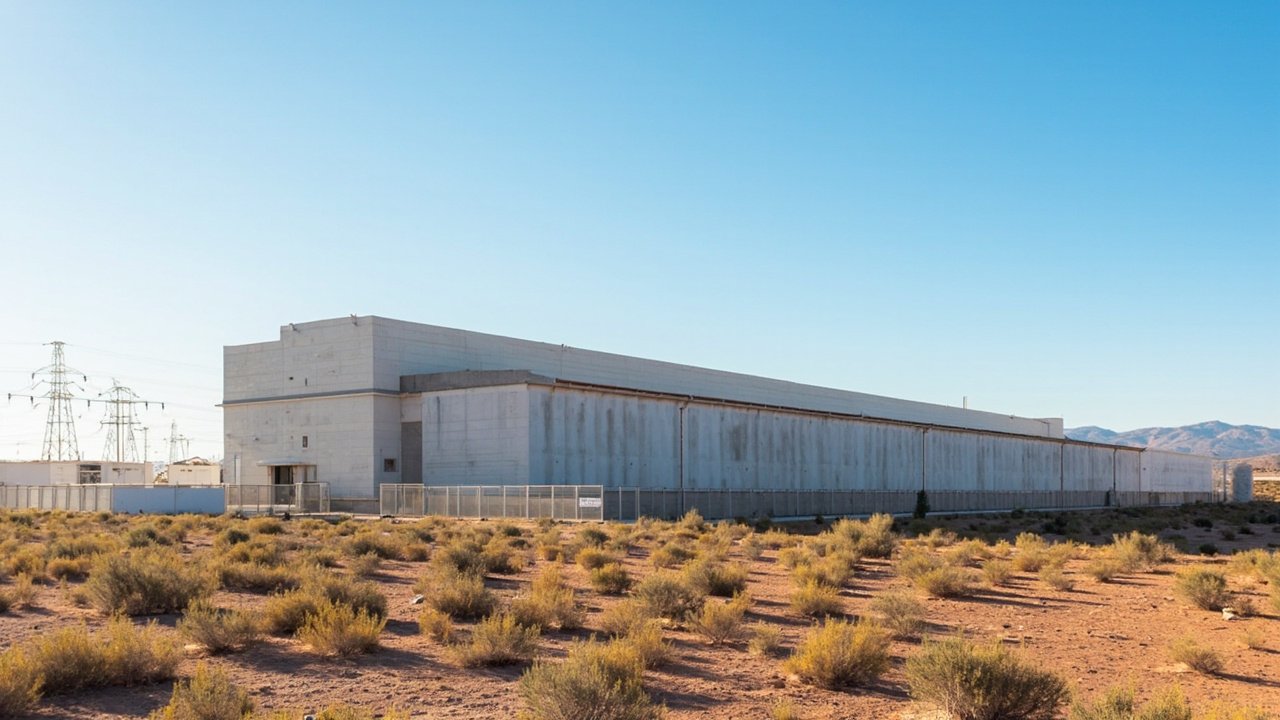
Why the Bajío concentrates more than half of national capacity
Mexico had, at the close of 2025, 279 MW of installed data center capacity according to the Mexican Data Center Association (MEXDC). Of that total, Querétaro concentrates approximately 72% (some sources cite 79% when measured by individual installations), followed by Mexico City at 10%, Nuevo León at 9%, Jalisco at 5%, Guanajuato at 3%, and Yucatán at 1%. The reason for this concentration isn’t coincidence, nor is it solely the result of preferential fiscal policy. It’s the result of three structural conditions that the Bajío has and the rest of the country has not been able to replicate: direct backbone fiber to the United States, CFE substations with reservable capacity, and expedited industrial permits/land use.
The national investment context
To size the concentration, the numbers are:
- Mexico has 279 MW installed, 205 MW under construction, and 1,730 MW announced for future deployment.
- Querétaro concentrates approximately 298.2 MW installed at the close of Q1 2026 (CBRE), with year-over-year growth of 450.2%, the highest among the Latin American markets analyzed.
- Total projected investment for data centers in Mexico between 2026 and 2031 is USD $82.5 billion, according to MEXDC.
- Querétaro captured approximately USD $600 million in additional infrastructure investment to stabilize the electric supply in recent years.
- KIO Networks announced in August 2026 an investment of USD $1.3 billion for QRO3, its next phase of the technology campus in El Marqués Industrial Park, adding approximately 100 MW.
- Schneider Electric invested in new manufacturing capacity in Querétaro explicitly to serve the data center sector, with 12 plants in Mexico projected by the end of 2027.
The state of Querétaro alone represents approximately 80% of Mexico’s data centers according to Economy Minister Marcelo Ebrard, a concentration that has no precedent in comparable emerging markets.
The three structural reasons
Reason 1: Direct backbone fiber to the United States. Querétaro sits on the natural fiber corridor that connects Mexico City to the Nuevo Laredo border, the main data crossing into the United States via the Texas route. Latency from Querétaro to Dallas sits in the 20-25 ms range, comparable to Austin or San Antonio. That route is operated by multiple Tier 1 carriers with physical presence: Telmex, Axtel, Megacable, Alestra, Total Play, and international carriers with POPs in Querétaro.
That allows data centers in Querétaro to offer their clients low-latency connections to the United States, where most of the traffic demand from Mexican users resides (CDN, SaaS services, cloud content) and where Mexican companies with international operations need integration.
Guadalajara and Monterrey have routes to the United States but with more hops and higher latency. Mexico City has the best domestic connectivity and reasonable connectivity to the United States, but land costs and land-use restrictions in the metropolitan area limit growth.
Reason 2: CFE substations with reservable capacity. The industrial corridor of Querétaro (El Marqués, San Juan del Río, Pedro Escobedo) has access to medium-voltage substations with capacity reserved for new intensive industrial loads. The few restrictions that exist have been managed through additional private investment (the USD $600 million mentioned) to build electric infrastructure dedicated to data centers.
In contrast, Guadalajara and other metropolitan areas have the local electric grid saturated or committed to existing industrial projects. CFE has not been able to announce or build substations dedicated to the west at the speed nearshoring demands.
The effective electric capacity defines the growth ceiling of a data center cluster. Without energy available, announced projects don’t get executed. Querétaro has energy available. The rest of the country, in general, does not.
Reason 3: Expedited industrial permits and land use. Querétaro has developed a regulatory and permitting ecosystem that allows data center operators to advance projects in 12-18 months from conception to start of operations. The municipalities in the industrial corridor have experience evaluating data center projects, know the technical requirements (electric loads, noise, water, waste), and can issue permits without prolonged delays.
That contrasts with Mexico City, where land-use change processes and environmental permits can take 24-36 months or more, and with Guadalajara, where the municipal fragmentation between the metropolitan area and conurbated municipalities adds friction.
What it means for a new data center operator
If you’re evaluating establishing data center capacity in Mexico, the concentration in Querétaro has practical implications:
- Access to specialized talent. The Querétaro cluster already has technicians, engineers, and operators with data center experience. Recruiting and training staff is faster than in zones where the cluster doesn’t exist.
- Provider ecosystem. Specialized service providers (UPS maintenance, commissioning, Tier III/IV certifications, BMS, CCTV, access control) have local presence in Querétaro. In zones with an incipient cluster, those services have to be imported from Mexico City or Monterrey, with additional cost.
- Higher industrial land cost. Concentrated demand has pushed up industrial land prices in El Marqués and San Juan del Río. For 2026, price per square meter sits at USD $80-150, compared to USD $40-90 in industrial zones of Guanajuato or San Luis Potosí.
- Competition for energy with other operators. The additional 1.7 GW Mexico needs for announced data centers is scarce. Although Querétaro has a better relative position, new projects face waitlists for electric connection, especially above 50 MW.
- Concentration risk. If 80% of national capacity sits in Querétaro, a major event (earthquake, regional electric failure, cybersecurity event) has a disproportionate impact on the Mexican Internet ecosystem. Some clients require geographic redundancy as a hedge.
What Querétaro doesn’t have yet
The concentration also has frictions now starting to generate operational and social pressure:
- Water stress. Data center growth has put pressure on Querétaro’s aquifers. Communities like Viborillas face water rationing, with some receiving water only three days a week. Well concessions for data centers have generated social and political conflict.
- Local grid instability. Despite investment, power outages persist in the area. Power quality (voltage variations, flicker) is not comparable to mature markets like Northern Virginia.
- Lack of infrastructure for AI at scale. The largest operational data center in Mexico is in Pedro Escobedo, Querétaro, at 149 MW. To support AI training loads that typically require more than 250 MW, dedicated new campuses are needed that have not yet been built in Mexico.
The options for a project that doesn’t fit in Querétaro
If Querétaro’s restrictions don’t allow growth, there are three realistic options:
Option 1: Monterrey as alternative. Monterrey holds 9% of national capacity, with a growing cluster near the Texas border. The direct fiber route to Dallas and Austin is competitive with Querétaro’s. Industrial land cost is lower. Energy restrictions are less severe than in Guadalajara. For loads that require proximity to Texas operations, Monterrey is the most logical alternative.
Option 2: San Luis Potosí or Guanajuato as Bajío expansion. Both states share the Bajío geography with Querétaro, with reasonable access to the backbone fiber network and CFE substations. Land cost is lower. Talent supply is more limited, but sufficient for medium-size data centers (10-30 MW).
Option 3: Mexico City for domestic-traffic loads. If the load is predominantly domestic and US latency is less critical, the CDMX metropolitan area has the best national connectivity and reasonable US connectivity. The bottleneck is land cost and permits.
What your next site RFP should ask
To correctly evaluate the concentration in Querétaro and the viability of alternatives, the questions that must appear:
- Does the client load require proximity to the United States? To which specific destinations?
- Does the candidate site have at least 3 Tier 1 carriers with physical presence? How many cross-connects available?
- What CFE capacity is available at the candidate site, and what’s the lead time for the utility connection?
- What is the total cost (energy + land + taxes + permits) compared to Querétaro?
- Are there water-stress risks or social conflicts over local resource use?
- Does the cluster have specialized service providers available locally?
- What is the geographic redundancy if a major event affects the main cluster?
The answers to those questions allow informed decisions on where to expand data center capacity, considering both the current concentration in Querétaro and the emerging alternatives.
Sources
- Mexico Business News (June 2026). Mexico Targets US$82.5 Billion Data Center Buildout Through 2031. https://mexicobusiness.news/cloudanddata/news/mexico-targets-us825-billion-data-center-buildout-through-2031
- Mexico Business News (August 2026). KIO Data Centers announces US$1.3 billion investment in Queretaro. https://mexicodailypost.com/2026/08/16/kio-data-centers-announces-us1-3-billion-investment-in-queretaro
- Mexico Business News (2026). Energy for Mexican AI: The Schneider Electric Case in Queretaro. https://mexicobusiness.news/energy/news/energy-mexican-ai-schneider-electric-case-queretaro
- WeDoAny (August 2026). Mexico Plans $82.5 Billion Investment in Data Centers from 2026 to 2031. https://en.wedoany.com/shortnews/299413.html
- Mexico Business News (September 2026). Querétaro’s Data Center Boom Faces Resource, Community Struggles. https://mexicobusiness.news/cloudanddata/news/queretaros-data-center-boom-faces-resource-community-struggles
Want to master this?
Noxtel Academy →