When your client’s data center closes: who is responsible for the 500 tons of abandoned toxic waste
The angle nobody wants to pay for
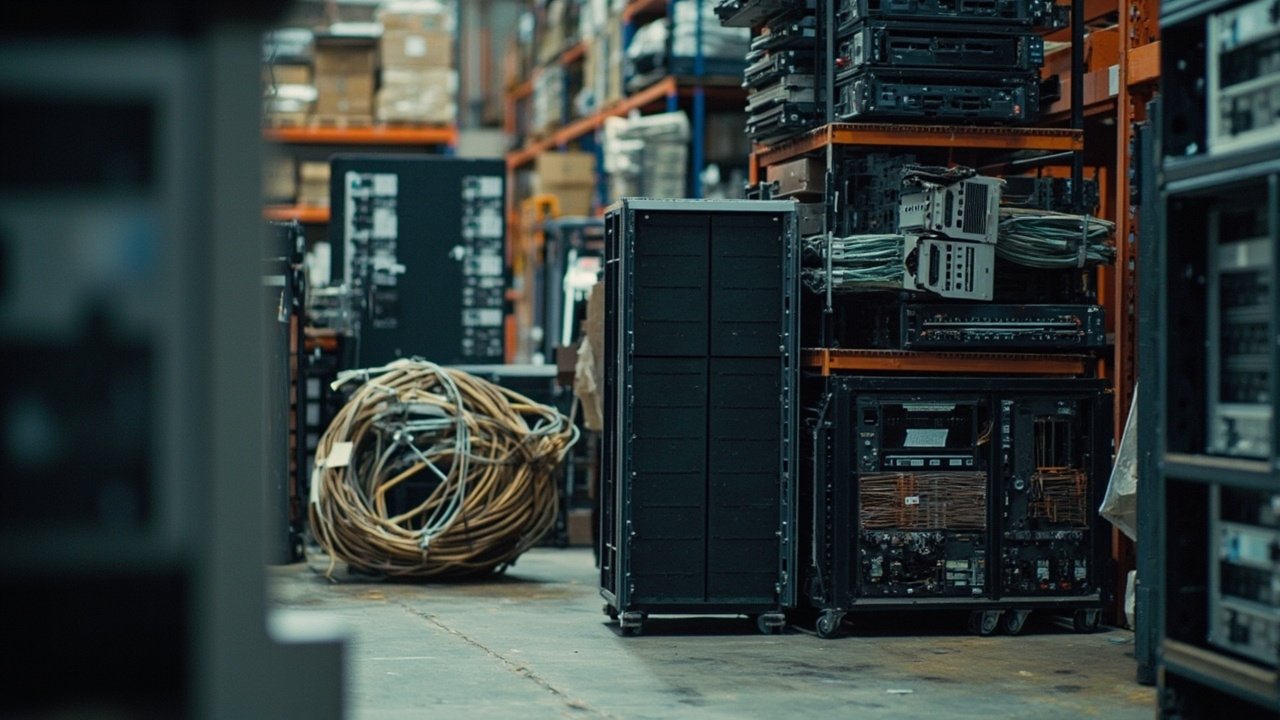
A corporate data center that closes leaves behind, on average, between 200 and 600 metric tons of physical waste. That includes everything from metal racks and copper cabling to motherboards with brominated flame-retardant compounds, lead-acid or lithium-ion battery banks, dielectric oil from transformers, and in some cases two-phase cooling fluids. The problem is not that this waste exists — that is inevitable when retiring critical infrastructure. The problem is that the question “who is responsible?” is answered differently in each country, and in Mexico the answer is weaker than it appears at first glance.
The number that changes the conversation
A report published by the Basel Action Network in 2025 estimates that the infrastructure build-out for generative artificial intelligence will generate between 395 and 617 million metric tons of accumulated electronic waste between 2025 and 2050. The earlier, much more conservative calculation projected between 1.2 and 5 million metric tons by 2030. The difference between the two figures is explained by a methodological decision: the new report counts the full stack of equipment inside a modern AI facility, not just the servers and GPUs.
The UN Global E-Waste Monitor 2024 documents that only 22.3% of global electronic waste is formally collected and recycled. The rest ends up in informal channels where equipment containing lead, chromium, and other toxic materials is burned or buried. The World Health Organization has documented the health risks for millions of people — including minors — who live near or work in backyard recycling operations in developing countries.
The inventory your client probably never made
When a data center ceases operations, the first asset to leave is the easiest to sell: servers, switches, storage. What remains, and rarely appears in contracts, is the mass of infrastructure that has no secondary market:
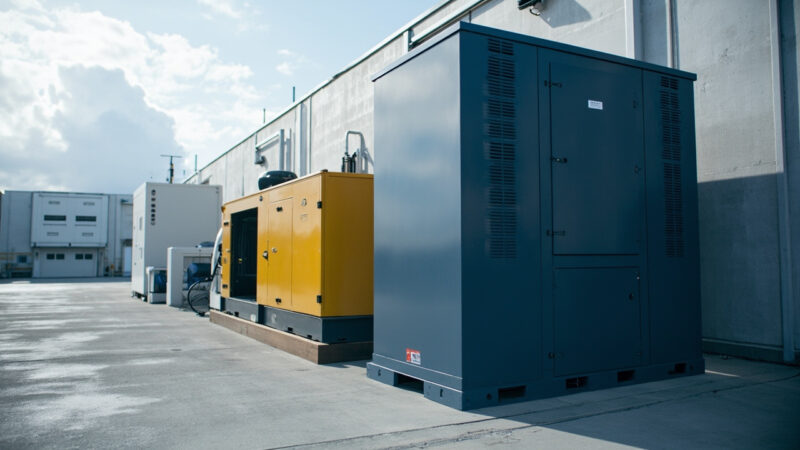
- Backup battery banks. Lead-acid in traditional installations, lithium-ion in modern ones. Lead batteries are RCRA hazardous waste in the United States (code D008) and require controlled disposal. Lithium-ion batteries are hazardous waste due to flammability and electrolyte content.
- Dielectric transformer oil. If the main transformer fails during dismantling without operational secondary containment, the oil can migrate to the soil or storm drainage. Containment is rarely designed for a dismantling scenario.
- Cooling system fluids. Glycol in secondary loops, HFC refrigerants in direct CRACs (R-410A, R-134a), immersion fluids in advanced systems. Each has a different disposal category.
- Cables and structured cabling. Copper has recovery value, but the insulation contains flame retardants that turn it into hazardous waste when burned informally.
- Fire suppression equipment. Halogenated agents, FM-200 systems, Novec 1230 — all require specialized recovery before site dismantling.
- Solar panels if the site had on-site renewable generation, and BESS batteries if it had storage.
The Mexican regulatory framework compared
In the United States, the Resource Conservation and Recovery Act (RCRA) has classified used lead batteries as hazardous waste since 1980. The Basel Convention, signed in 1989 and in force since 1992, regulates the cross-border movement of hazardous waste — but the United States has never ratified it, which allows recyclers to export waste to countries with weaker regulation.
In Mexico, the General Law for the Integral Prevention and Management of Waste (LGPGIR) and its Regulations classify hazardous waste by type and characteristic. Used lead-acid batteries are listed as hazardous waste in Article 31 of the Regulations. NOM-052-SEMARNAT-2005 establishes the criteria to identify hazardous waste by CRETI characteristic (corrosivity, reactivity, explosivity, toxicity, flammability). Responsibility is distributed between the generator and the management service provider, but documentary traceability ends up being the responsibility of the original generator.
The operational difference is important: in the United States, an ITAD (IT Asset Disposition) contract certified R2v3 or e-Stewards leaves an auditable trail from the rack to the final disposal. In Mexico, that trail exists on paper, but in practice depends on the quality of the service provider and the willingness of the generator to audit beyond the certificate of destruction they receive.
The sudden closure problem
Data center closures are rarely planned a year in advance. What happens in practice:
- Closure decision. Sometimes due to migration to a hyperscaler, sometimes due to operator bankruptcy, sometimes due to the sale of the building with the site included.
- Transition period of 60 to 120 days. Where services are moved to other infrastructure and an attempt is made to sell reusable equipment.
- Physical dismantling. Where copper, aluminum, and whatever else has market value comes out.
- What remains. Often: batteries with no buyer, transformers requiring specialized disassembly, waste that the building buyer does not want to receive.
The key question is whether the original site contract includes a post-closure environmental remediation clause. In typical colocation operations that clause exists but has a liability cap. In self-managed operations (company owns the building and the site) responsibility usually stays with the legal area until a concrete problem appears — and at that point the problem has already escalated.
The conversation to have before the closure
When a client asks you about the closure plan for its data center, the operational questions that rarely appear in the RFP are:
- Is there a documented inventory of hazardous materials present at the site, with estimated quantities?
- Do the contracts with battery providers include end-of-life disposal, or is that responsibility yours?
- Does the main transformer have a removal and dielectric oil disposal plan with an identified provider?
- Is there a contingent budget for unscheduled environmental remediation?
- Who signs the final disposal certificate and who audits it?
If your client does not have a documented answer for at least four of those five questions, the environmental risk of the closure is greater than management believes.
What changes the conversation
The most recent European Union guidelines on corporate ITAD, particularly Delegated Regulation 2024/1364 and the Corporate Sustainability Reporting Directive (CSRD), are turning documentation of electronic waste disposal into a binding legal obligation for companies with European operations. A Mexican subsidiary of a European company, or a Mexican company that serves European clients, inherits part of that contractual obligation.
The global ITAD market is projected to reach $40.1 billion USD by 2035 according to Fortune Business Insights, driven precisely by the demand for auditable documentation. The companies that today treat site closure as “next year’s problem” will discover that the documentation their European clients ask for does not exist, and that the cost of reconstructing it afterwards is several times greater than building it before.
Sources
- Basel Action Network (2025). AI Data Center Buildout Could Generate 617M Tons of E-Waste by 2050. https://aichatdaily.com/ai-security/ai-data-center-buildout-generate-617m-tons-e-waste
- UN Global E-Waste Monitor 2024. Executive summary. https://stselectronicrecyclinginc.com/esg-itad-value-recovery
- Reuse Tech Group (2026). The Ultimate Data Centre Decommissioning Checklist (2026 Edition). https://reusetechgroup.com/blog/data-centre-decommissioning-checklist
- Cámara de Diputados del H. Congreso de la Unión. Ley General para la Prevención y Gestión Integral de los Residuos (LGPGIR). https://www.diputados.gob.mx/LeyesBiblio/pdf/LGPGIR.pdf
- SEMARNAT. NOM-052-SEMARNAT-2005 — CRETI characteristics of hazardous waste. https://www.dof.gob.mx/normasOficiales/1055/SEMARNAT/SEMARNAT.htm
Want to master this?
Noxtel Academy →