Data centers in 2026: the ethical dilemma nobody is auditing
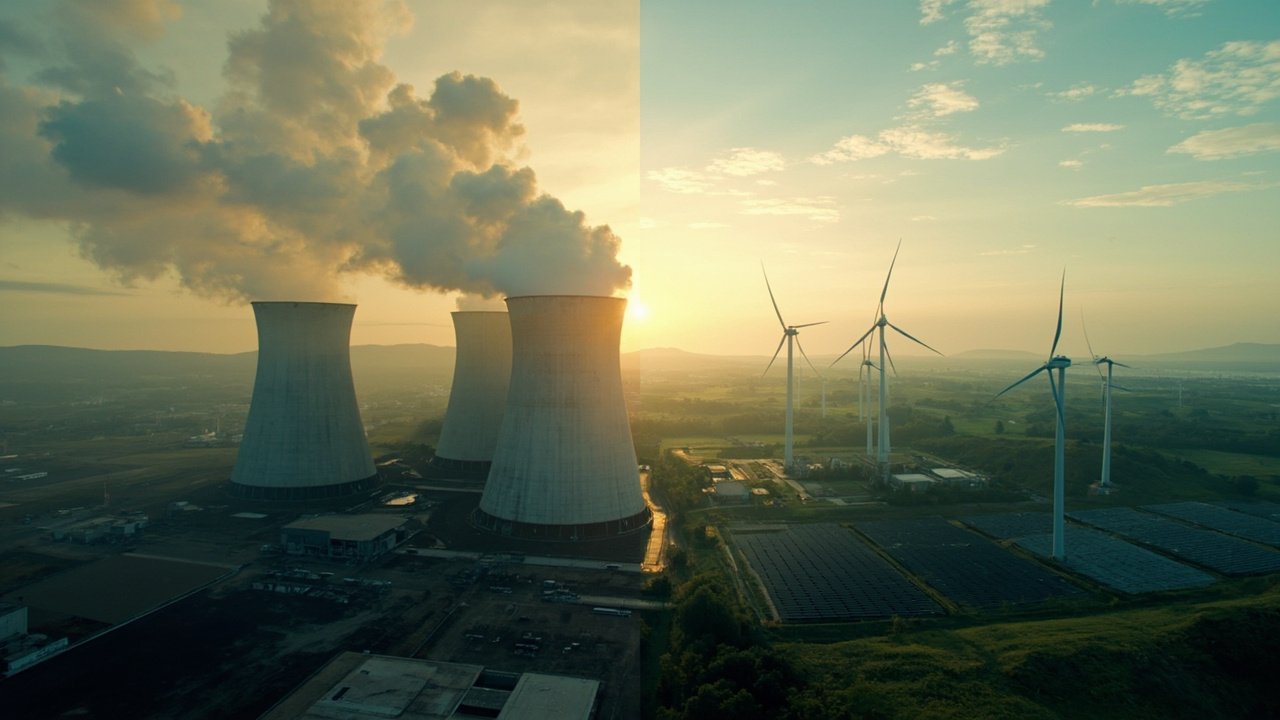
The figure that puts everything in perspective
The technology industry spends more on artificial intelligence in a single year than the Apollo program cost at its peak, and every new watt is being built on the same foundation that pushed us into climate crisis. That contradiction is no longer theory: it is the 2026 bottom line.
Why it matters now
The International Energy Agency (IEA) published in April 2026 its report Key Questions on Energy and AI. The central figure is direct: global data center electricity consumption went from approximately 485 TWh in 2025 to a projected 945 TWh by 2030, nearly double in five years. To put it in perspective: that is equivalent to adding the entire electricity demand of Japan to the global system in less than a decade, and all of it comes from the same thermal mix we are already trying to decarbonize.
The capital expenditure of the five largest hyperscalers (AWS, Google, Meta, Microsoft and Equinix) exceeded 400 billion dollars in 2025 and is projected to grow an additional 75% by 2026. This is not speculative investment fever: it is a structural reallocation of global capital, and each of those watts has to come from somewhere.
The paradox nobody knows how to name
Energy efficiency per AI task is improving at a rate the IEA qualifies as “unprecedented in energy history”: at least one order of magnitude per year. AI server power multiplied by eleven between 2020 and 2025, and is expected to quadruple again by 2027. However, total data center consumption grew 17% in 2025, and AI-focused data center consumption grew 50%.
This is what economics calls Jevons Paradox, and for the first time it stops being a textbook concept to become an operational problem. Efficiency falls, but total consumption rises, because every new task that becomes profitable attracts more users. The electricity grid was not designed for loads that go from zero to hundreds of megawatts in months. That is the literal phrase from a utility engineer quoted in the IEA report, and it describes the exact problem.
What the report says between the lines
There are three findings in the report that rarely make headlines:
- The natural gas lock-in risk is real. Data center developers, particularly in the United States, are building local natural gas generation because grid interconnection takes 3 to 7 years, while a modular gas turbine can be installed in 12 to 30 months. The IEA estimates that to handle the peak loads of AI models, gas capacity needs to be oversized between 30% and 70%. That locks in emissions for decades.
- Data centers are already producers of grid stability, not just consumers. Technology companies signed around 40% of all corporate renewable energy purchase contracts globally in 2025. Those long-term contracts are what allow financing renewable projects that otherwise would not be built. AI demand is unintentionally subsidizing the growth of clean energy.
- Small Modular Reactors (SMR) moved from pilot project to industrial commitment. The pipeline of conditional purchase agreements between data center operators and SMR projects grew from 25 GW at the end of 2024 to 45 GW in early 2026. If those projects get built, the carbon footprint of AI compute long-term could drop significantly.
The concrete ethical dilemma
If you are the infrastructure lead of a data center in 2026, you have to answer four questions that did not exist before:
- Is your electricity consumption documented in hourly carbon intensity, or only in annual bills?
- Do you know the Scope 3 of your supply chain, or only your direct Scope 1 and 2?
- Do you have an operational plan for when the grid operator asks you to shed load during peak hours?
- Does your contract with the UPS and battery supplier let you audit the carbon footprint of the imported lithium, or do you trust the datasheet?
The first two questions you can answer with public data that already exists. The third is where traditional planning breaks down. And the fourth is the one almost nobody is looking at yet.
What to do about it
The first step is not to shut anything down. It is to measure. The European Data Center Environmental Transparency Directive, which will enter into force in the third quarter of 2026, will require operators to report in real time the carbon intensity per hour and the water consumption per gigawatt-hour of compute. That regulation will reach Mexico too, sooner or later, via international clients who will demand it contractually.
If your infrastructure does not have today the instrumentation to answer those questions, you will not have it in 12 months. The competitive advantage now is to build that telemetry layer before it becomes mandatory, not after.
The Noxtel point
At Noxtel we have seen how data center projects in Mexico that reach executive design phase without a documented energy efficiency model end up paying between 30% and 45% more in electricity consumption during the first year of operation. The difference is not in the equipment: it is in the initial thermal and electrical design.
A pre-commissioning energy efficiency audit costs a fraction of what will be wasted in operation. And the sustainability conversation passes, in our field work, through technical conversations: expected PUE, WUE, redundancy, UPS sizing, battery bank lifetime.
The ethical dilemma of the data center in 2026 is not solved with declarations of intent. It is solved with measured kilowatt-hours, reported gigas of water and audited Scope 3 tons of CO₂. If your next project does not start with those questions in the RFP, it will start with them in a crisis.
Sources
- IEA (April 2026). Key Questions on Energy and AI 2026. https://www.iea.org/reports/key-questions-on-energy-and-ai-2026
- IEA (2026). AI and data centre electricity use continue to surge — executive summary. https://www.enlit.world/library/ai-and-data-centre-electricity-use-continue-to-surge-iea-finds
- Uptime Institute (2024). Data Center Cooling Systems Survey 2024. https://datacenter.uptimeinstitute.com/rs/711-RIA-145/images/2024.Cooling.Survey.Report.pdf
- Clemente, M., Maharjan, P., Salazar, M., Hofman, T. (October 2025). Meta-analysis of life cycle assessments for Li-ion batteries production emissions. International Journal of Life Cycle Assessment 30:2625–2641. https://link.springer.com/article/10.1007/s11367-025-02541-9
- European Commission (March 2026). Data Center Environmental Transparency Directive (entry into force Q3 2026). Summary at: https://api.finexus.net/api/news/events/ca641e2a-70c5-419b-aed2-a13b805a0f6f/html
Want to master this?
Noxtel Academy →