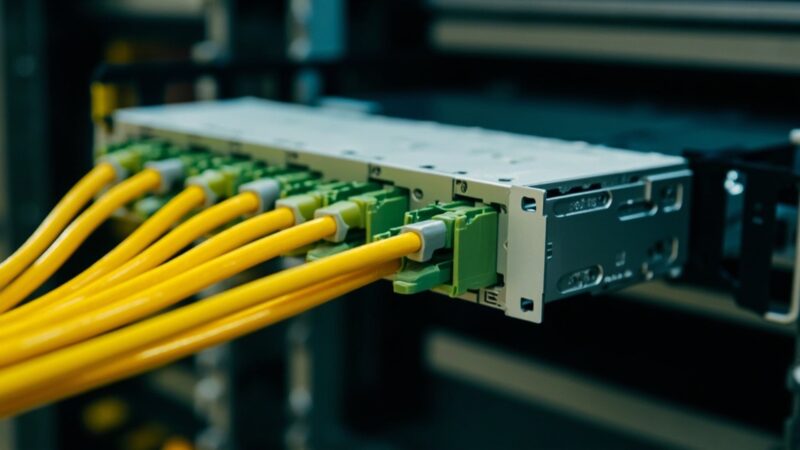
Structured Cabling: The Backbone of Your Network

In today’s digital world, connectivity is as vital as electricity. Behind every click, every video call, and every data transfer, there is a complex infrastructure working tirelessly. One of the fundamental pillars of this infrastructure, especially in enterprise and corporate environments, is structured cabling.
What is Structured Cabling?
Structured cabling is a building or campus cabling infrastructure system consisting of a set of copper cables (typically twisted pairs such as Cat5e, Cat6, Cat6a) and fiber optic cables, as well as connection hardware (connectors, patch panels, racks, etc.), which provides comprehensive communications infrastructure. This system is designed to be standardized, flexible, modular, and easy to manage, allowing it to support a wide range of voice, data, and video applications.
Key Benefits of a Structured Cabling System
- Flexibility and Scalability: It allows devices and services to be added, moved, or changed simply and efficiently, without significant network interruptions. It is designed to grow with your business.
- Reliability and Performance: By following strict standards, it minimizes errors and interference, ensuring consistent and high-speed data transmission.
- Ease of Management: The logical organization and detailed documentation of the system simplify problem identification, maintenance, and future expansions.
- Long-Term Cost Savings: Although the initial investment may be higher than messy cabling, its durability, ease of maintenance, and adaptability significantly reduce operating costs and future upgrades.
- Support for Multiple Applications: A good structured cabling system can simultaneously support local area networks (LAN), telephone systems, IP video surveillance, access control systems, home automation, and more.
- Aesthetics and Organization: Designed to be orderly and hidden when possible, it contributes to a more professional and safe work environment.
Main Components
A structured cabling system is divided into several subsystems, interconnected and standardized:
- Horizontal Cabling: Connects end-user outlets (where computers, telephones, etc. are connected) to the telecommunications closet (TR).
- Vertical Cabling (Backbone): Interconnects the different telecommunications closets (TRs) with each other, as well as the TRs with the equipment room or main connection room. It typically uses fiber optic or high-capacity copper cabling.
- Telecommunications Closet (TR): It is the central point for horizontal cabling and the connection point for vertical cabling on each floor or area. It contains patch panels, switches, and other network equipment.
- Work Area: The area where users and their devices are located, with standardized information outlets.
- Equipment Room: A centralized space for critical network equipment, servers, and external service provider connections.
- Entrance Facilities: The point where external telecommunications services (ISP, telephone line) enter the building and connect to the internal infrastructure.
The Importance of Standards
Structured cabling is governed by international standards such as those defined by TIA/EIA (Telecommunications Industry Association/Electronic Industries Alliance), with TIA/EIA-568 being one of the best known. These standards ensure compatibility between equipment from different manufacturers and guarantee system performance and reliability.
Investing in a structured cabling system is investing in the future and efficiency of your organization. It is not simply a set of cables, it is the foundation that supports all your digital operations, ensuring that your business is always connected, productive, and prepared for tomorrow’s technological challenges.
Proper planning, design, and implementation by professionals is crucial to take full advantage of its benefits.
Want to master this?
Noxtel Academy →