The water your data center ‘does not use’ according to the provider: why the reported WUE is half of the real one
The metric that hides most of the impact
Water Usage Effectiveness (WUE) is the industry standard metric for reporting the water consumption of a data center. It has been defined by The Green Grid since 2011 and standardized as ISO/IEC 30134-9:2022. The formula is direct: liters of water consumed annually divided by the energy consumption of IT equipment, in kWh. The result is expressed in L/kWh. A WUE of zero means the site uses no water in operation. That is what air-cooled data centers report. What that metric does not capture is, depending on the case, between four and twelve times more water consumption than what is reported in the direct figure.
The two waters your site uses
When a data center reports a WUE of 0.26 L/kWh (the figure Microsoft published for its fiscal year 2025), it is reporting only the water that comes out of the tap at the site. That number refers to direct water: cooling tower water, humidifier water, evaporative condenser water. What the number does not include is the water consumed to generate the electricity that powers the site, known as indirect water or water footprint of electricity.
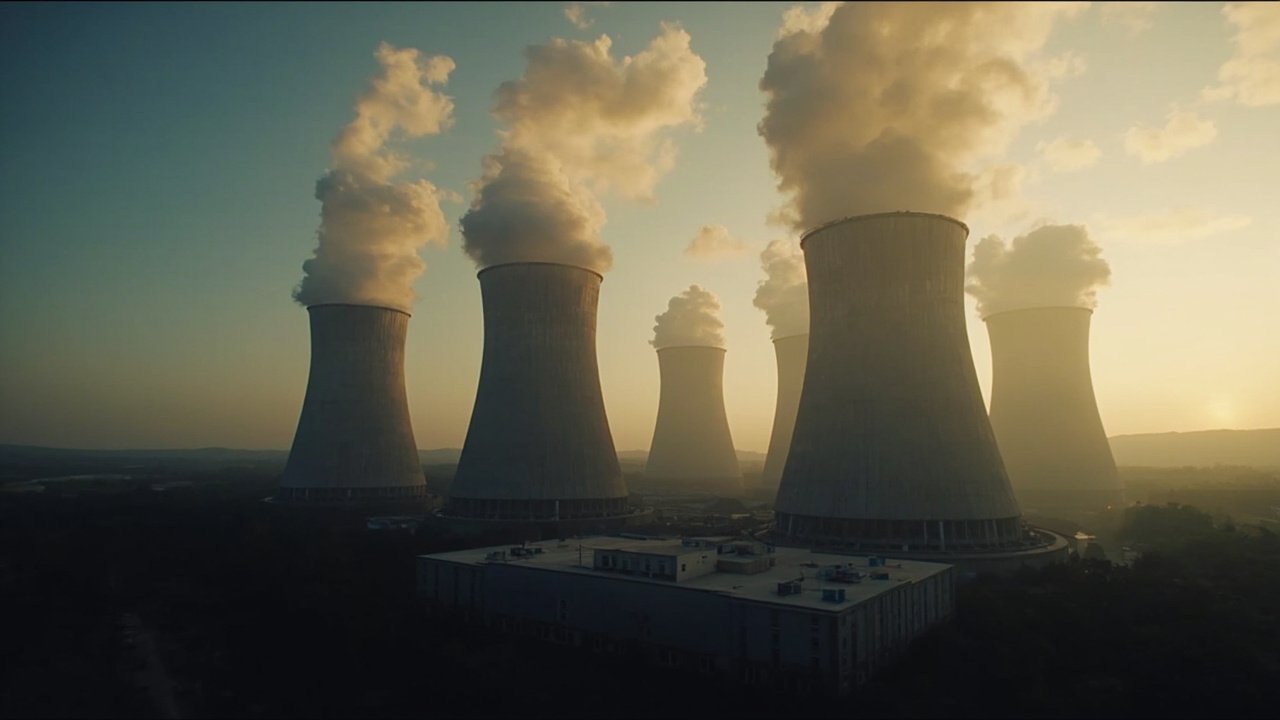
The Lawrence Berkeley National Laboratory (LBNL) published in 2024 its report on energy use in U.S. data centers, estimating that the water consumed in thermoelectric plants to generate electricity for U.S. data centers in 2023 was approximately 800 billion liters, equivalent to 4.5 L/kWh indirect versus 0.36 L/kWh direct in the sector average. The proportion between indirect and direct water in the sector average is approximately 12 to 1.
The concrete calculation for your site
To size the impact, the three numbers that matter:
- Annual site electricity consumption in kWh. You have it on the CFE bill or in your electrical monitoring system.
- Direct WUE reported in L/kWh. If your site uses evaporative cooling towers, the typical range is 1.0 to 2.5 L/kWh. If it is air-cooled, you report 0 L/kWh.
- Indirect water factor per electricity mix. In the Mexican electrical system, dominated by natural gas, hydroelectric, and fuel oil, the indirect factor ranges between 1.5 and 3.5 L/kWh depending on the zone and the time. The LBNL factor for the U.S. mix is 4.5 L/kWh, but it includes nuclear and coal which have higher factors.
Example: a 5 MW site consumes approximately 43.8 million kWh per year. With direct WUE of 1.8 L/kWh (industrial average):
- Direct water: 43,800,000 x 1.8 = 78.8 million liters/year (what you report)
- Indirect water: 43,800,000 x 2.5 (Mexico factor) = 109.5 million liters/year (what you do not report)
- Total real water: 188.3 million liters/year
The site’s “real” WUE, if all water consumed were measured, would be approximately 4.3 L/kWh, not 1.8 L/kWh. The difference is what the operator does not report and what the regulator does not require.
Why the metric is structured this way
WUE was designed by The Green Grid as an operational efficiency metric for the site. Its original purpose was to compare cooling designs within the data center, not to measure the total water impact of the operation. The ISO/IEC 30134-9 formula standardized the definition limiting it to site water.
That design decision has consequences: a site that switches from evaporative cooling towers to air-cooled chillers reports WUE close to zero and appears more sustainable. But air-cooled chillers consume 2 to 3 times more electricity than evaporative ones for the same thermal load. If that additional electricity comes from thermoelectric plants, indirect water increases. Direct WUE improved; total water consumed probably worsened.
The analysis published by Avanza Energy on Nevada’s cooling tower ban policy (in force since February 2024 in Las Vegas and Henderson) documents this problem: 23 data centers in southern Nevada consumed 716 million gallons of water in 2024, and regulation responded by banning evaporative towers in new construction. But the shift to air-water or air-air displaces water consumption to the electric sector, which does not have the same restriction.
What has been proposed
Data Center Dynamics’s proposal to revise PUE to include the “missing energy” of evaporative water points exactly at this problem. The vaporization energy of water (2,257 kJ per liter or 0.627 kWh per liter) should count as site energy consumption, because it is thermal energy the cooling tower is extracting from the system. A site with WUE of 1.8 L/kWh is spending 1.13 additional kWh per kWh of IT in vaporization energy. Adding that to conventional PUE gives a higher, more realistic number.
That proposal remains academic. The WUE metric has not changed. The corporate sustainability report continues to accept the direct figure as valid.
What the industry does report in 2024-2025
Recent figures on water consumption in data centers, per corporate environmental reports and LBNL analysis:
- Google reported 8.1 billion gallons (30.7 billion liters) of consumption in its data centers in 2024.
- Microsoft withdrew approximately 2.7 billion gallons (10.2 billion liters) in 2024, reporting WUE of 0.27 L/kWh for fiscal year 2025.
- AWS disclosure June 2026: 2.5 billion gallons (9.5 billion liters) withdrawn in 2025, reported WUE of 0.12 L/kWh.
- LBNL estimates that the U.S. data center sector consumed directly 66 billion liters in 2023, compared with 21.2 billion in 2014 (a growth of 211% in 9 years).
Projected growth is aggressive: a Cornell University study (Fengqi You et al., November 2025) projects that U.S. data centers for AI will consume between 731 and 1,125 million cubic meters per year by 2030, equivalent to the daily needs of 6 to 10 million households. S&P Global estimates that by 2050, approximately 45% of data center installations will face high exposure to water stress.
The question the Mexican regulator does not yet ask
The Mexican regulatory framework for data centers does not require WUE or water consumption reporting. NOM-001-SEDE-2012 regulates electrical safety, not water use. CONUEE has energy efficiency guidelines for commercial buildings that apply tangentially.
If a Mexican data center wants to report water consumption today, it does so voluntarily under formats like CDP (Carbon Disclosure Project) or its annual sustainability report. What it reports is direct water. What it does not report is indirect water. And what the corporate client signing the contract is also not looking at is the total figure.
What can be done before it becomes mandatory
For a data center in Mexico, the actions that make sense today:
- Calculate total water consumed, adding direct and indirect with the national electricity mix factor. That converts the marketing number into a comparable operational figure.
- Compare cooling designs by total water, not by direct WUE. An air-cooled site in a thermoelectric-mix zone can have higher total water impact than an evaporative site in a renewable zone.
- Document the electricity mix factor by hour, not only annually. The water footprint changes during the day. In high solar demand hours, indirect water drops; in nighttime peak hours, it rises.
- Include the indirect water figure in any ESG report presented to clients or stakeholders. It is the data EU regulators are going to start requiring, and it will reach Mexico by contractual extension.
Sources
- Lawrence Berkeley National Laboratory (LBNL, 2024). United States Data Center Energy Usage Report. https://eta-publications.lbl.gov
- Data Center Dynamics (2024). Power Usage Effectiveness Revised To Account for Water Use. https://datacenterdynamics.com/en/opinions/power-usage-effectiveness-revised-to-account-for-water-use
- ISO/IEC 30134-9:2022. Information technology — Data centres — Part 9: Water usage effectiveness (WUE). https://www.iso.org/standard/81040.html
- Avanza Energy (2026). The $3 Billion Blind Spot: Nevada’s Cooling Tower Ban and Hidden Water Consumption. https://avanzaenergy.substack.com/p/the-3-billion-blind-spot-how-nevadas
- Google (2024). Environmental Report 2024 — Data Center Water Consumption Disclosure. https://sustainability.google/reports/environmental-report-2024/
Want to master this?
Noxtel Academy →