CloudHQ in Querétaro: what the 900 MW announcement does say and what it hides about CFE, water and the 2027 timeline
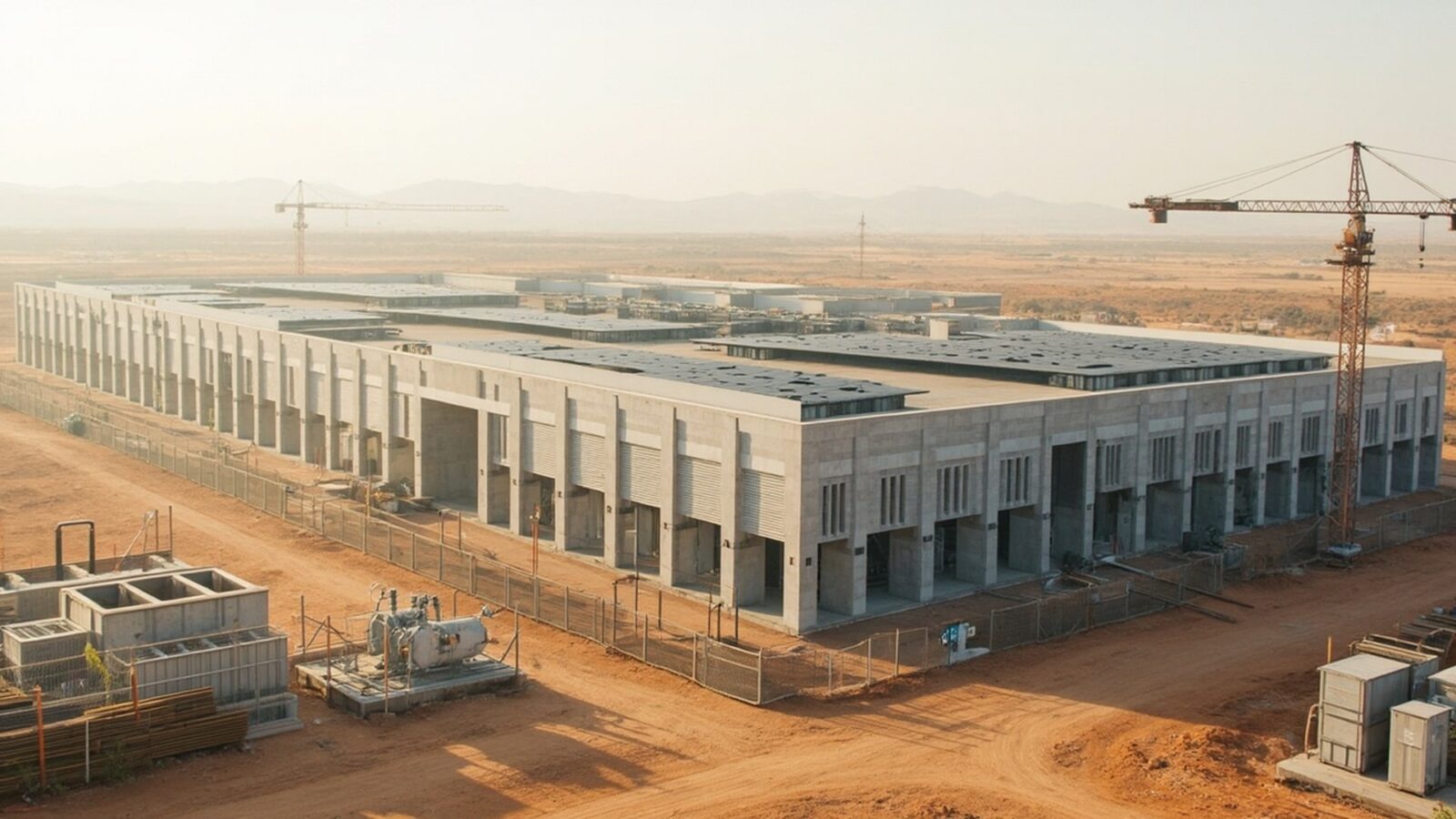
When on September 25, 2025 President Claudia Sheinbaum presented, alongside Marcelo Ebrard and Keith Patrick Harney, CloudHQ COO, the 4,800 million dollar project to build six data centers on 52 hectares near Querétaro International Airport, the most repeated figure was 900 MW of critical IT load. For the Mexican investor weighing whether that announcement changes his roadmap, that figure is fine — but it is not the most important one. The figure that changes decisions is the other one: 200 MW secured today with CFE and CENACE, inside a 1,705 MW sector commitment that the September 10, 2026 CFE–MEXDC agreement has only just started to route.
In this article we break down the 5 points of the announcement that your CFO should not read as marketing.
What the announcement does say (verifiable)
The official press release from the Secretaría de Economía (Plan México, gob.mx, September 2025) confirms four hard data points that require no reinterpretation:
| Hard data point from the official release | Value |
|---|---|
| Investment | 4,800 million dollars, spread across six buildings |
| Surface area | 52 hectares in Querétaro, adjacent to the International Airport |
| Critical IT load | 900 MW, with a dedicated private substation and a 2 GW maneuvering substation |
| Secured capacity | 200 MW with CFE and CENACE support, with prior investment of 250 million dollars |
Plus two operational commitments:
That is all verifiable. What the announcement does not say — and that is what your team will have to cross-check — is the real speed of energization per block, the delivery schedule for the dedicated 400 kV substation, and the fallback path if the 2 GW maneuvering substation is delayed. We answer those three questions in the next section using the public information available as of October 2026.
What it does not say: CFE, CENACE and the 2027 window
The agreement signed on September 10, 2026 between the Comisión Federal de Electricidad (CFE) and the Asociación Mexicana de Centros de Datos (MEXDC) is the piece that turns the CloudHQ announcement from a promise into a technical roadmap. It recognizes three things that change your sign-up:
The agreement establishes three pilots in Polos de Desarrollo to test the CFE-project coordination model before scaling it. In practice: if CloudHQ delivers the 200 MW secured today, the next block enters the review queue project by project, not as an automatic promise. That queue is the one that gets congested — Querétaro accumulates 298.2 MW of inventory in Q1 2026 according to CBRE, with 450.2% year-over-year growth, the highest in Latin America, and 10.6% vacancy (from 0.9% the previous year). Vacancy rose because the CFE grid does not absorb supply at the rate hyperscalers announce capacity.
Why waterless cooling matters more than it appears
CloudHQ did not choose waterless cooling for ESG marketing. It chose it because Querétaro already has documented water stress and approval of new sites will be conditioned on WUE (Water Usage Effectiveness). The data point that usually does not show up in reports: the Querétaro–San Miguel de Allende–Celaya corridor is in a medium-high water stress zone according to CONAGUA, and projects that use municipal water for evaporative cooling will face permitting restrictions before SEMARNAT in 2027. CloudHQ got ahead of the regulatory framework that is coming.
Implication for your project: if you are evaluating a brownfield in Querétaro, Monterrey or CDMX and your design uses evaporative cooling towers or chillers with municipal water consumption, WUE and SEMARNAT approval will get complicated regardless of site size. Closed-loop liquid cooling with a CDU (Coolant Distribution Unit) paired with a dry cooler is the route CloudHQ validated as bankable on Mexican soil.
CFE-MEXDC 1,705 MW: the real map of capacity by region
The 1,705 MW figure is not a promise — it is a commitment signed between the industry and the grid operator. What that figure hides is the geographic distribution. What we know as of October 2026 from regional coverage:
For an enterprise project between 5 and 50 MW, the question is no longer “which state suits me better?” but “which specific CFE substation can I connect my load to, and in which 18-month window?”. That granularity is not in the CloudHQ announcement; CFE answers it project by project under the new scheme.
What it means for your 2027–2028 sign-up
CloudHQ confirmed a full 2027 energization window. That puts pressure on three schedules:
The 5 questions your CFO will have to answer before signing with any colocation or hyperscaler in Mexico in this cycle:
The short answer: if your provider does not hand you documentary evidence — not press releases — on these five points, your risk is not technological, it is schedule.
Verdict
CloudHQ in Querétaro is the largest project announced in Mexico in 2025–2026 and Sheinbaum’s 2026 bet to reposition the country on the hyperscale AI factory map. The 900 MW figure is real, the 4,800 million dollar investment is real, and the 2027 window is a signed commitment. What is still an open question — and where your CFO carries the largest risk — is how the next 700 MW of CloudHQ get routed in the 1,705 MW CFE-MEXDC queue, and how that same bottleneck affects your own sign-up if your site falls in the Querétaro corridor.
If you are interested in auditing your brownfield project in Mexico under the new 1,705 MW CFE-MEXDC + WUE + dedicated substation framework, request a site assessment with Noxtel — we deliver a 6-page memo with the technical, regulatory and financial path specific to your load.
Sources
Want to master this?
Noxtel Academy →