Electronic waste in data centers: the new Extended Producer Responsibility (EPR) coming to Mexico in 2027
The law that changes who pays for end-of-life disposal
On January 19, 2026, the Decree creating the General Law on Circular Economy (LGEC) was published in the Diario Oficial de la Federación, in force since January 20, 2026. The law introduces for the first time in Mexico a mandatory federal framework for Extended Producer Responsibility (EPR) that will be implemented progressively by sector and product category. For electronic waste in data centers, that means that between 2026 and 2027 SEMARNAT will publish the specific agreements that will define the concrete obligations for manufacturers, importers, and operators of electronic equipment.
What the law actually says
Article 36 of the LGEC establishes that productive sectors must, when environmentally, technically, and economically feasible:
- Design or develop products under Circular Design criteria.
- Implement the policies, bases, and principles of the Circular Economy under an Extended Producer Responsibility scheme.
The LGEC does not impose automatic obligations on all products on day one. It is a framework law that defines the principles and empowers SEMARNAT to issue specific agreements by sector or product category. For electronic waste, the specific agreement is expected during 2026 or early 2027.
The law also creates the National Circular Economy Seal, valid for three years, which grants preference in public procurement to companies that obtain it. It is a market incentive to accelerate adoption beyond mandatory compliance.
What changes compared to the previous framework
Before the LGEC, Extended Producer Responsibility in Mexico was established as a principle in the General Law for the Prevention and Integrated Management of Waste (LGPGIR), but its operational application depended on SEMARNAT issuing specific standards per product. For electronics, the NOM-052 standards and existing management plans partially cover the cycle, but the traceability of waste from the original equipment to its final disposal remains weak.
What the LGEC adds is the explicit legal obligation for the producer or importer of the equipment to be financially responsible for the collection and recycling system. That turns the principle into a verifiable obligation, with consequences for non-compliance.
The Regulation of the LGEC must be issued within 180 calendar days following its entry into force. That is, before July 19, 2026. States have an additional 180 calendar days to align their local legislation. The first specific EPR agreements for priority sectors (electronics appears on the likely list) would come out between late 2026 and early 2027.
What electronic waste from a data center covers
For a data center operator, the scope of EPR for electronic waste includes:
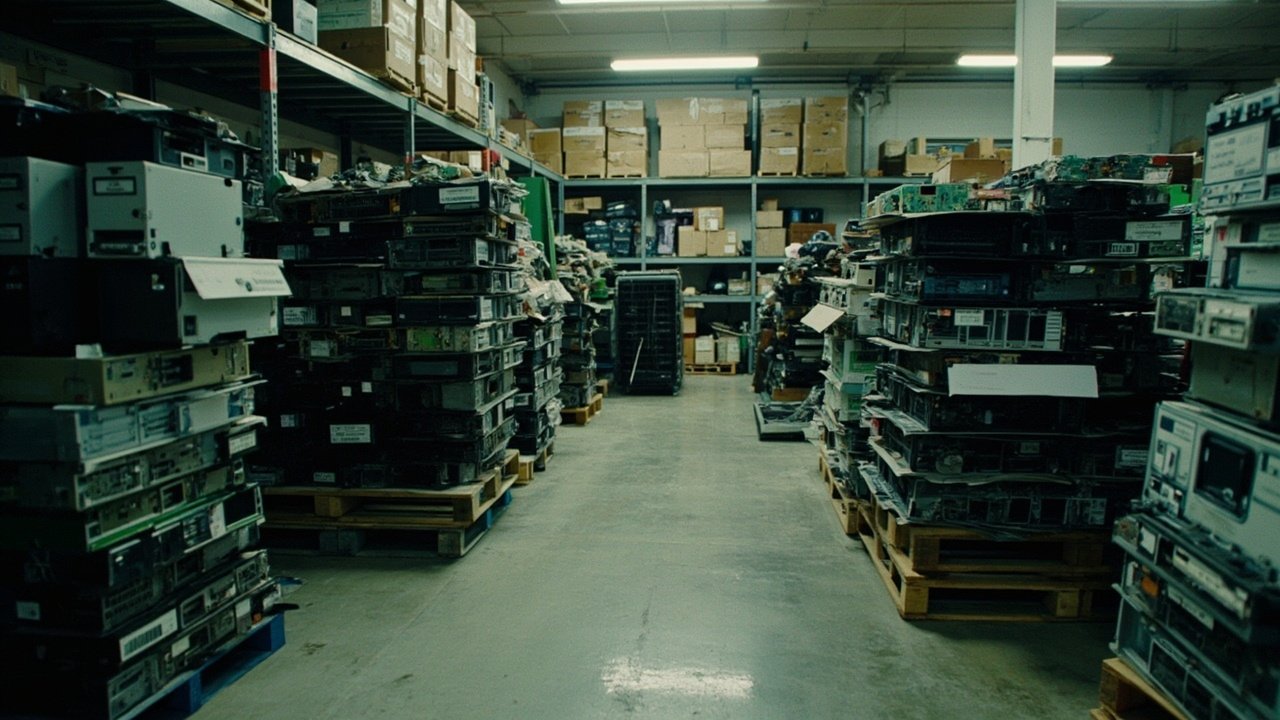
- End-of-life compute equipment: servers, switches, storage, network equipment.
- Auxiliary equipment: UPS units, refrigeration units when they leave the site, monitoring infrastructure.
- Specific components: motherboards, memory modules, SSD/HDD drives, power supplies, structured cabling.
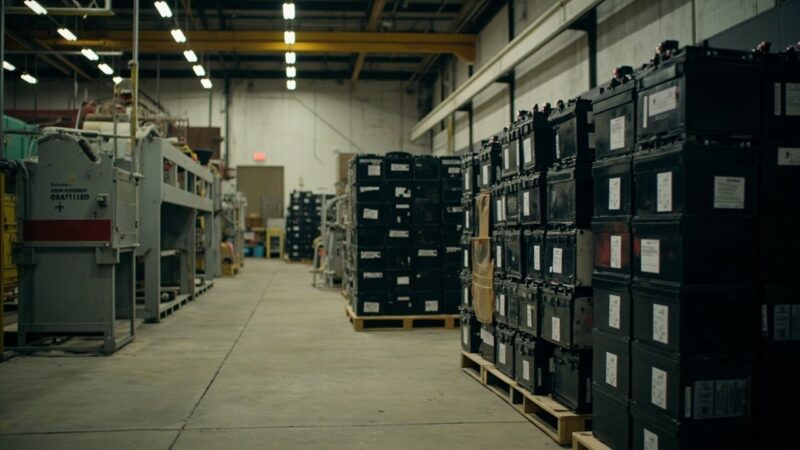
- Backup batteries: both VRLA and lithium-ion, which already have a partial regulatory framework but will be incorporated into the electronics EPR as an integrated category.
- Lighting and security equipment at end of life.
What is normally excluded from electronic EPR:
- Non-electronic hazardous waste (dielectric oils, refrigerants if not part of refrigeration equipment, chemical waste from maintenance processes).
- Construction and demolition waste from the site.
- Operational waste (paper, plastic, packaging cardboard).
What is already done well and what is missing
What the Mexican framework has working today:
- List of SEMARNAT-authorized managers for electronic waste.
- NOM-052 standards and management plans that cover specific categories of hazardous waste.
- Technical capacity of certified R2v3 or e-Stewards recyclers operating in Mexico (although few).
- Conceptual framework of EPR in LGPGIR.
What is missing in practice:
- Real coverage: less than 30% of Mexican electronic waste reaches authorized managers. The rest ends up in informal channels, illegal export, or uncontrolled disposal.
- Producer-to-final-disposal traceability: typical documentation breaks between the authorized manager and the subcontracted recycler.
- Incentives to return equipment: there is no deposit-refund or retailer take-back requirement that closes the gap between the waste generator and the formal system.
The LGEC aims to close these three gaps. But operational implementation depends on SEMARNAT’s specific agreements, which do not yet exist for electronic waste.
The special case of the data center
For the data center sector specifically, the application of EPR has three particularities that differentiate it from consumer electronics:
- Concentrated volume. A data center that closes generates between 200 and 600 metric tons of equipment, compared with a few kilograms per household for consumer electronics. The scale completely changes the economics of recycling.
- Sensitive data. IT equipment leaving a data center contains data that requires certified sanitization before any disposal. NIST SP 800-88 Rev. 2 sets the standards; IEEE 2883 expands them. End-of-life disposal traceability must consider this additional step.
- Specific materials. Beyond copper, aluminum, and plastic, data center equipment includes: lithium in batteries, brominated flame retardants in boards, gold and palladium in contacts, tantalum in capacitors. Each category has different treatment and distinct recyclers with the capacity to process it.
Electronic EPR applied to the data center will likely have different operational categories than consumer electronics. Regulatory pressure will push operators to document the materials inventory at end of life in greater detail, not only the total weight of the equipment.
What can be anticipated before the specific agreement
For a data center operator in Mexico, the moves that make sense before SEMARNAT’s specific agreement for electronics is released:
- Document the current disposal chain for each category of electronic waste, from generation to final destination. That documentation is the basis on which compliance will be constructed.
- Verify that the authorized managers you already work with hold international certifications (R2v3, e-Stewards) or are in the process of obtaining them. International certifications will likely be a reference for Mexican standards.
- Calculate the current disposal cost per kilogram or per unit, because EPR will likely internalize that cost in the original producer (equipment manufacturer). Operators buying new equipment will start to see an “end-of-life disposal cost” component included in the price.
- Include take-back contractual clauses in new equipment acquisitions. These clauses will be legally enforceable once the EPR is operational.
The regulatory reading for site closures
A case already documented in the sector: the closure of a corporate data center that left equipment at the site. Without operational EPR, the legal liability for abandoned equipment fell on the building’s landlord, not on the data center operator nor on the original equipment manufacturer. With operational EPR, liability would shift to the manufacturer or importer of the equipment.
That changes the contractual conversation: data center operators will start to demand that their suppliers show that EPR is handled, because the risk of orphaned equipment will no longer fall on them.
What changes for 2027
The likely calendar for the next 18 months:
- July 2026: LGEC Regulation published.
- Late 2026: Specific EPR agreements for electronics published by SEMARNAT, with transition periods.
- 2027: Formal start of EPR obligations for specific product categories (electronics among the first).
- 2028-2029: EPR programs in full operation, with mandatory product registration in the National Circular Economy System.
The window for operators to prepare their operational compliance is the remainder of 2026 and the first quarter of 2027.
Sources
- Diario Oficial de la Federación (January 19, 2026). Decree issuing the General Law on Circular Economy. https://www.diputados.gob.mx/LeyesBiblio/pdf/LGEC.pdf
- Hogan Lovells (2026). Mexico enacts Circular Economy Law: Extended Producer Responsibility and Product Design. https://hlc.com/en/publications/mexico-enacts-circular-economy-law-extended-producer-responsibility-and-product-design
- Legalink (2026). Publication of the General Law on Circular Economy and Amendments to Other Environmental Statutes. https://legalink.net/en/publications/newsletters/publication-of-the-general-law-on-circular-economy-and-amendments-to-other-environmental-statues/7154
- H2 Compliance (2026). Mexico’s General Law on Circular Economy: Key Takeaways for 2026. https://h2compliance.com/mexicos-general-law-on-circular-economy-key-takeaways-for-2026/
- Santamarina y Steta (2026). LGEC: New obligations for Mexican manufacturers under the Circular Economy framework. https://santamarinasteta.mx/en/page/6?p=kzfukkbwrx
Want to master this?
Noxtel Academy →