NOM-141 SEMARNAT: why your data center must report hazardous waste (UPS batteries) and how to do it
Why your UPS batteries have a regulated end-of-life that you cannot ignore
In Mexico, lead-acid batteries used in data center UPS systems are classified as hazardous waste under NOM-052-SEMARNAT-2005. Their handling, storage, transport, and final disposal are regulated by a set of Mexican Official Standards (NOMs) that apply to any generator of this type of waste, including data centers. Ignoring this regulatory framework generates administrative, civil, and potentially criminal liability for the data center operator and for company executives.
NOM-141 and its real scope
NOM-141-SEMARNAT-2003 establishes the procedures for characterizing mining tailings. On its own, it does not apply directly to UPS batteries. What applies to the handling of UPS batteries is the hazardous-waste regulatory system, headed by:
- NOM-052-SEMARNAT-2005: establishes the hazardous characteristics, the identification and classification procedure, and the listings of hazardous waste. Used lead-acid batteries fall in the listing because of their lead content and acid electrolyte.
- NOM-054-SEMARNAT-1993 (and updates): establishes the procedure for determining incompatibility between hazardous wastes based on their reactivity, corrosivity, toxicity, etc.
- NOM-002-SCT/2011 (and updates): regulates the overland transport of hazardous materials and waste, including lead-acid batteries.
- NOM-018-STPS-2015: on the harmonized system for identification and communication of hazards and risks from hazardous chemical substances in workplaces.
The General Law for the Prevention and Integrated Management of Waste (LGPGIR) and its Regulation are the underlying legal framework. The NOMs are the technical instruments that operationalize that law.
Why a data center generates hazardous waste
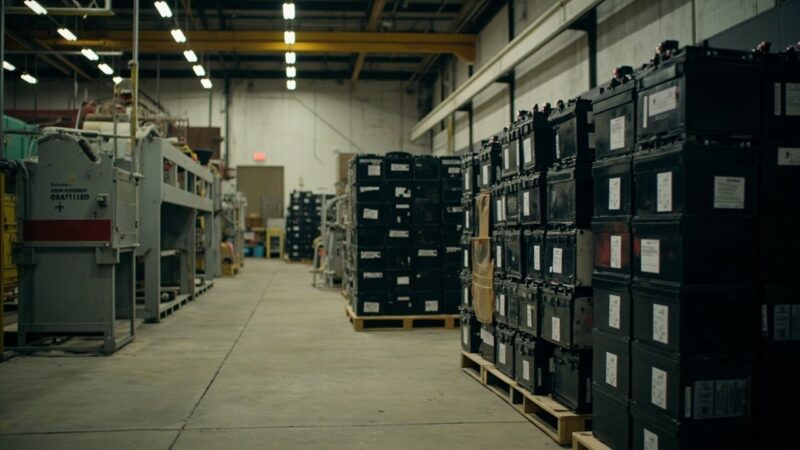
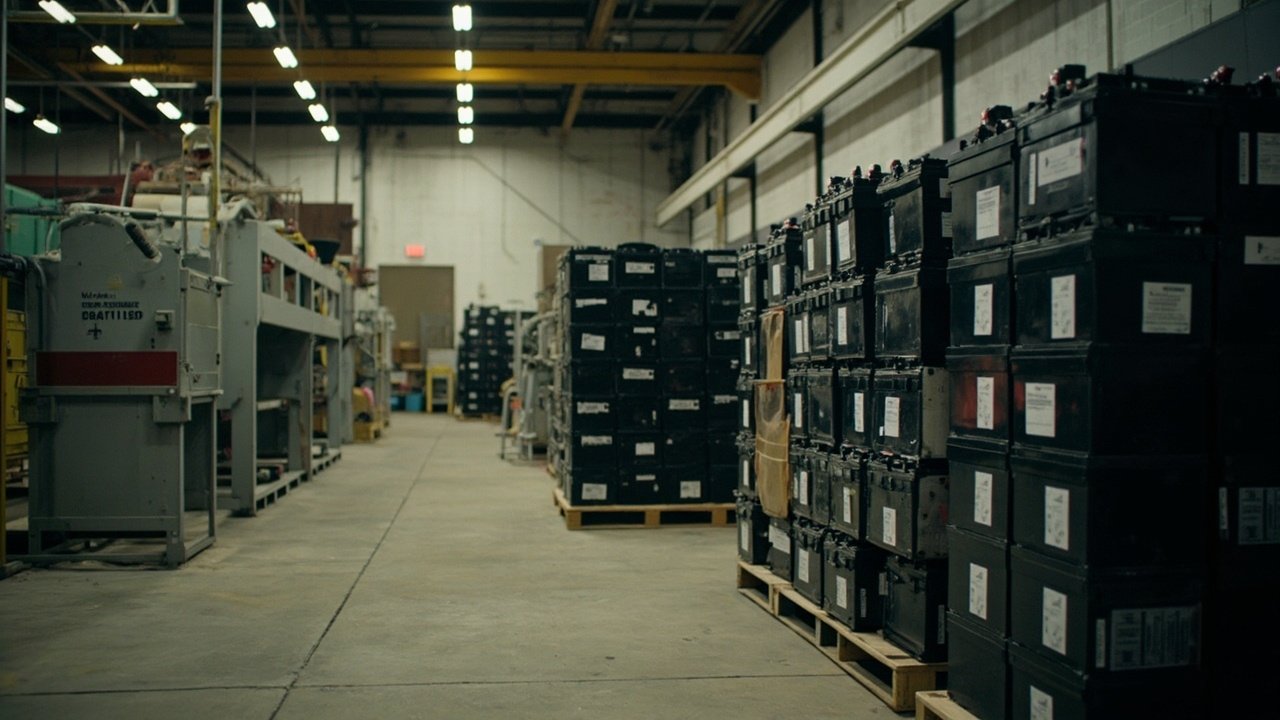
A typical data center with centralized UPS in N+1 or 2N configuration has battery banks that are typically replaced between years 3 and 8 of operation, depending on type (VRLA, Li-ion, NiCd). For a 1 MW data center with 10 minutes of autonomy, the battery bank can contain between 5,000 and 20,000 kg of lead-acid batteries.
Those banks must be replaced when:
- Capacity falls below 80% of nominal (typical end-of-life criterion).
- There are catastrophic failures (internal short circuits, swelling, venting).
- The manufacturer’s design service life is reached.
- Technology is changed (for example, migration from VRLA to Li-ion).
At the moment of replacement, used batteries become hazardous waste. The generating company (the data center operator) is responsible for their proper handling from the moment they are removed from the UPS until their final disposal.
The generator’s obligations
The LGPGIR Regulation establishes the obligations of the hazardous-waste generator:
1. Registration as a hazardous-waste generator with SEMARNAT. Any company that provides hazardous waste in quantities above the thresholds (or that, because of the nature of the waste, is required regardless of volume) must register with SEMARNAT and obtain its registration number. The registration expires and must be renewed periodically.
2. Hazardous-waste management plan. The generator must prepare and keep updated a management plan that describes:
- Type of waste generated and its estimated annual volume.
- Procedures for separation, packaging, labeling, and temporary storage.
- Transport procedure, including the authorized service provider.
- Final disposal procedure, including confinement or recycling.
- Safety measures for personnel and the environment.
- Contingency procedures in case of spill or accident.
3. Hazardous-waste logbook. The generator must keep a logbook registering every movement of hazardous waste: date of generation, date of delivery to the service provider, volume, characteristics, and final destination. The logbook must be available for PROFEPA inspection.
4. Adequate temporary storage. Used batteries must be stored in a designated area that meets:
- Impermeable floor with spill containment system.
- Adequate ventilation to prevent gas accumulation.
- Signage in accordance with NOM-018-STPS-2015 (hazard diamond, warning words, hazard indications).
- Separation of incompatible materials.
- Containment capacity for 110% of the volume of the largest container.
5. Transport by an authorized service provider. Used batteries may only be transported by companies registered with SEMARNAT as hazardous-waste management service providers. The carrier must deliver to the generator a delivery-receipt manifest that is added to the logbook.
6. Final disposal at an authorized site. Used batteries must be delivered to a final disposal site authorized by SEMARNAT (controlled confinement or recycling plant). The site issues a final-disposal certificate that the generator keeps as evidence of compliance.
The specific case of lead-acid batteries
Used lead-acid batteries have characteristics that make them hazardous waste:
- Lead toxicity. Lead is neurotoxic and bioaccumulative. Leaching of lead from abandoned or improperly disposed batteries contaminates soil and groundwater.
- Electrolyte corrosivity. Sulfuric acid is corrosive and can cause chemical burns. Spills without adequate containment damage surfaces and create risk for personnel.
- Reactivity. Batteries can generate hydrogen during charge or discharge, with explosion risk if it accumulates in a confined space.
Because of those characteristics, their handling is subject to strict regulation. However, lead-acid batteries are also recyclable: more than 95% of the lead in a used battery can be recovered and reused. The environmentally and regulatorily correct path is recycling at an authorized plant, not confinement.
The recycling process
A lead-acid battery recycling plant carries out typically these operations:
- Reception and weighing of the batteries.
- Crushing and separation of components: lead, plastic (polypropylene), and electrolyte.
- Neutralization of the electrolyte (conversion to sodium sulfate or treated water).
- Smelting of the lead to produce ingots.
- Refining of the lead to achieve new-battery purity.
- Shot blasting and processing of the plastic for reuse as raw material.
Recycled lead is used to manufacture new batteries, closing the cycle. Authorized recycling plants in Mexico include operations of Grupo Quimmco, Enertec, and others with presence in central and northern states of the country.
How to comply without over-investing
For a data center operating with VRLA batteries and handling periodic replacements, the operational compliance process is:
Step 1: Confirm SEMARNAT registration. If the data center has UPS batteries and replaces them periodically, it must be registered as a hazardous-waste generator. Verify that the registration is current.
Step 2: Keep the management plan updated. The plan must include the specific procedure for UPS batteries. Some companies have generic plans that do not detail battery handling, which is a deficiency PROFEPA notes in audits.
Step 3: Ensure adequate temporary storage. A metallic container with containment tray, NOM-018 signage, and adequate ventilation is sufficient for the typical volume of a data center. Implementation cost between $50,000 and $150,000 MXN.
Step 4: Contract with an authorized service provider. The contract must specify pickup frequencies, manifests, and final disposal. Verify that the provider has current authorization.
Step 5: Up-to-date logbook. Every battery-removal event must be recorded with date, volume, number of batteries, and reference to the provider’s manifest.
Step 6: Archived final-disposal certificates. Each delivery must have its certificate, archived for at least 5 years.
The consequences of non-compliance
PROFEPA (Federal Attorney for Environmental Protection) conducts inspections of hazardous-waste-generating companies. Sanctions for non-compliance may include:
- Administrative fines ranging from $30,000 to several million pesos depending on severity.
- Partial or total site shutdown.
- Civil liability for environmental damage, which may include remediation of contaminated soil and water.
- Criminal liability for executives in cases of severe contamination or harm to health.
For data centers serving clients with international certifications (ISO 14001, R2v3, etc.), Mexican environmental non-compliance is also a material event that must be reported in ESG and can affect the certification.
What your next management plan should include
To ensure regulatory compliance, the items that must appear in the data center’s hazardous-waste management plan:
- Updated inventory of hazardous-waste sources (UPS batteries, toner, electronic equipment, dielectric oils, maintenance waste).
- Specific procedure for each type of waste with assigned owner.
- Current contracts with authorized service providers for each waste category.
- Annual training program for personnel on hazardous-waste handling.
- Semiannual internal audit schedule to verify compliance.
- Contingency plan for spills or accidents, including personal protective equipment and PROFEPA notification procedure.
The responses to those items indicate whether the data center has an environmental management system that complies with Mexican regulation and that can demonstrate to clients, auditors, and authorities.
Sources
- Diario Oficial de la Federación. General Law for the Prevention and Integrated Management of Waste (LGPGIR). https://www.diputados.gob.mx/LeyesBiblio/pdf/LGPGIR.pdf
- Diario Oficial de la Federación. NOM-052-SEMARNAT-2005 — Characteristics of hazardousness, identification, classification and listings of hazardous waste. https://www.profepa.gob.mx/innovaportal/file/6616/1/nom-052-semarnat-2005.pdf
- Diario Oficial de la Federación. NOM-018-STPS-2015 — Harmonized system for identification and communication of hazards and risks. https://www.dof.gob.mx/normasOficiales/5626/stps5/stps5.html
- Federal Attorney for Environmental Protection (PROFEPA). Inspection program for hazardous-waste generators. https://www.profepa.gob.mx
- Diario Oficial de la Federación (2018). Regulation of the General Law for the Prevention and Integrated Management of Waste. https://www.diputados.gob.mx/LeyesBiblio/regley/Reg_LGPGIR.pdf
Want to master this?
Noxtel Academy →