Smart PDU vs basic PDU: the hidden ROI of measuring each outlet
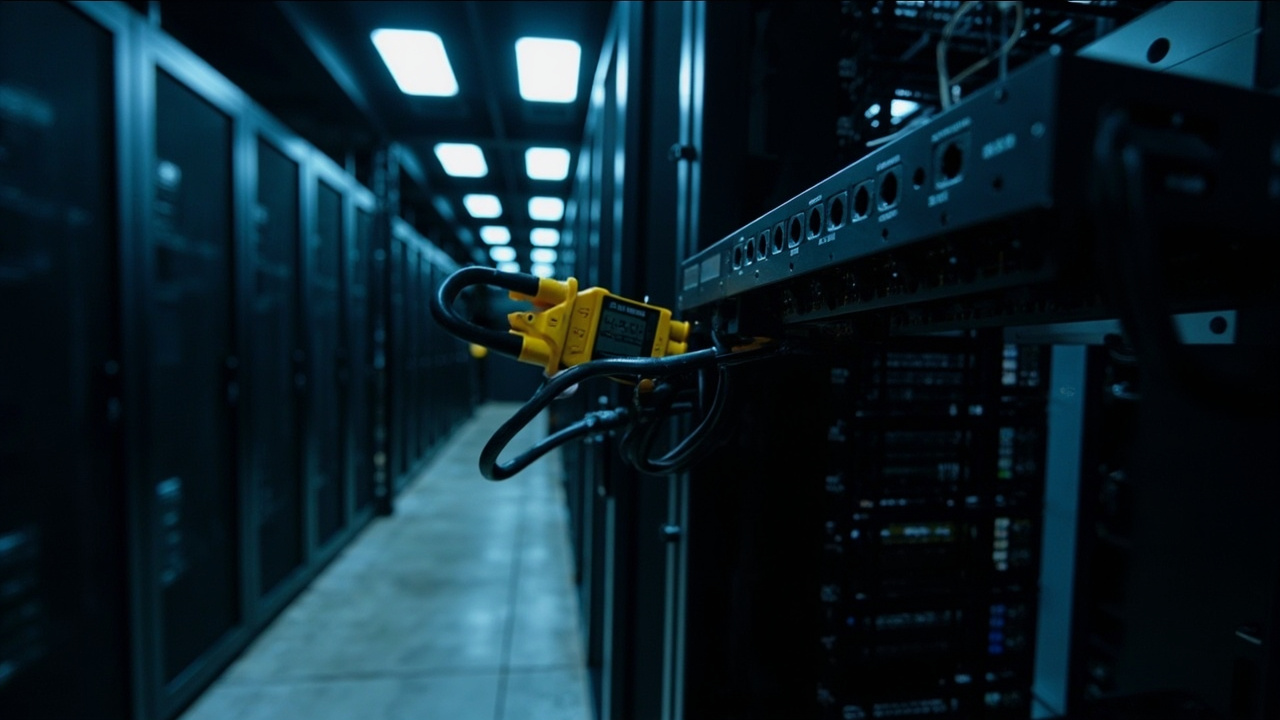
A PDU (Power Distribution Unit, a rack-mounted power distribution device) decides whether your data center can respond when a server starts failing, when an enterprise client asks how many kWh their application consumed last quarter, or when the sustainability team needs to report consumption per device. The difference between a basic PDU and a smart PDU is not marginal: it is the difference between operating blind and having per-outlet telemetry. And that difference pays for itself in less than 18 months at most mid-sized sites.
This article describes what makes a PDU smart, in which cases the investment pays for itself, when a basic PDU is still enough, which variables to measure for the investment to make sense, and the most common mistakes when choosing. The decision is not to buy telemetry for the sake of buying it: it is to know what you are going to use it for.
What makes a smart PDU different from a basic one
Both PDUs do the same thing physically: distribute alternating current from the rack’s utility feed to the outlets where equipment is connected. The difference is what happens between the outlet and the equipment:
A basic PDU only conducts electricity. It has a switch, fuse or breaker, outlets, and a voltage presence indicator. It does not know how much each outlet consumes, cannot cut power to a specific outlet remotely, and has no telemetry. Its cost is in the range of USD $200–$500 per PDU.
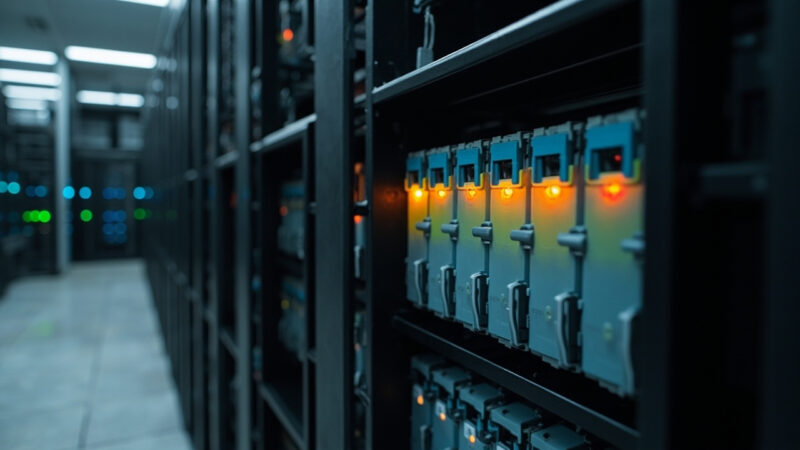
A smart PDU measures, reports, and controls. It measures current, voltage, power factor, and accumulated energy per outlet (in higher-granularity models). It reports that data over the network to a DCIM (Data Center Infrastructure Management, infrastructure monitoring platform) or a BMS (Building Management System, building management system). It controls the on, off, and reset of individual outlets remotely. Its cost is in the range of USD $1,500–$4,000 per PDU depending on granularity and per-outlet switching.
Technical comparison between basic and smart PDU
The following table compares typical features for a 42U rack (rack units, each U = 4.45 cm) with medium density in a mid-sized data center:
| Feature | Basic PDU | Smart PDU |
|---|---|---|
| Per-outlet metering | no | yes (switched + metered models) |
| Per-outlet on/off switching | no | yes |
| Reports to DCIM/BMS | no | yes (SNMP, Modbus, REST API) |
| Configurable alert thresholds | no | yes |
| Cost per PDU (USD) | $200–$500 | $1,500–$4,000 |
| Cost per rack (2 A/B PDUs) | $400–$1,000 | $3,000–$8,000 |
| Installation time | 15–30 min | 30–60 min + network configuration |
The hidden ROI: three cases where telemetry pays for the PDU
Three recurring cases show where the investment in a smart PDU pays for itself in less than 18 months:
Real versus estimated sizing. A smart PDU tells you how much each rack actually consumes, not how much you could consume based on equipment nameplates. This information lets you avoid two common mistakes: oversizing the rack’s utility feed (which is paid in CAPEX and unused energy cost) or undersizing it (which is paid in throttling and availability incidents).
Early failure detection. A PDU that measures per-outlet consumption detects the current spike of a failing server fan, the gradual consumption increase of a degrading PSU (Power Supply Unit, power supply), or the phantom consumption of equipment that should be off. Each of these findings translates into preventive action before the equipment goes down.
Per-client consumption reporting. When you operate infrastructure for multiple internal or external clients, per-outlet telemetry lets you allocate electricity cost with auditable data, not estimates. This becomes mandatory in multi-tenant operations and is highly valued in contracts with enterprise clients reporting Scope 2.
When a basic PDU is still enough
A smart PDU is not always the right answer. Three cases where a basic PDU is enough:
Small sites of fewer than 10 racks with stable load. If your data center has fewer than 10 racks, all with similar and known load, per-outlet telemetry may be unnecessary. A meter at the site’s main utility feed is enough to report aggregate consumption.
Operation without dedicated technical staff. Telemetry requires someone to configure, read, and act on it. If you do not have a facility manager or operations engineer on site, buying a smart PDU is paying for data that no one will use.
Zero short-term CAPEX budget. If the project has no margin to add USD $3,000–$8,000 per rack in telemetry, a basic PDU with a good breaker and preventive maintenance is better than a smart PDU poorly configured or unused.
Which variables to measure for the investment to make sense
Telemetry by itself does not lower the bill. What lowers the bill is acting on the data. Five variables, in order of impact, are what turn the smart PDU investment into ROI:
- kWh per outlet per month: lets you detect phantom consumption on equipment that should be off or in low-power mode. A typical audit finds 5–15% potential savings over reported consumption.
- Current peak per outlet: detects simultaneous starts that trip the feed, and gradual degradation of power supplies that precedes failures. Lets you plan maintenance instead of chasing emergencies.
- Power factor per outlet: a low power factor indicates poorly compensated inductive load or equipment with low-efficiency PSUs. Correcting it reduces reactive consumption billed by CFE in some tariff schemes.
- Temperature at the PDU: a PDU operating near its rated capacity for hours generates internal heat. Temperature telemetry lets you detect this before a breaker trips on thermal overload.
- Switching event history: knowing how many times and when remote switching per outlet was performed lets you audit maintenance operations, validate SLAs, and detect recurring failure patterns on specific equipment.
Common mistakes when choosing a PDU
Four mistakes account for most PDU purchasing decisions that end up with underused or poorly sized PDUs:
Buying more granularity than needed. A PDU with per-outlet metering and switching costs more than one with per-phase or full-PDU metering. If the use case is aggregate reporting, paying for maximum granularity is wasted CAPEX.
Ignoring DCIM integration. A PDU that speaks a proprietary protocol your DCIM does not understand is an expensive PDU without visible telemetry. Verify open SNMP, Modbus, or REST API before buying.
Undersizing current capacity. A 16 A PDU in a rack that needs 24 A becomes a bottleneck. Better to pay 20% more for a 32 A PDU than be forced to replace it at 18 months due to throttling or breaker failure.
Not planning the management network. Each smart PDU needs a dedicated network connection to report. If the data center’s management network was not planned for, telemetry ends up mixed with production traffic, which is a security and operational risk.
Sources
[1] TIA-942-C — Telecommunications Infrastructure for Data Centers — https://tiaonline.org/product/tia-942-c/
[2] IEC 62053-22 — Electricity metering equipment (AC) — https://webstore.iec.ch/en/publication/26488
[3] Wikipedia — Power distribution unit (PDU) — https://en.wikipedia.org/wiki/Power_distribution_unit
[4] ISO/IEC 30134 — Data centre key performance indicators — https://www.iso.org/standard/45611.html
[5] U.S. EPA — Energy resources for data centers — https://www.epa.gov/energy
Want to master this?
Noxtel Academy →