Microgrids for data centers: when they make sense and when they don’t
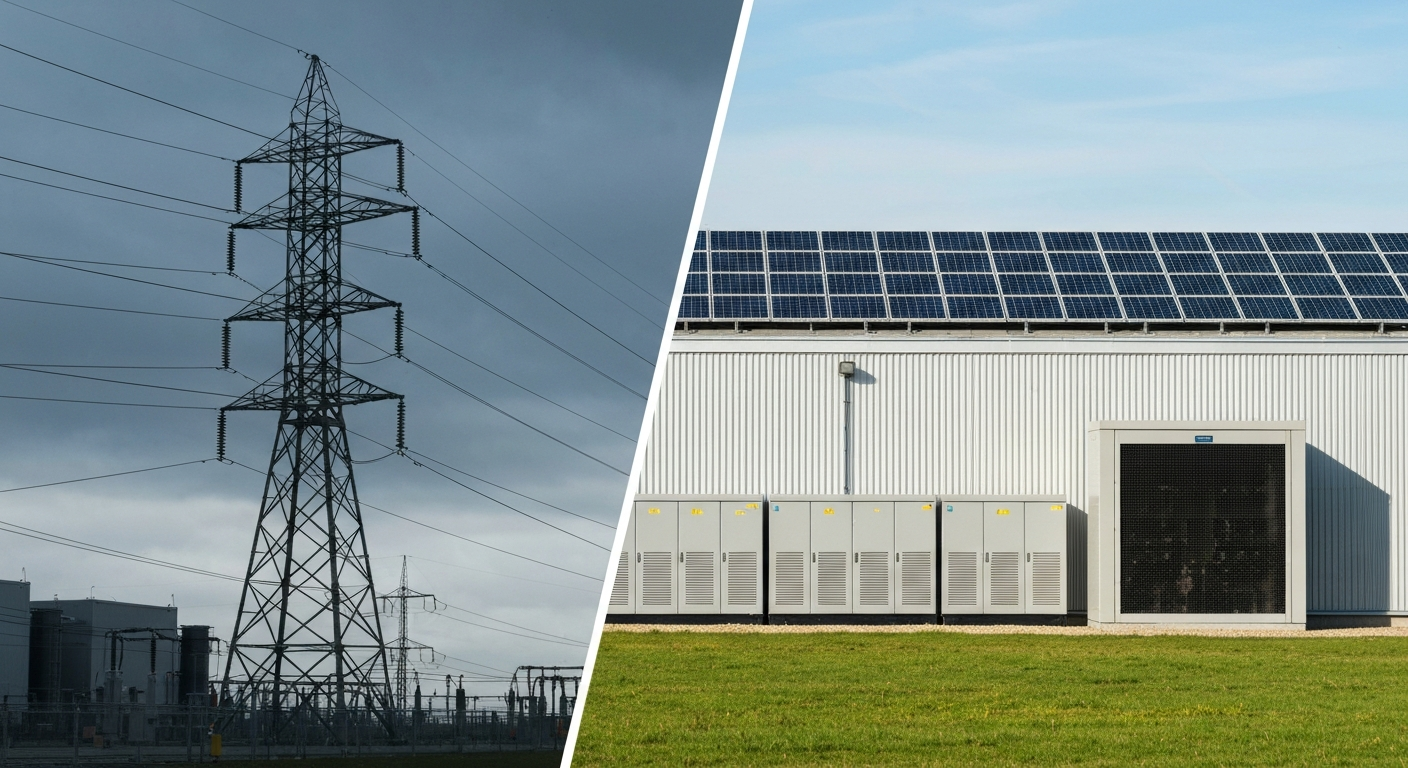
A microgrid is a local electrical system that can operate connected to the public grid or autonomously when the grid fails. For a data center, it sounds attractive: energy independence, the ability to integrate renewables, and reduced reliance on the regional electrical grid. But the decision to install a microgrid is not purely technical: it depends on economic, regulatory, and operational variables that change the outcome completely.
This article describes what a microgrid is, what components form it, in which operational scenarios the investment is justified, and in which it is preferable to maintain the conventional architecture with UPS backup and emergency generators.
What a microgrid is and why it became a topic in data centers
A microgrid combines distributed generation (solar panels, wind generation, cogeneration), storage (lithium-ion batteries or other technologies), controllable local loads, and a management system that decides in real time how much energy to take from the grid, how much to generate locally, and when to disconnect to operate in island mode.
For a data center, the most frequent drivers to evaluate a microgrid are three:
- The search for energy redundancy beyond the conventional UPS.
- The interest in reducing the carbon footprint with local renewable generation.
- The expectation of operational savings in electricity markets with time-of-use tariffs or demand peaks.
When it makes sense to install a microgrid
A microgrid is economically and operationally justified in very specific scenarios:
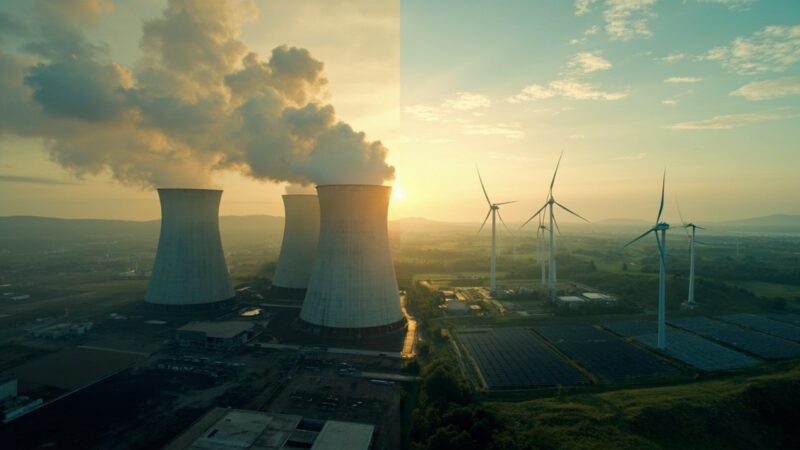
- Site with loads above 5 MW: And grid constraints. When the regional grid cannot deliver more power, local generation becomes the only way to grow.
- Climate with abundant and consistent renewable resources: Sites with high and stable solar irradiation throughout the year, or with access to biomass or industrial residues that can feed cogeneration.
- Electricity tariff with a strong demand component: When the maximum demand charge is high, generating locally reduces the billed peak.
- Availability of land or rooftop for panels: Solar generation density requires area. Small urban sites have space constraints.
- Regulatory framework that allows grid injection: In some markets, selling surpluses back to the grid changes the economic equation materially.
- Verifiable corporate ESG commitment: Some organizations need to demonstrate emission reduction with their own assets, not only with virtual PPAs.
When a microgrid is NOT advisable
The opposite decision is also common and is justified in equally valid scenarios:
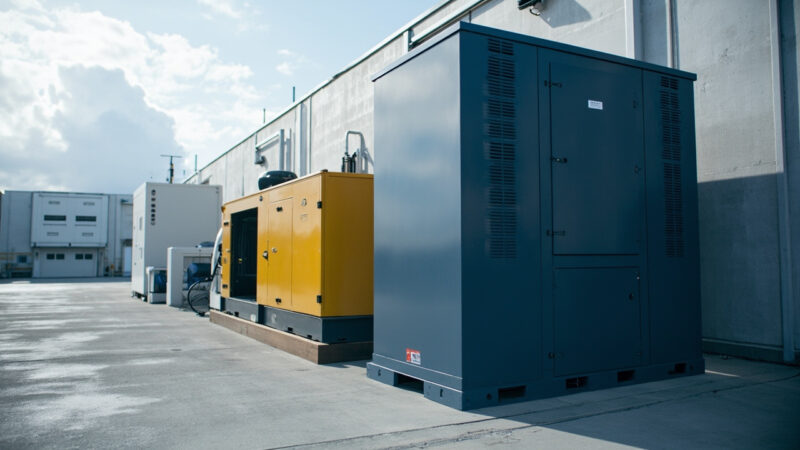
- Site with loads under 1 MW: Microgrid investment does not pay off with small loads; conventional UPS plus an emergency generator are sufficient.
- Highly reliable regional grid: In areas where the grid has N+1 or N+2 redundancy and supply quality is high, the operational benefit of the microgrid is diluted.
- Limited land and no exploitable renewable resource: Dense urban sites without usable solar rooftop and without access to biomass.
- Regulatory framework that prohibits or restricts grid injection: In some countries or regions, surpluses cannot be sold and the investment loses the export return.
- Operation that requires extreme generation redundancy: Tier IV or mission-critical data centers that require N+1 or 2N on every subsystem: the microgrid adds management complexity that can work against the goal.
- Data center useful life shorter than the microgrid amortization: Microgrid investment typically amortizes over 8-12 years. Sites with a shorter operational horizon do not justify it.
Comparison table: when yes and when no
| Variable | Microgrid advisable | Microgrid NOT advisable |
|---|---|---|
| Site load | Greater than 5 MW with grid constraint | Under 1 MW |
| Regional grid | Medium or low quality, N redundancy | High quality, N+1 or greater redundancy |
| Renewable resource | Consistent solar, biomass, cogeneration available | No exploitable resource |
| Electricity tariff | High demand charge, pronounced peaks | Flat tariff, controlled demand |
| Land | Available for panels or cogeneration | Limited, no space |
| Regulatory framework | Allows grid injection, carbon credits | Restricts injection, does not credit renewables |
| Site useful life | Greater than 12 years | Under 8 years |
| Main objective | Reduce OPEX or verifiable emissions | Meet availability SLA |
Technical variables that close the decision
When commercial and regulatory variables are aligned, technical variables close the decision:
- Battery bank size: Defines how long the site can operate in island mode. For hours-long backup, MWh-scale batteries are required, with significant cost.
- Local generation capacity vs peak demand: Correct sizing requires an annual load profile, not only maximum demand.
- Grid synchronization: The microgrid must be able to disconnect and reconnect without affecting power quality. This requires a robust and proven energy management system.
- Coordination with the conventional backup system: UPS, emergency generators, and microgrid must work in coordination. The additional operational complexity must be justified by the expected benefits.
A tool, not a mandate
The microgrid is not a universal improvement every data center should adopt. It is a tool with very specific use cases where the investment is justified, and cases where it is preferable to maintain the conventional architecture of UPS plus emergency generator. The decision depends on the intersection of load, regional grid, renewable resource, tariff, regulation, and operational horizon of the site.
For data centers in Mexico, the scenarios with the highest probability of justification are large-scale sites in areas with high solar irradiation and grid constraints. Small or medium urban sites in areas with reliable grid rarely justify the investment.
Sources
[1] Wikipedia — Microgrid: https://en.wikipedia.org/wiki/Microgrid
[2] Uptime Institute — Data Center Resources: https://uptimeinstitute.com/resources
[3] Uptime Institute — Blog: https://uptimeinstitute.com/blog
[4] Wikipedia — Distributed generation: https://en.wikipedia.org/wiki/Distributed_generation
[5] Wikipedia — Combined heat and power: https://en.wikipedia.org/wiki/Combined_heat_and_power
[6] Wikipedia — Solar power: https://en.wikipedia.org/wiki/Solar_power
[7] Wikipedia — Power Purchase Agreement: https://en.wikipedia.org/wiki/Power_purchase_agreement
[8] Wikipedia — Battery storage: https://en.wikipedia.org/wiki/Battery_storage
[9] Wikipedia — Energy storage: https://en.wikipedia.org/wiki/Energy_storage
[10] Wikipedia — Data center: https://en.wikipedia.org/wiki/Data_center
Want to master this?
Noxtel Academy →