Liebert PDX in Mexico: 7 signs you need to migrate (not just repair)
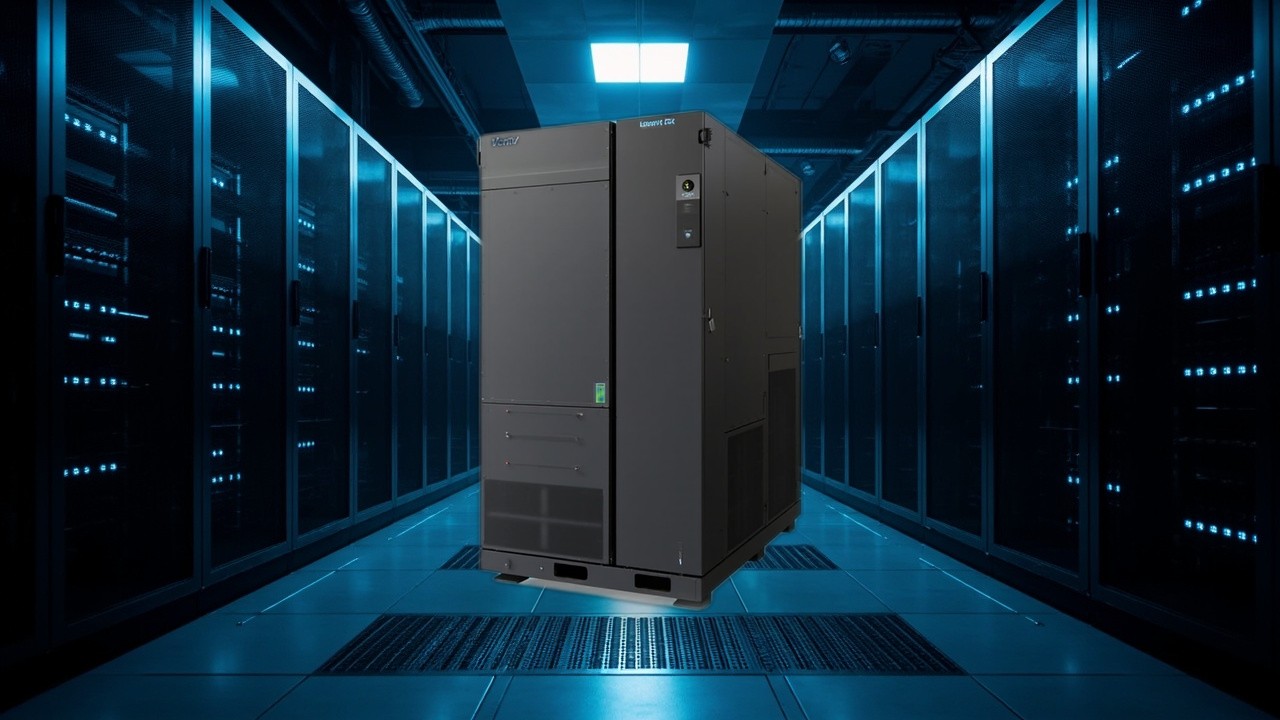
If your server room has Liebert PDX perimeter cooling units with more than 8-10 years of operation, it has likely already entered the zone where every service call costs more than a new unit. This guide helps you decide when to repair and when to migrate — and what to migrate to.
The Liebert PDX is the evolution of the historic Liebert DS/DSE and quickly became the de facto standard perimeter air unit in corporate and carrier data centers in Mexico. Launched around 2010, it remains one of the most installed — you will find it in banks, corporates, telcos, and government.
The 7 signs you need to migrate
These are the signals we see in field service when a PDX has moved from corrective maintenance to the replacement zone. If your unit has 3+ of these, start requesting migration quotes:
- Compressor with more than 80,000 hours of operation (8-10 years of continuous use). The compressor is the most expensive replacement component and its failure is catastrophic for the room.
- Growing failure frequency: more than 4 service interventions in the last 12 months. Every service call costs money; when they accumulate, the TCO of the old unit exceeds the new one.
- Spare parts that are hard to source or with lead times greater than 4 weeks. On PDX units over 10 years old, some components (legacy control boards, specific sensors) start to become scarce.
- Use of R-410A refrigerant in systems with severe wear: even though it is the current standard, recurring leaks in old circuits from accumulated vibration raise the OPEX of recharging and break internal sustainability targets.
- Setpoint forced to 18-20°C to sustain the load — indicates the capacity no longer keeps up. The room grew beyond the original design.
- Inability to maintain relative humidity (RH) per ASHRAE: if the infrared or vaporizer humidification components of the PDX have reached end of life, the iCOM system cannot mitigate the risk of electrostatic discharge (from dry air) or condensation, forcing preventive shutdowns.
- PUE greater than 1.6 in normal operation — a PDX over 10 years old consumes 30-40% more energy than a new PDX-F or a CyberAir 3 with free cooling. The OPEX savings (recurring operating expense, mainly energy and maintenance) pay back the CAPEX in 3-4 years.
What to migrate to? Three paths depending on your case
- 1:1 same-format migration — new-generation Liebert PDX-F. For same room, same raised floor, keeping redundancy and footprint.
- Upgrade to native free cooling — Stulz CyberAir 3 W or Plus. If you want to lower PUE and you have a cooling tower or can install a dry cooler.
- Switch to in-row — Liebert CRV4 or Stulz CyberRow. If the room has containment or you are about to install it, you want row-based cooling.
PDX variants
- PDX-F (downflow) — discharge through the raised floor. The most common in traditional data centers.
- PDX-U (upflow) — overhead discharge. For rooms without a raised floor, discharge to an overhead plenum.
- PDX-A (Air), PDX-W (Water), PDX-G (Glycol) — heat-rejection variants (air, water, glycol). Capacities 20-110 kW in air/water/glycol; up to 120 kW in water-cooled.
Quick technical comparison
| Equipment generation | Estimated PUE range | Key characteristics | Financial impact profile |
|---|---|---|---|
| Liebert PDX Legacy | 1.5-1.8 | No free cooling, R-410A, fixed-speed compressor | High OPEX; high service cost over 8 years |
| Liebert PDX-F new generation | 1.3-1.5 | EC fans, modulating compressor, iCOM controls | Lower OPEX; service contracts available |
| Stulz CyberAir 3 W/Plus | 1.15-1.30 | Native free cooling, hot/cold aisle ready, iCx control | Lowest OPEX; 3-4 year payback vs PDX legacy |
| Liebert CRV4 / Stulz CyberRow (in-row) | 1.20-1.40 | Row-based, requires containment | Best efficiency with containment; higher CAPEX |
? Technical data based on the manufacturer’s public documentation (datasheet and installation manual). Verify against the current datasheet on the manufacturer’s website before any quotation or formal proposal. Capacities, part numbers, and specifications are reference values; each variant and revision can change values.
When it makes sense to repair instead of migrating
- The PDX is less than 8 years old and spare parts are available without extended lead time.
- The PUE is between 1.30-1.50 (not terminal legacy).
- You do not have CAPEX budget to migrate this fiscal year.
- The room is going to be replaced or consolidated in less than 24 months.
- A preventive-maintenance contract (HVAC-002 Noxtel) extends useful life by 3-5 years over equipment without service.
Practical decisions and mistakes when migrating PDX
- Do not replace 1:1 without re-evaluating capacity: the room has changed in 10 years; size for the current state.
- Do not migrate to in-row without containment: you lose 40-50% of the in-row advantage. Containment is mandatory.
- Do not underestimate the civil work: new piping, updated electrical service entrance, raised-floor intervention — include it in the budget.
- Disposal of the old equipment: R-410A requires recovery by a certified company. Do not leave it as a surprise expense.
- The most critical mistake: keeping a worn-out perimeter system running under the false premise that "as long as it turns on, it works". In a mission-critical environment, the cost of an unplanned shutdown from a cooling failure far exceeds the CAPEX of a planned modernization.
Conclusion: the true cost of postponing obsolescence
A compressor failure in a Tier III room costs you more than the full migration. The true cost of postponing obsolescence is not in the spare-parts invoice, but in the sum of three silent penalties: a PUE that rises 30-40% versus the new generation, an OPEX for recharging and corrective service that grows quarter over quarter, and an operational risk of electrostatic discharge or condensation that no iCOM can mitigate when the humidification components have already reached end of life. Migration is not an expense: it is coverage against a catastrophic failure that, when it happens, arrives at the worst possible time.
Do you feel your room has already given more than it could? Talk to a Noxtel advisor to audit the thermal efficiency of your site and get quotes for turnkey modernization plans — direct replacement to Liebert PDX-F or a jump to Stulz CyberAir 3 — or a Noxtel-certified service contract (HVAC-002) to extend the useful life of your current equipment without losing coverage.
Do you need help with
Vertiv solutions?
At Noxtel we specialize in the design, supply, installation, and preventive maintenance of critical infrastructure for data centers. If you are comparing equipment, need to size a project, or require certified technical support for
Vertiv
solutions, our engineering team is ready to help you.
? Contact us today and schedule a consultation with the Noxtel team
Sources
- Vertiv Liebert PDX — product search — https://www.vertiv.com/en-us/search?q=liebert+pdx
- Vertiv Thermal Management / Cooling — https://www.vertiv.com/en-us/products/thermal-management/cooling/
- ASHRAE Technical Resources — https://www.ashrae.org/technical-resources/
- TIA-942-C — https://tiaonline.org/product/tia-942-c/
- Montreal Protocol — R-22 phase-out — https://ozone.unep.org/treaties/montreal-protocol
- Uptime Institute Research & Reports — https://uptimeinstitute.com/resources/research-and-reports/
Want to master this?
Noxtel Academy →