Drone inspection in a data center: what it really solves and when it is not worth it
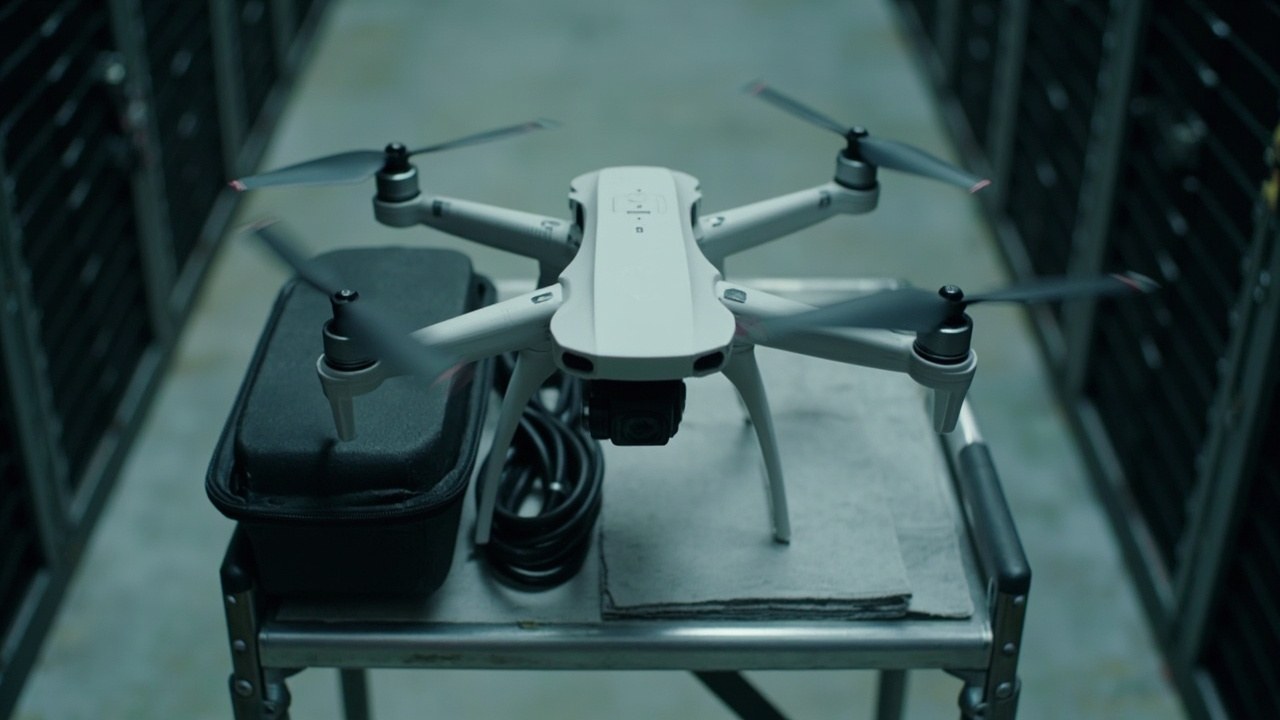
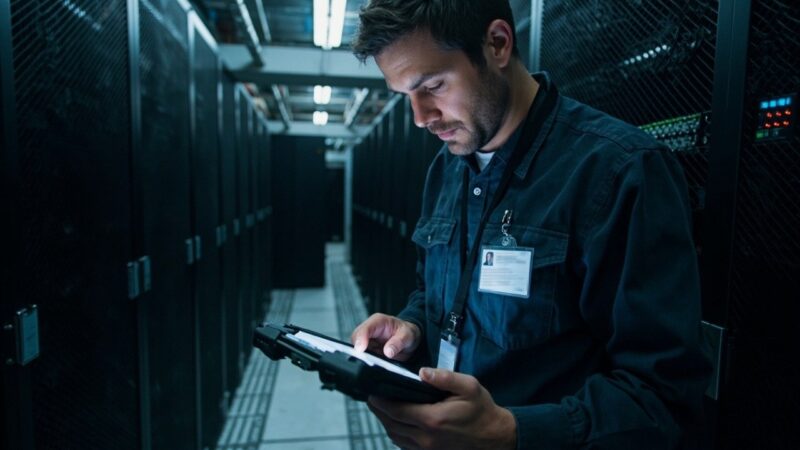
Your facility technician climbs to the ceiling with a thermal camera, a ladder and a rented harness, and waits for the maintenance window to review the cabling at height. A UAS operator covers the same ground in one hour, without shutting down the room.
The difference is not about speed: it is about cost per hour and about the operating window consumed. And even so, the drone repairs nothing. This article is meant to help you decide whether the service makes sense in your facility, not to sell you the technology.
If your facility has one or two rows of racks in a low room, you probably do not need it. What follows is for those who have plenty of height, dense cabling overhead and short or expensive maintenance windows.
What a UAS is when it shows up in your room
UAS (Unmanned Aircraft Systems) is the public standard that describes the structure, navigation and safety of an unmanned aircraft. In inspection, a UAS is a mobile sensor: it carries a camera and a thermal radiometer, and it flies within the line of sight of its operator.
In Mexico, NOM-107-SCT3-2019 governs: it classifies RPAS by weight, requires registration with AFAC and civil liability insurance for commercial use, and limits altitude to 122 meters above ground level.
It is worth separating two things that get mixed together in commercial conversations. The UAS is the vehicle. The reading depends on the emissivity of the surface, the angle of the shot and the calibration of the sensor. Flying well is the easy part; measuring well is the part that costs.
The three advantages that are real
All three come from the same idea: replacing a person at height, with a camera in hand, with a sensor that flies.
What the drone does not solve
The UAS detects and documents. It does not repair, does not terminate cables and does not replace the facility technician on physical work. If the problem is a loose connector, a card that has to be swapped or a splice that has to be redone, the flight tells you where it is and someone still has to go and fix it.
It does not see inside the rack either. The camera sees surfaces, not ports: a badly connected cable in a panel looks the same as a properly connected one, unless it is hot. And it does not lift a raised-floor tile, inspect a duct or confirm an electrical load.
The thermal risk almost nobody mentions to you
An automatic reading is worth as much as the emissivity it was computed with. Painted surfaces, aluminum and polished metal lie to the camera and report as hot what is not. That is why the ASTM E1933 practice exists: it defines how to measure and compensate for emissivity before declaring that something is heating up.
A report without that data is a nice photograph. And a hot spot over a busbar or a splice remains a hypothesis until someone measures current, checks terminations and decides.
What to ask before hiring the service
Under what conditions it does make sense
It does make sense when your room has real height, dense cabling overhead, several zones to cover and short maintenance windows. There, the flight replaces hours on a ladder and harness with one hour of operation, and the data comes out objective.
It does not make sense when the space is low, when there are one or two rows of racks with no height, or when the real problem is housekeeping and labelling inside the rack. Nor when the finding has to be repeated by hand anyway.
For an SME or mid-sized company the calculation is simple: compare the cost of the service against the cost of the maintenance window you spend today to look at the same thing. With an accessible roof and three rooms, a technician with a camera and a harness often works out cheaper.
The drone is justified by volume, not by enthusiasm. The question is not whether the technology works, but whether the scale of your facility pays for the hourly cost and the permits it brings.
Sources
Agencia Federal de Aviación Civil: registration and procedures for RPAS (drones).
Want to master this?
Noxtel Academy →