Sealing penetrations and cable passes in data center: the 4 solutions that keep cold air from escaping (and that your CFO will approve)
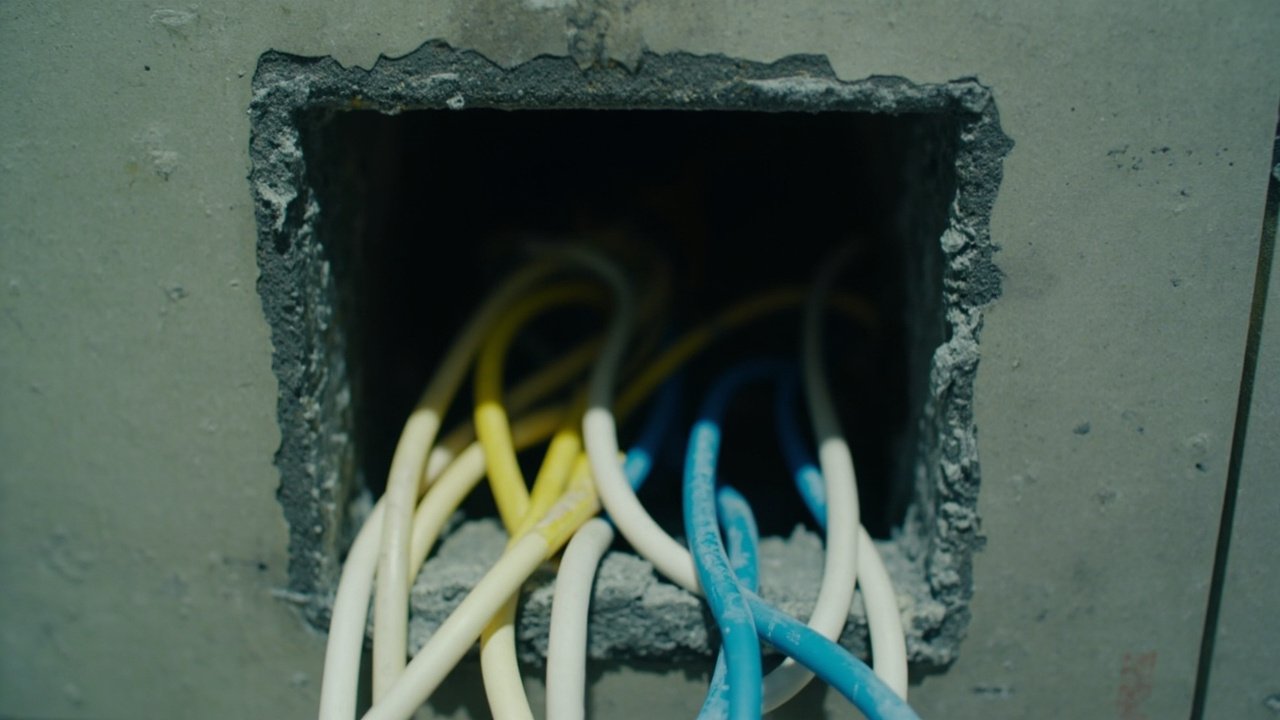
Every penetration in a wall or slab of your data center — every cable that enters or exits, every HVAC pipe, every tray that crosses — is a potential cold air leak. If you do not seal correctly, the cooling system works harder to maintain temperature, PUE rises, and the CFE bill skyrockets. This article covers the 4 main sealing solutions: intumescent foam, mechanical blocking modules, elastomeric seals, and gel bags. Cost, installation time, fire resistance, and when to use each one. Your CFO can approve any of the 4; what they CANNOT approve is continuing without sealing.
Penetration sealing applies to existing and new data centers. In a new data center, sealing is the designer’s responsibility. In an existing data center, sealing is done during normal operations as a maintenance project with controlled cost.
Why sealing is more important than it seems
An unsealed 10×10 cm penetration in a wall between cold room and hot aisle allows the passage of 200-400 CFM of air. In a data center with 30 similar penetrations (typical in a medium data center), that is 6,000-12,000 CFM of air that the cooling system must compensate. The operational impact:
- The CRAC works at 110-130% of nominal capacity to maintain 22°C in the cold room. This reduces compressor life and increases electrical consumption.
- PUE rises between 0.1 and 0.3 due to escaping air. If your current PUE is 1.6, without proper sealing it can reach 1.9.
- Hot spot in racks near the penetrations. If hot air from the hot aisle enters through the penetration, it heats the adjacent rack.
- Fire propagation risk. Penetrations are the #1 route of fire propagation between rooms in a data center. Sealing with intumescent material cuts this route.
The cost-benefit of sealing is favorable even in conservative analysis. For every $1 invested in sealing, you save $3-8 in annual electrical cost of the CRAC. In 2-3 years the sealing pays for itself.
Solution 1: Intumescent foam (the most common and versatile)
Foam that expands with heat, sealing the penetration when there is a fire. Common brands: 3M FB-3000 WT, Hilti CP 620, Nullifire FF197. Application:
- Apply the foam in the space between cables and wall/slab. The foam cures in 24 hours. It can be applied with a standard caulking gun.
- Fire resistance: 2-4 hours depending on classification (F-rating). Compliant with ASTM E814 and UL 1479.
- Cost: $800-2,500 MXN per liter of foam. A typical penetration consumes 1-3 liters. Total per penetration: $800-7,500 MXN.
- Installation time: 15-45 minutes per penetration depending on size and number of cables.
- Advantages: economical, easy to apply, removable to add new cables.
- Disadvantages: requires reapplication every 3-5 years because the foam deteriorates with vibration. Not the most aesthetic solution.
Intumescent foam is the correct solution for penetrations where cables change occasionally (new racks, upgrades, etc.). If your data center is going to have constant cabling movement, foam is the only practical option.
Solution 2: Mechanical blocking modules (the cleanest and most durable)
Pre-fabricated blocks that are inserted around each cable, forming a mechanical seal. Common brands: Roxtec, Tflex, MCT Brattberg. Application:
- Metal frame installed in the wall/slab. Individual sealing blocks inserted around each cable. Compressed manually with tool.
- Fire resistance: 4 hours. Compliant with IEC 61500 and F-rating up to 4h.
- Cost: $3,000-8,000 MXN per individual block. A typical penetration with 10-20 cables consumes 15-25 blocks. Total per penetration: $50,000-200,000 MXN.
- Installation time: 2-4 hours per penetration. Requires specific manufacturer training.
- Advantages: durability of 20+ years, professional aesthetics, allows easy addition/removal of cables.
- Disadvantages: high initial cost, requires certified provider for installation.
Mechanical modules are the correct solution for enterprise data centers where aesthetics, durability and ease of maintenance weigh more than initial cost. If your CFO approves initial investment of $100,000-300,000 MXN, the annualized cost is lower than foam.
Solution 3: Elastomeric seals (for HVAC pipe penetrations)
Rubber or silicone seals that wrap HVAC pipes crossing walls. Common brands: Metraflex, K-Flex, Armacell. Application:
- Elastomeric sleeve that fits around the pipe. Secured with metal clamps. Secondary sealing with silicone sealant.
- Fire resistance: 1-2 hours. Typically combined with intumescent foam to meet 2-4h.
- Cost: $500-2,000 MXN per seal. A typical penetration consumes 1-2 seals. Total: $500-4,000 MXN per penetration.
- Installation time: 30-60 minutes per penetration.
- Advantages: economical, easy to install, flexible for pipe vibration.
- Disadvantages: requires annual inspection for elastomer wear. HVAC pipe vibration degrades the seal in 3-5 years.
Elastomeric seals are for penetrations where HVAC pipe passes (chilled water, refrigerant, condensate). They do NOT apply to data cable penetrations. For cables, use foam or mechanical modules.
Solution 4: Gel bags (for temporary or low priority penetrations)
Gel-filled bags that are placed around cables to seal temporarily. Common brands: STI EZ-Path, Hilti CFS-IS. Application:
- Gel-filled bags that are inserted around cables. They expand slightly to seal the space. No adhesive, no special tools.
- Fire resistance: 1-2 hours. Limited compared to intumescent foam.
- Cost: $200-800 MXN per bag. A typical penetration consumes 5-15 bags. Total: $1,000-12,000 MXN per penetration.
- Installation time: 5-15 minutes per penetration. The fastest to install.
- Advantages: fastest installation, removable, no training required.
- Disadvantages: lower fire resistance, lower durability (1-3 years), not aesthetic.
Gel bags are the correct solution for temporary sealing during construction or as a quick measure before definitive sealing. They are NOT the permanent solution for a data center in operation.
When to use each solution (decision matrix)
Criteria to choose:
- Power/data cable penetration in main room: MECHANICAL MODULES (best) or INTUMESCENT FOAM (alternative).
- HVAC pipe penetration: ELASTOMERIC SEALS + complementary FOAM.
- Temporary penetration during construction: GEL BAGS. Replace with permanent solution before finishing work.
- Cable tray penetration: specialized MECHANICAL MODULES for trays (more expensive but more durable).
- Mixed penetration (cables + pipes): combine FOAM + ELASTOMERIC SEALS.
In a typical data center with 30-50 penetrations, the correct combination is: 80% mechanical modules for cables, 15% elastomeric for pipes, 5% gel bags for temporary penetrations. If your data center has different composition, adjust the distribution.
The annual inspection plan
Any of the 4 solutions requires annual inspection:
- Visual inspection: verify that sealing is intact, without cracks, without separation of cables.
- Smoke test (optional but recommended). Generate smoke from the hot side and verify that it does NOT pass to the cold side. If it passes, there is sealing failure.
- Reapplication if visible deterioration. Intumescent foam every 3-5 years. Elastomeric seals every 3-5 years. Mechanical modules do not require reapplication.
- Photographic documentation of each penetration with date. For internal audit and compliance.
The annual plan costs between $30,000-80,000 MXN depending on the number of penetrations. It is a maintenance cost that pays for itself in electrical savings.
How to present the project to your CFO
The CFO will ask: ‘How much does the project cost?’ Your structured answer:
- Initial cost of sealing 30 penetrations (mix modules + foam + elastomeric): $300,000-600,000 MXN.
- Electrical savings: $80,000-150,000 MXN annually in CRAC consumption (with PUE dropping from 1.7 to 1.5).
- ROI: 2-3 years just from electrical savings. Adding the increased CRAC life and fire risk reduction, real ROI is < 2 years.
- Risk of NOT doing it: high PUE = potential fine if there is regulation, fire propagation risk, opportunity cost in CRAC capacity (which slows data center growth).
The CFO approves this type of project when the numbers are clear. Sealing $400,000 MXN today to save $100,000 MXN/year for the next 10 years. The NPV is clearly positive. If your CFO does not approve with these numbers, the project is not being sold well internally.
The most expensive error: sealing with cheap foam without inspection
The error we see in old data centers: they installed cheap intumescent foam 8 years ago, never inspected. Today the foam is cracked, separated from the cables, and allows air passage. The operator notices the high electrical consumption but does not know why. The solution: remove all the old foam and reinstall with mechanical modules or new foam + annual inspection.
Cheap foam without inspection is worse than not having foam. Because it gives you the false sense of ‘it is already resolved’ and you do not address the underlying problem. Annual inspection is what converts any solution into investment; without inspection, it is lost expense.
If your data center has penetration sealing without inspection in 3+ years, schedule one for the next 3 months. The cost is low and the potential savings are high. Inspection is the first step before any replacement investment.
Sources
- ASTM E814 — https://www.astm.org/e0814-24.html
- UL 1479 — https://www.shopulstandards.com/ProductDetail.aspx?UniqueKey=24358
- NFPA 75 — https://www.nfpa.org/codes-and-standards/all-codes-and-standards/list-of-codes-and-standards/detail?code=75
- TIA-942-B-2023 — https://www.tia.org/standards/tia-942
- ASHRAE TC 9.9 — https://www.ashrae.org/technical-resources/bookstore/thermal-vigilance-for-data-processing-environments
Want to master this?
Noxtel Academy →