Load bank testing: why your diesel generator has not failed in an emergency (yet)
Your diesel generator has gone 3 years without being tested under real load. On every maintenance visit, the vendor starts it, lets it idle for 10 minutes, and leaves. That is what they call a “functional test” — and it is the reason your generator will fail when CFE drops the power on a Monday at 4 AM.
A diesel generator that has never operated at 80% of its nominal capacity for at least 30 continuous minutes has problems that only show up under load: fuel that degrades in the lines, seals that dry out, a turbocharger that loses efficiency. An idle test does not catch them. A load bank test does.
What load bank testing really is
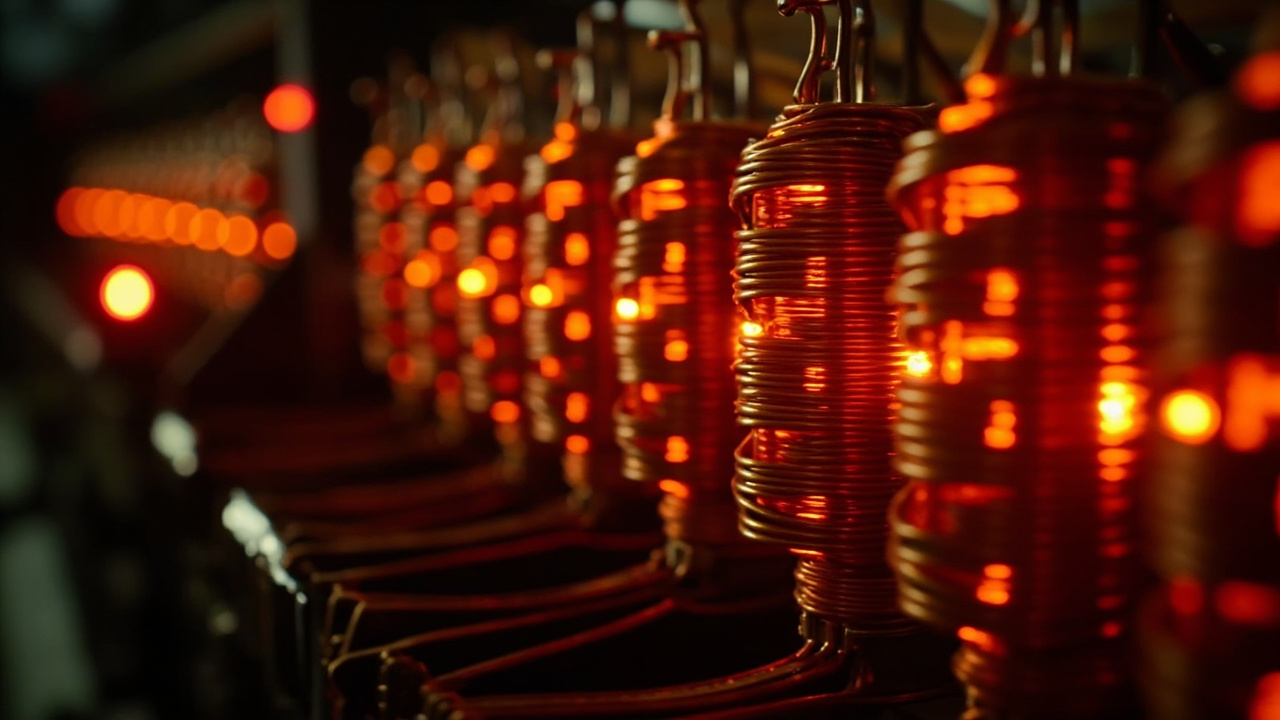
It is connecting to the generator an artificial resistive load — typically high-power electrical resistors grouped in a mobile or fixed bank — and forcing it to deliver 50%, 75%, and 100% of its nominal capacity for periods of 30 minutes to 4 hours per stage.
The artificial load absorbs all the energy generated. The diesel engine works at its nominal regime. The exhaust gases come out hot. The bearings get lubricated under load. The generator windings heat up to operating temperature. This is what uncovers the real failures before a real emergency uncovers them for you.
The 5 failures that only show up under load
Fuel injection valves that lose pressure. At idle they work. At 80% load, fuel atomization fails, the engine blows black smoke, and delivered power drops 15-25%. The maintenance vendor does not see it in 10 minutes of idling.
Turbocharger seals with leaks. At idle the oil pressure is low. Under load, the leak shows up as constant blue smoke and a power drop. Replacing the seal costs USD 1,400-3,400 (approx. $25,000-60,000 MXN at 17.5 MXN/USD). Replacing the full turbocharger costs USD 10,300-20,000 (approx. $180,000-350,000 MXN at 17.5 MXN/USD).
Voltage regulator that oscillates. With no load there is nothing to regulate. Under load, voltage swings can be ±5% instead of the required ±1%. This damages the downstream UPS regulators and, eventually, the connected servers.
Block heater resistors that fail. The engine starts cold in an emergency without proper preheating. In climates like the Bajío or northern Mexico, a winter night can make a cold diesel engine take 30-45 seconds to stabilize — if your UPS only has 15 seconds of autonomy, that time costs you the whole site.
Fuel tanks with condensed water. Condensation accumulates at the bottom of the tank. Under load, the engine will draw more fuel volume and suck in the water. The engine shuts down in 30 seconds. The idle test with little fuel flow does not catch it.
The NFPA 110 protocol your vendor should follow
NFPA 110 “Standard for Emergency and Standby Power Systems” section 8.4.2 requires annual tests with load at least at 30% of nominal capacity for 30 minutes, and at 100% for 1 hour every 3 years. The standard has existed since 1984 and is referenced by most building and insurance codes.
Mexico has no mandatory equivalent. The good practice is NFPA 110 plus the generator manufacturer’s recommendations (Caterpillar, MTU, Cummins, and Kohler all have specific protocols). If your maintenance vendor does not know NFPA 110, you have the wrong vendor.
When to do the test (and when NOT to)
Annually at minimum. Quarterly if the generator is your only backup source for a Tier III/IV operation. Before each hurricane or storm season (May to October in most of Mexico). After any major engine repair.
Do NOT do it on days with high probability of CFE failure — when storms are forecast, when there is an extreme heat alert saturating the local grid. The test must be done with the CFE grid active and the transfer switch in normal position. Under no circumstance disconnect your data center from the generator to run the test — use the load bank, not your real operation.
How much it costs (and why the ROI is absurd)
Load bank rental: USD 800-2,500 per day depending on bank size. Full service with certified technician: USD 2,500-6,000 per test. An annual test costs less than one hour of unplanned downtime.
A 200 kW data center with a 500 kW generator that has never been tested under load is a ticking time bomb with an 18-25% annual failure probability according to industry data. Testing once a year drops that probability to under 2%. The math is simple: USD 3,400/year (approx. $60,000 MXN at 17.5 MXN/USD) of testing vs USD 45,700-143,000 (approx. $800,000-$2,500,000 MXN at 17.5 MXN/USD) of a 4-8 hour failure. The answer is obvious.
Sources
[1] NFPA 110 — Standard for Emergency and Standby Power Systems (2025 edition, section 8.4.2) — https://www.nfpa.org/codes-and-standards/nfpa-110-standard-development/110
[2] Caterpillar — Application and Installation Guide: Emergency Generator Set Testing — https://www.cat.com/en_US/articles/cat-connect/electric-power/diesel-generator-sets.html
[3] Cummins Power Generation — Load Bank Testing for Standby Generator Sets — https://www.cummins.com/news-and-insights/load-bank-testing
[4] Wikipedia — Load bank — https://en.wikipedia.org/wiki/Load_bank
Want to master this?
Noxtel Academy →