The 7 Mistakes Data Center Managers Make in Their First Year
There are errors that are repeated in every generation of new DC managers. They are not errors of knowledge, they are of attention: things that seem obvious in retrospect and are ignored in the rush of the day-to-day.
Here is the catalog of the seven that are most expensive to ignore.
1. Underestimating the future cooling load
The DC is designed for a specific IT load, but the load grows. The first signs are CRACs working at their limit, high delta-P in the chilled water, and redundant CRACs that are no longer redundant.
Mitigation: design with a 25% margin over the expected load at 3 years, and continuous monitoring of consumption per rack.
2. Not documenting physical cabling
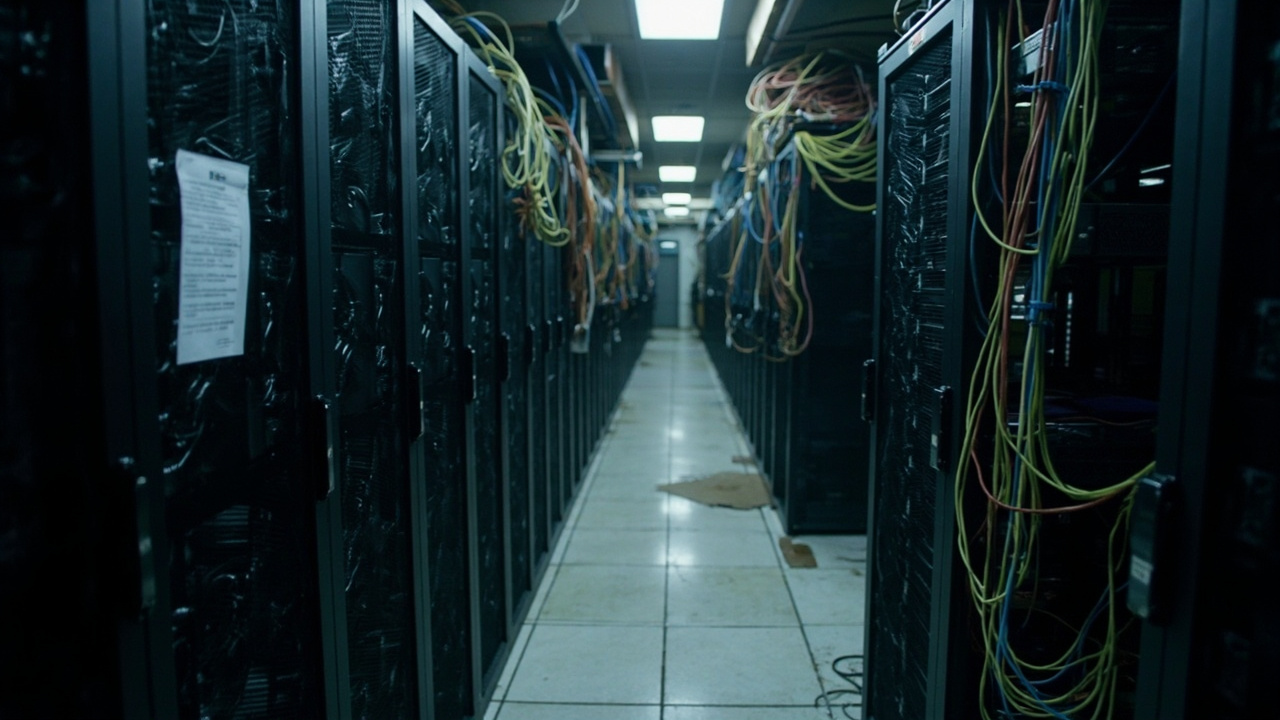
Network and power cabling is the most dynamic asset of the data center. If there is no updated database, any change becomes archaeology: you open the raised floor and discover unidentified cables.
Mitigation: CMDB or DCIM with the cabling documented from day one. Every change is registered at the exact moment it is made.
3. Buying UPS without testing the batteries
UPS batteries have a useful life of 3-5 years. If they are not tested periodically, you discover they are dead the day the electrical utility feed fails.
Mitigation: annual runtime test with real load, and planned replacement according to the manufacturer’s service hours.
4. Not reviewing access periodically
Users who left the organization months ago still have active permissions for the server room or the switches. The audit is operational, not just legal.
Mitigation: quarterly access review. Automate the cross-referencing with the HR system to remove users at the moment of termination.
5. Not testing the DRP (Disaster Recovery Plan)
You have a document. You have the contacts in a spreadsheet. No one has ever executed it under real conditions. When the incident occurs, the document fails where no one had thought.
Mitigation: annual drill with scenarios (UPS failure, internet provider failure, ransomware, chiller failure). Document what failed and correct.
6. Over-contracting electrical redundancy
Not all load needs Tier III. Defining redundancy levels per load (tier per rack or per island) reduces CAPEX and OPEX without sacrificing real availability. Uniform distribution of maximum redundancy is waste.
Mitigation: classify loads by criticality. Tier III for production, Tier II for development, Tier I for testing and offline backups.
7. Forgetting daily operations
The data center is physical, not just digital. Humidity, dust, ambient temperature, pests, noise, vibration. Equipment that no one touches for months accumulates problems until one day they fail.
Mitigation: weekly physical rounds with a checklist. Updated logbook. Any anomaly is reported before it escalates.
These seven errors share a pattern: they are process failures, not technology failures. Technology is the least of it. The habit of reviewing, documenting, and testing is what separates a DC that survives a decade from one that is rebuilt after five years.
Sources
[1] TIA — ANSI/TIA-942-B (Telecommunications Infrastructure for Data Centers): https://www.tiaonline.org/
[2] Uptime Institute — Tier Standard (operational tier reference): https://uptimeinstitute.com/tier-classification/
[3] BICSI — Data Center Operations Best Practices (industry reference): https://www.bicsi.org/
[4] IFMA — Facility Management Body of Knowledge (operations reference): https://www.ifma.org/
[5] Wikipedia — Data Center Operations (background reference): https://en.wikipedia.org/wiki/Data_center
Want to master this?
Noxtel Academy →