Liquid cooling for data centers: a practical guide to adoption
Liquid cooling is no longer experimental in 2024-2026: AI rack densities can no longer be cooled effectively with air, and the TCO of the new options is competitive. The question is no longer “when?” but “how do we adopt it without breaking what already works?”
When TCO Justifies the Change
Three signs that liquid cooling already makes sense: 1) average per-rack density above 15 kW (perimeter CRACs are starting to fall short), 2) high local energy cost where PUE matters most, 3) DC cooling capacity near the physical limit.
If your average density is between 5-10 kW per rack and there is headroom to expand air cooling, there is no urgency. Liquid cooling is necessary, but not urgent until you cross the density threshold.
The Three Families of Technologies
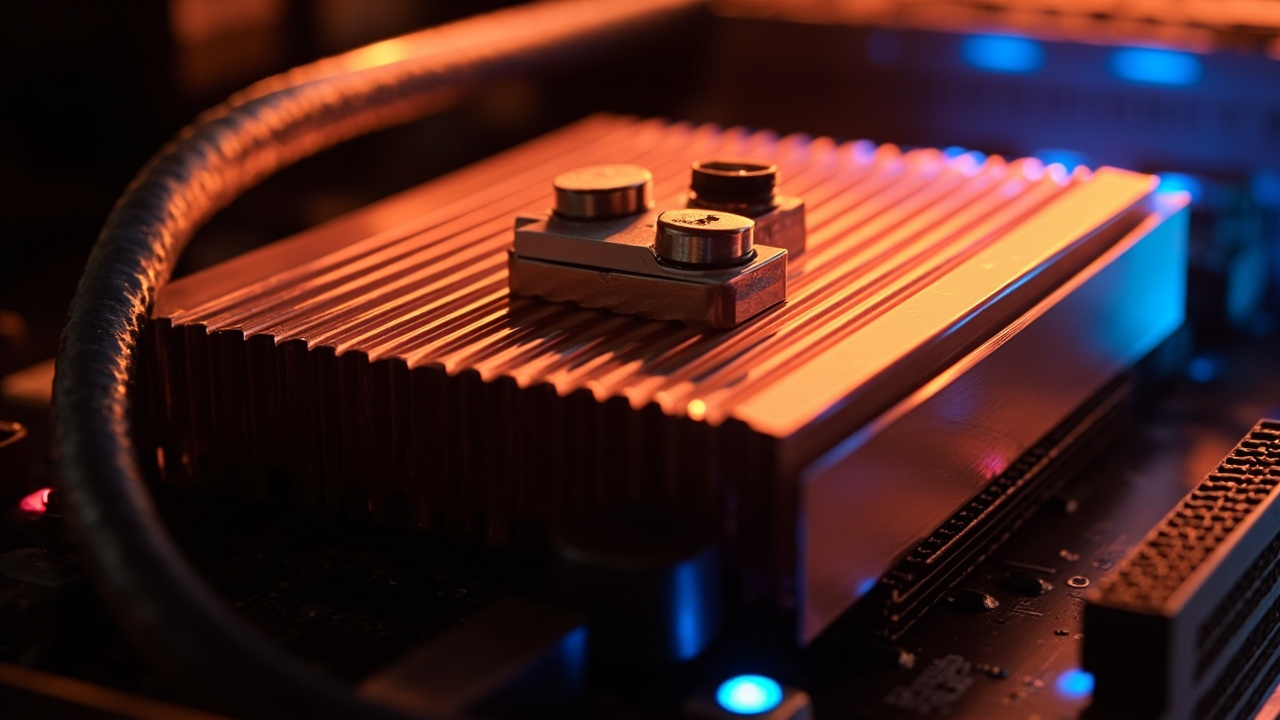
- Direct-to-chip cold plate: cold plates bolted to the CPU/GPU with water or coolant circulation. Mature technology, relatively easy to integrate into existing servers.
- Immersion: complete servers submerged in dielectric fluid. High efficiency, but it completely changes the operating model (you cannot physically ‘open the server’ without pulling the tank).
- Spray/2-phase: coolant that is sprayed or evaporates onto the chip. A compromise between cold plate and immersion, with less operational change.
Recommended Adoption Phases
- Phase 1: measure. Install instrumentation on existing racks to get real load profiles rather than estimates. This phase takes 4-8 weeks and is the foundation of every subsequent decision.
- Phase 2: pilot on one rack. Select a rack with high load, install liquid cooling, and run it for 90 days. Compare PUE, operating temperature, and operational complexity.
- Phase 3: scale-out by zones. If the pilot confirms the case, expand zone by zone across the data center (not rack by rack) to simplify supporting infrastructure.
- Phase 4: full conversion. Only when the business case clearly justifies it. Migrating an entire data center takes months and must be planned with the same rigor as a full data center migration.
Common Mistakes in Adoption
- Choosing technology before measuring actual density. Actual density differs from documented density. Measure first.
- Underestimating the change in operations. Liquid cooling has fewer tuning points but requires different expertise. The facilities team needs specific training.
- Not considering maintenance. Immersion completely changes how hardware maintenance is done. Cold plate is closer to traditional cooling.
- Forgetting the impact on the data center layout. Liquid cooling systems require space for manifolds, CDUs (Coolant Distribution Units), and pumps. They change the physics of the space.
Legacy Server Compatibility
Direct-to-chip cold plate is the most compatible option: it can be adapted to existing servers with kits from the server manufacturer. Immersion generally requires servers designed for immersion or adaptations that affect warranty.
If you have a mix of legacy and new servers, direct-to-chip cold plate is more flexible. If you are going greenfield, immersion has the best PUE.
Regulatory and Standards Framework
ASHRAE TC 9.9 covers the thermal guidelines for data centers, including limits for operation with liquid cooling. ASHRAE published the extended guide for immersion and cold plate in 2022.
Server manufacturers (Dell, HPE, Lenovo, Supermicro) publish compatibility guides with specific liquid cooling systems. Server warranty may be affected if a non-certified system is used.
Sources
[1] ASHRAE TC 9.9 — Thermal Guidelines for Data Processing Environments — https://www.ashrae.org/technical-resources/bookstore/thermal-guidelines-for-data-processing-environments
[2] Uptime Institute — Liquid Cooling Survey — https://uptimeinstitute.com/
[3] Vertiv — Liquid Cooling Solutions — https://www.vertiv.com/en-us/solutions/learn-more/it-management/liquid-cooling/
[4] Schneider Electric — Liquid Cooling Reference Designs — https://www.se.com/ww/en/work/solutions/data-center/liquid-cooling/
Want to master this?
Noxtel Academy →