Grounding (MGB) in data center: why your cabinets fill with static and how to fix it with proper bonding
Grounding in a data center is the least visible but most critical electrical system to prevent equipment damage from electrostatic discharge (ESD) and overvoltage. When cabinets ‘fill with static’ or get shocked when touching equipment, the problem is 95% of the time a poorly designed or poorly verified grounding system. This article covers the 4 critical points your electrical vendor does NOT verify for you: resistance of the grounding system, potential equalization, MGB vs TGB, and metallic channel isolation. If you have cabinets with static, this guide tells you where to start. What follows applies to data centers with cabinets that suffer recurring static discharges, or where the electrical vendor delivered the installation without a grounding verification report. The solution is NOT adding more ground cables — it is verifying the existing system and correcting the 4 typical failure points.
Why cabinets ‘fill with static’ (the diagnosis)
Typical phenomenon:
- Operator touches the cabinet and receives a shock. Typical voltage: 1,000-5,000 V. The discharge can damage electronic components in the server.
- The air around the cabinet feels charged. Measured with an electrometer, there is 500-2,000 V of potential in the air near the cabinet.
- Components in the server fail without explanation. ESD can damage chips without leaving a visible mark. The damage appears weeks later as component failure.
The typical root cause is NOT lack of a ground cable. It is that the ground cable is connected, but the resistance of the grounding system is too high to drain the static charge quickly. Or worse, there is a problem of potential equalization between the cabinet and other equipment, creating a voltage difference that manifests as static. Your electrical vendor probably measured continuity of the ground cable (which IS connected) and approved the installation. What they did NOT measure is the actual resistance of the grounding system under load, the equalization between cabinets, and the integrity of the bonding network.
Critical point #1: Grounding system resistance
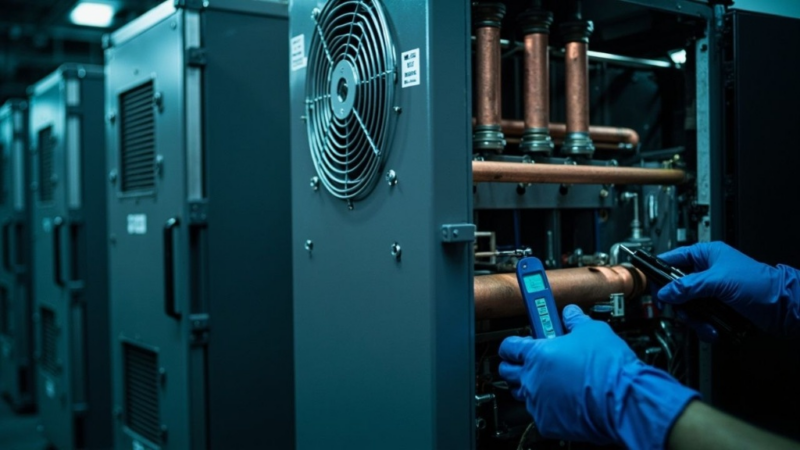
The most basic parameter of any grounding system. Measured with a ground resistance meter (megger or clamp meter). Acceptable values:
- Data center grounding system (MGB): less than 1 ohm resistance to earth ground. Measured at the main grounding bar.
- Telecommunications grounding bar (TGB): less than 1 ohm resistance to MGB. Measured between the TGB and the MGB.
- Equipment grounding conductor: less than 0.5 ohm resistance from cabinet to TGB. Measured at each rack.
If any of these measurements exceeds the limit, the grounding system is insufficient to drain ESD quickly. Your vendor probably never measured this — they measured continuity only, which is different from resistance to ground.
Critical point #2: Potential equalization
Equalization means that all metallic parts (cabinets, cable trays, conduits, racks, equipment) are at the same electrical potential. If two metallic parts are at different potentials and someone touches both simultaneously, they receive a discharge. How to verify:
- Measure voltage between any two cabinets in the same row with a multimeter in millivolts scale.
- Acceptable value: less than 50 mV difference. If there is a higher difference, there is a problem of bonding between the cabinets.
- Verify that each cabinet is bonded to the bonding network with a dedicated conductor (not just chained through adjacent cabinets).
Equalization is the parameter most often ignored by vendors. It is not optional; it is part of basic electrical design per NFPA 70 NEC 2023 Article 250 and TIA-942-B-2023 Section 5.4.
Critical point #3: MGB vs TGB (many confuse them)
Two different things that must be bonded but are not the same:
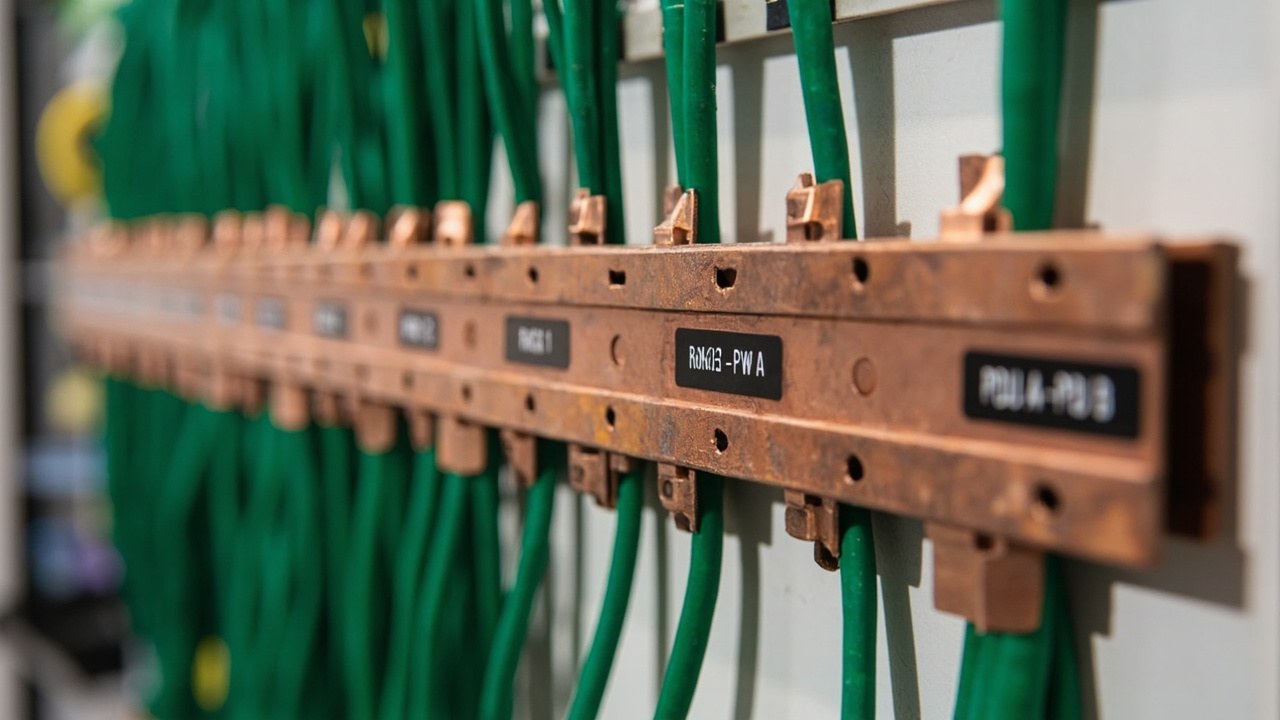
- MGB (Main Grounding Busbar): the main bar that connects to the building grounding system (ground rods, building steel, water pipe). Typically located in the main electrical room.
- TGB (Telecommunications Grounding Busbar): the bar local to the data center that connects to the MGB and serves as the bonding point for cabinets, trays, and equipment.
- The bonding between MGB and TGB must be a dedicated conductor (typically 6 AWG or larger copper), not through the building structure.
Many vendors connect cabinets to the building structure and assume that ‘grounds the system’. It does. The bonding must be to the TGB, which is bonded to the MGB, which is bonded to earth. Three layers, not one.
Critical point #4: Metallic channel and tray isolation
Metallic cable trays and conduits must be bonded to the TGB. If not, they float at unknown voltage and become ESD sources or shock hazards. How to verify:
- Each section of metallic tray must be bonded to the TGB with a dedicated conductor (typically 6 AWG).
- Each conduit section must be bonded with grounding bushings, not just continuity through the fittings.
- Verify with multimeter that the tray resistance to TGB is less than 0.5 ohm.
If your trays or conduits are not bonded, you have a hidden ESD source. The operator walks past a tray, builds up a charge, then touches a server and discharges. The server fails weeks later.
How to request the verification from your electrical vendor
Specific request to your vendor:
- Measurement of grounding system resistance at MGB, TGB, and each cabinet. With values in ohms. Not just ‘continuity verified’.
- Measurement of potential equalization between cabinets, with values in millivolts.
- Verification of MGB and TGB connection with conductor gauge and path.
- Verification of bonding of metallic trays and conduits to TGB, with conductor gauge and resistance values.
Request the report in writing, signed by a certified electrical perito. If your vendor resists, they probably never did these measurements on the original installation. That is valuable information.
When the problem is NOT electrical but environmental
Some cases of ‘static’ are not electrical problems but environmental:
- Relative humidity below 30%: in dry environments, the human body and equipment accumulate static charge faster. Solution: increase humidity to 40-55% per ASHRAE TC 9.9.
- Synthetic carpets or vinyl floors: generate triboelectric charge with walking. Solution: anti-static flooring or mat at the operator workstation.
- Clothing: synthetic fabrics generate more charge than natural fibers. Anti-static uniforms for operators working in DC.
If the grounding system is verified OK and static persists, look at humidity and flooring. The problem is not always the cables.
The corrective plan when EVERYTHING is wrong
If your DC has multiple grounding deficiencies, the corrective plan in order:
- Install or verify MGB. If the MGB does not exist, install one with proper connection to earth (ground rods + building steel).
- Install TGB local to the DC with 6 AWG conductor to MGB. Each cabinet connects to the TGB with dedicated conductor.
- Bond all metallic trays and conduits to TGB with dedicated conductors and grounding bushings.
- Measure equalization between cabinets and verify it is < 50 mV. If not, add bonding jumpers.
- Sign a corrective report with all values measured. Keep it accessible for the next maintenance cycle.
Cost: USD $2,000-8,000 (approx. $35,000-140,000 MXN at 17.5 MXN/USD, verify Banxico FIX on publication day) for a typical DC. Time: 2-4 weeks. Cost of doing nothing: cumulative component failures, with cost per failure of USD $500-50,000 (approx. $8,750-875,000 MXN at 17.5 MXN/USD, verify Banxico FIX on publication day).
How to prevent future problems in new DCs
For new DCs or expansions:
- Specify the grounding system in the design phase with values in ohms and equalization in millivolts. It is not optional; it is part of the basic electrical design.
- Measurement of grounding resistance before energizing any equipment. Report signed by certified perito.
- Measurement of equalization between cabinets after installation. Report with values.
- Annual maintenance measurement. The grounding system degrades over time (corrosion, loose connections).
The cost of doing it right from the start is 10-15% more than doing it wrong. The cost of correcting it wrong is 3-5x more. The correct decision is the first one.
Summary: the 4 points your vendor does NOT verify for you
Audit checklist:
- Grounding system resistance.
- Potential equalization between cabinets.
- Existence and correct connection of MGB and TGB.
- Bonding of metallic channels and trays to TGB.
If your electrical vendor does not deliver these 4 points verified, your DC has a grounding problem. The static you feel is the symptom; the root problem is one or several of these 4 points.
Sources
- TIA-942-B-2023 — Section 5.4: Grounding and Bonding Infrastructure — https://www.tia.org/standards/tia-942
- IEEE 1100-2020 — Recommended Practice for Powering and Grounding Electronic Equipment — https://standards.ieee.org/standard/1100-2020.html
- NFPA 70 (NEC) 2023 — Article 250: Grounding and Bonding — https://www.nfpa.org/codes-and-standards/all-codes-and-standards/list-of-codes-and-standards/detail?code=70
- BICSI 002-2024 — Data Center Design: Electrical Grounding Systems — https://www.bicsi.org/standards/data-center
Want to master this?
Noxtel Academy →