Free Air Cooling: Efficient Strategy to Complement Cooling of Mission-Critical Facilities
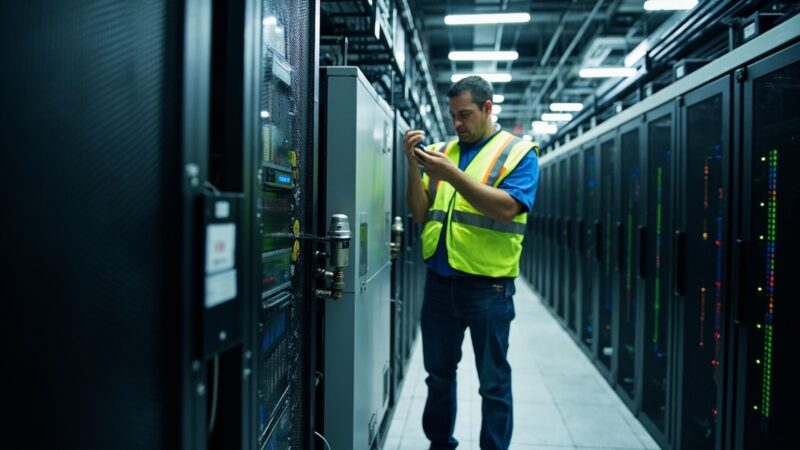
Currently, thermal management of critical facilities is a constant challenge due to the need to maintain optimal availability and performance of equipment —such as data centers, telecommunications rooms, and server rooms— represents a constant challenge and a significant operating cost.
Traditional cooling systems consume a massive amount of energy, impacting both the budget and the carbon footprint of companies.
But, what if you could leverage an unlimited and free resource to keep your equipment at the ideal temperature? This is where Free Air Cooling comes into play.
What is Free Air Cooling?
Free Air Cooling, or “free air cooling”, is a cooling strategy that uses the naturally colder outside ambient air to cool interior spaces when weather conditions permit.
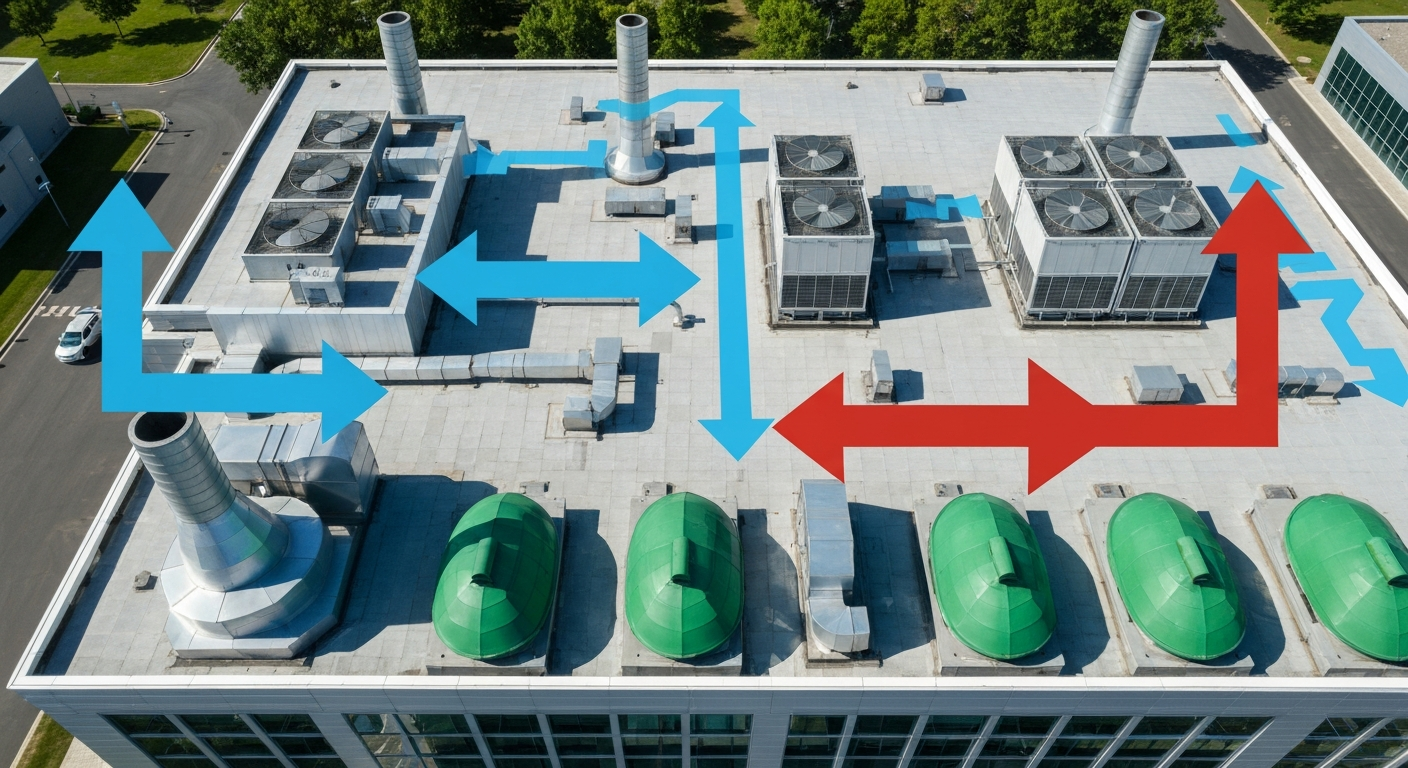
Instead of relying exclusively on energy-intensive refrigeration compressors (such as those in conventional air conditioners), this system introduces filtered outside air directly into the facility, expelling hot air from the interior.
When the outside temperature is low enough, Free Air Cooling systems can partially or fully take over the thermal load, drastically reducing or even eliminating the need to activate the costly compressors.
Key Benefits of Free Air Cooling
Implementing Free Air Cooling solutions offers a series of transformative advantages for any critical facility:
- Energy Efficiency and Cost Savings: It is the most obvious benefit. By relying less on compressors, electrical consumption is drastically reduced, which translates into lower energy bills and a rapid return on investment.
- Sustainability and Carbon Footprint Reduction: By reducing energy consumption, companies actively contribute to the reduction of CO2 emissions and a more ecological operation, aligning with sustainability objectives.
- Greater System Reliability: By relieving the workload of traditional cooling systems, wear on their components is reduced, extending their useful life and decreasing the likelihood of failures.
- Lower Maintenance: By operating less frequently, compression equipment requires less maintenance, optimizing resources and technical staff time.
- Extended Life of IT Equipment: Maintaining a more stable and controlled ambient temperature helps prevent overheating of servers and other equipment, extending their operability and performance.
- Flexibility and Scalability: Free Air Cooling systems can be designed to work independently or as a complement to existing systems, adapting to the infrastructure growth needs.
How Does It Work? (Basic Principle)
In its simplest form, a Free Air Cooling system consists of:
- Air Intake Unit: Equipped with high-efficiency filters to ensure that only clean air enters the interior.
- Fans: That drive the outside air into the room.
- Smart Sensors and Controls: That constantly monitor both outside and inside temperature and humidity, deciding when it is optimal to use free air and when it is necessary to activate or supplement with mechanical cooling.
- Air Extraction Unit: To expel hot air from the interior.
There are variants such as Direct Free Cooling (outside air is introduced directly) and Indirect Free Cooling (where a heat exchanger transfers energy without mixing air flows), each with its own applications and advantages.
A Cooler and More Efficient Future
Free Air Cooling is not just a trend, it is an effective strategy in the way we cool our most critical facilities.
It represents a step forward towards operational efficiency, environmental sustainability, and infrastructure resilience.
If you are looking to optimize the performance of your data center, reduce costs, and contribute to a greener future, Free Air Cooling is an option that can be considered as part of a comprehensive cooling strategy
Consider integrating this technology into your cooling strategy and experience the benefits of intelligent and natural cooling.
Want to master this?
Noxtel Academy →