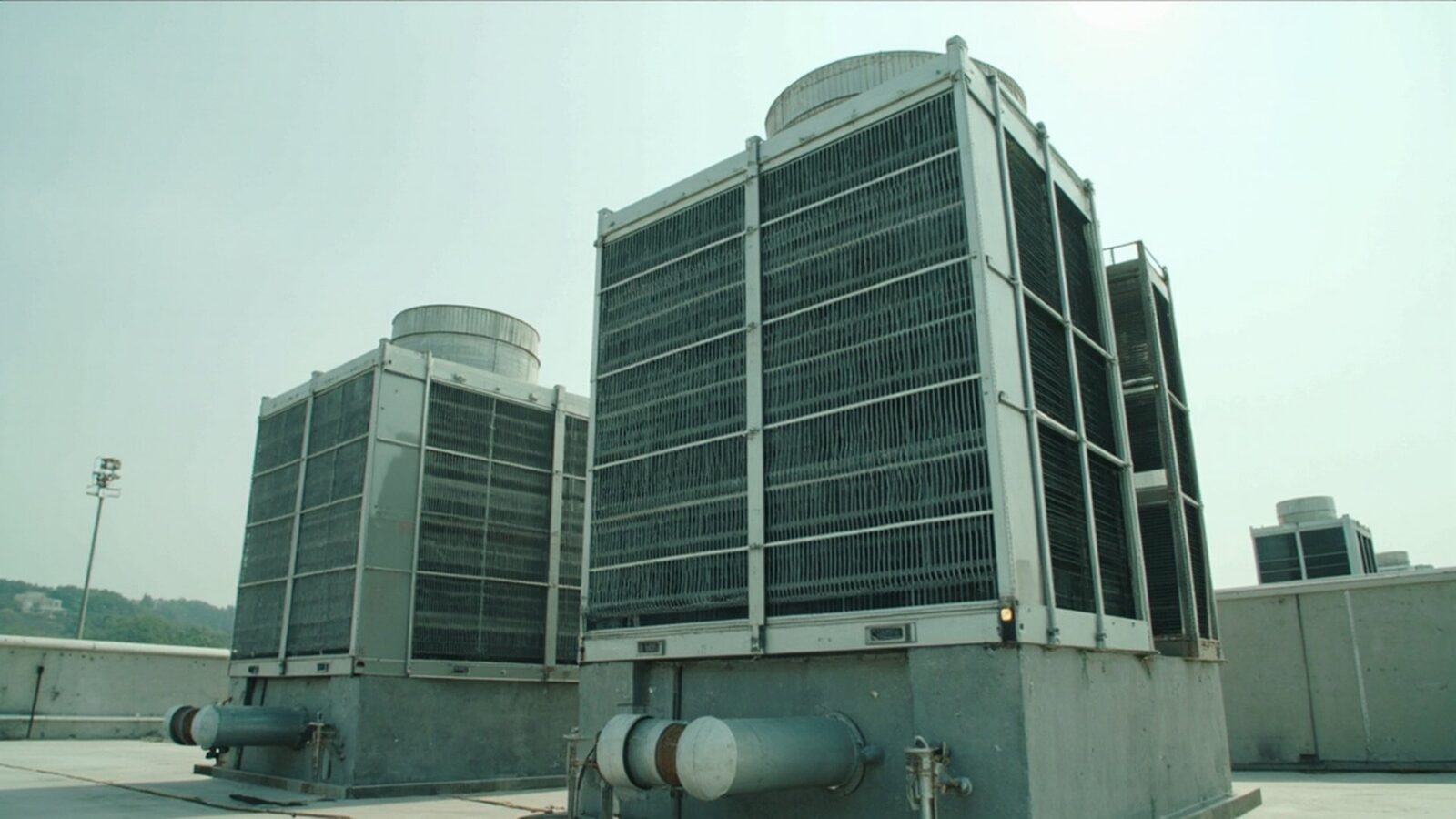
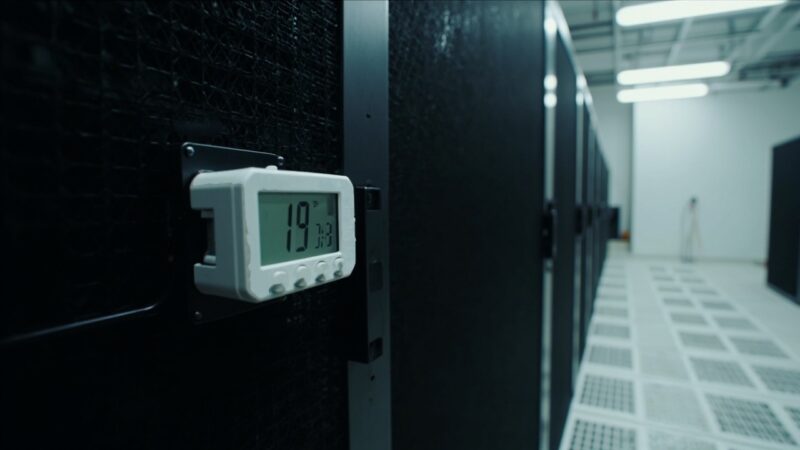
Water, not power, is the bottleneck for data centers in Mexico toward 2026. Querétaro, Monterrey, Guadalajara and CDMX concentrate 78% of the installed DC capacity in the country, and all four are in zones where CONAGUA reports medium-high or high water stress. If your hyperscale data center aspires to scale to 20 MW with evaporative water cooling (cooling towers, chillers with evaporative condenser), it needs between 1.2 and 2 million liters of water per day. That is no longer politically viable in Querétaro, and in Monterrey it will become less so every year.
Closed-loop liquid cooling (liquid cooling in a closed circuit) is the only architecture that breaks that constraint without sacrificing density. This article covers how it works, when it makes sense, when it does NOT, and the 4 most common implementation mistakes at Mexican sites that are deploying it.
What closed-loop is and why it is not the same as immersion or direct-to-chip
There are three liquid cooling architectures that get confused in vendor marketing, and only one of them is closed-loop:
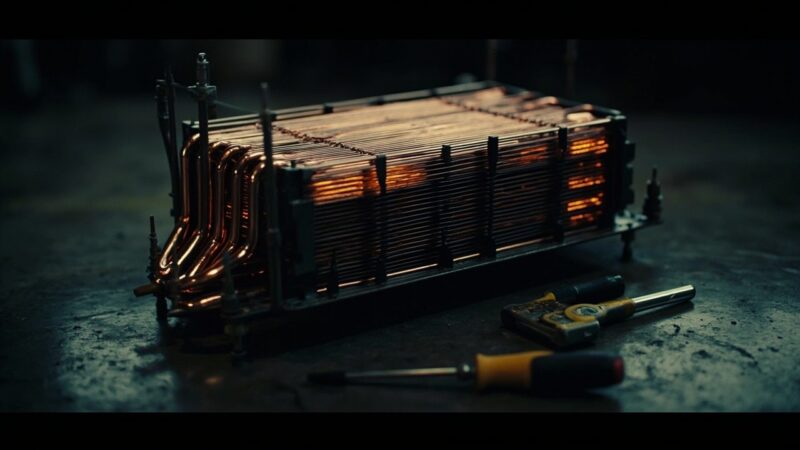
Direct liquid cooling (DLC) or cold plate: the coolant (water or glycol) circulates through cold plates bolted to the CPU/GPU. The circuit that touches the chip is closed, but the heat rejection to the outside can be done with a dry cooler (no water) or with a cooling tower (with water). The critical point is whether the loop that touches the chip is open or closed to the environment.
Immersion cooling: the entire server is submerged in a dielectric fluid in a tank. There is no water in the chip loop, and heat rejection is typically by dry cooler or by a secondary water-glycol heat exchanger. It is closed-loop de facto, but with CAPEX and operational complexity much higher than DLC.
Closed-loop liquid cooling: the term is reserved for DLC with dry cooler (no cooling tower). The water or glycol in the primary loop never touches the environment; it is cooled by forced convection with air. Water consumption: essentially zero in normal operation.
The number that matters: WUE (Water Usage Effectiveness)
WUE measures liters of water consumed per kWh of IT load. A site with chillers and a cooling tower typically has a WUE between 1.5 and 2.5 L/kWh. A hyperscale site with closed-loop and dry cooler has a WUE between 0.0 and 0.2 L/kWh, depending on whether the dry cooler uses water for adiabatic cooling during extreme heat peaks.
For a 10 MW DC, that difference amounts to between 13,000 and 22,000 m³ of water per year. In terms of municipal water stress, it is the equivalent to the annual domestic consumption of 800 to 1,400 homes. In Querétaro or Monterrey, where municipalities are already rationing in dry years, that figure is politically unsustainable for an operator that aspires to expand.
When closed-loop is the right answer
Closed-loop makes sense in a specific subset of cases. It is not for all data centers, and pushing it where it does not apply is one of the most expensive sources of failed projects I see.
Medium-high density per rack (between 25 kW and 80 kW per rack). Below 20 kW/rack, a properly engineered air system (cold aisle containment, right-sized CRAC) is still cheaper. Above 80 kW/rack, DLC starts to fall short and it makes sense to move to immersion.
Loads with a high and stable thermal profile: AI training or inference clusters, where the GPU consumes between 300 W and 700 W per chip with a high duty cycle. Here air falls short at 6-8 kW per rack, and closed-loop makes it possible to reach 40-60 kW with two cold plates per server.
Sites in zones with confirmed high water stress (Querétaro, Monterrey, the semi-arid zones of Bajío and the north). The calculation is straightforward: if your 2027 target WUE is below 0.5 L/kWh, air with a cooling tower does not get there, not even with free cooling.
Where the CAPEX of a dry cooler + CDU is justifiable against water OPEX. At sites with an industrial water tariff above 25 pesos per m³ and projected consumption above 100,000 m³ per year, the payback period of the closed-loop is typically 2 to 3 years.
When it does NOT apply (and they will sell it to you anyway)
There are three cases where closed-loop is the wrong answer, even though every CDU provider will tell you otherwise:
Density below 15 kW per rack. If your load is general-purpose CPU with a low utilization factor, the ROI does not close. The dry cooler + CDU costs you between 1.5 and 2.5 million dollars per MW of cooling capacity, and that is paid for with energy and water savings, not by merely having it.
Legacy sites in cold zones. If you are in a city with an average dry bulb temperature below 22°C (Toluca, Puebla, the highlands of the State of Mexico), free cooling with direct air or with a simple dry cooler gives you WUE 0 without paying the CAPEX of a CDU. The technical solution to water stress in a cold climate is not closed-loop, it is a better air architecture.
Where you already have a chiller with a cooling tower running. The brownfield retrofit to closed-loop costs more than it looks, because the existing hot water distribution is not built for the small delta-Ts of closed-loop. At sites where the current system is less than 5 years old, it usually makes sense to wait for the next investment cycle and engineer the full replacement.
The 4 most expensive mistakes in closed-loop implementations in Mexico
Undersizing the dry cooler for the worst-case scenario instead of the average. The dry bulb temperature in Monterrey or Querétaro can reach 42°C in heat waves. If you size the dry cooler for the 95th percentile, you end up with a site that throttles the GPUs on 5 days per year, and in an AI cluster that translates into training jobs that restart or are delayed by 24 hours. Size for the 99th percentile with a 5°C margin.
Not specifying the correct glycol for the temperature range. Pure water freezes above 0°C; that is not a problem in Querétaro, but it is at sites above 2,200 msnm such as Toluca or Zacatecas in winter. Ethylene glycol or propylene glycol mixes at 30-40% lower the freezing point, but they also lower the heat capacity. What you save on freezing you lose in efficiency, or you require additional pumping. Specify the glycol from the RFP, not afterwards.
Forgetting pressure control on the primary loop. The difference between a closed-loop system that runs for 10 years and one that leaks every 6 months is the quality of the pressure control. Thermal expansion + load transients on GPU cluster startup generate pressure spikes that blow out gaskets. The cheap option: a badly sized expansion tank. The correct option: a bladder tank pressurized with nitrogen and relief valves calibrated to the maximum pressure of the loop.
Treating closed-loop as a vendor black box. The CDU and the dry cooler are sold by an integrator, but the controls and the integration with the DC’s BMS are done by your team (or your facility integrator). If the controls are poorly mapped in your DCIM or in your BMS, you will get “cooling failure” events that are actually read artifacts, and that will cost you avoidable unavailability. Ask the provider for the complete BACnet/Modbus integration protocol and do the integration on site before energizing the first cluster.
The verdict
Closed-loop liquid cooling is not a marketing fad; it is the only architecture that allows scaling a medium- or high-density DC in a water-stressed zone in Mexico. The right question is not “closed-loop, yes or no”, but at what minimum density, at what ambient temperature, and with what target WUE. If your site is in Querétaro, Monterrey or CDMX with AI loads, and you aim for more than 5 MW, the answer in 2026 is yes. If you are in a cold zone with general-purpose loads and density below 15 kW/rack, the answer is still properly engineered air. There is no single right answer for all of Mexico’s data centers, but ignoring water stress as a variable is no longer an option.
Sources
[1] ASHRAE TC 9.9 — Thermal Guidelines for Data Processing Environments (5th Edition, 2021) — https://www.ashrae.org/technical-resources/bookstore/thermal-guidelines-for-data-processing-environments
[2] The Green Grid — Water Usage Effectiveness (WUE) Categorization — https://www.thegreengrid.org/
[3] CONAGUA — Water Atlas in Mexico 2024 (water stress by region) — https://sigagis.conagua.gob.mx/
[4] Uptime Institute — Data Center Site Infrastructure Tier Standard (Tier Classification System) — https://uptimeinstitute.com/resources/asset/tier-classification-system
[5] TIA-942-B-2023 — Section 6: Cabling and Pathways / Liquid Cooling considerations — https://www.tia.org/standards