Apodaca vs Querétaro vs San Luis Potosí: the New Data Center Geography in Mexico for 2026
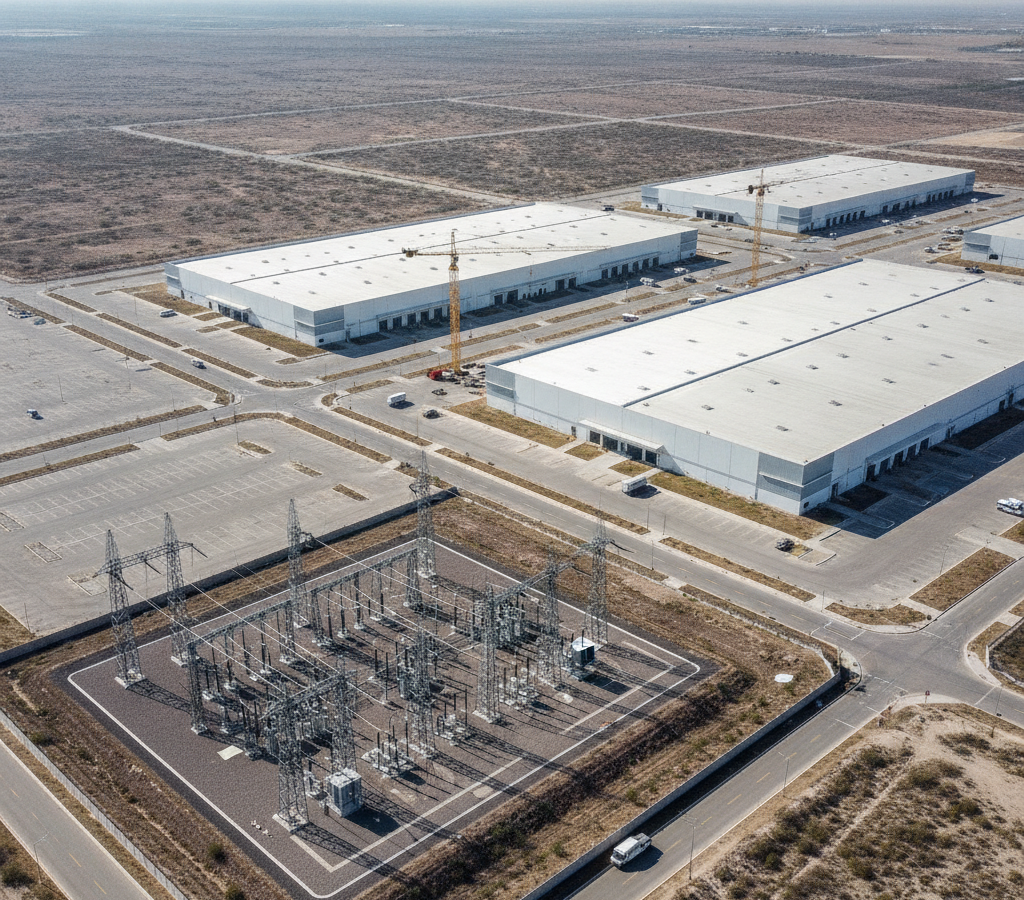
The concentration of data centers in Mexico is being reconfigured. Querétaro was during 2015-2022 the almost only destination for new sites, with 60% of the country’s hyperscale capacity and land prices that tripled between 2019 and 2023. Today there are clear signs that that hegemony is breaking: Apodaca (Nuevo León) captured 22% of the new site announcements in 2024, San Luis Potosí emerged as a third hub with anchor projects in public-private investment, and land and power availability in Querétaro is starting to become a bottleneck. Deciding where to put a data center in 2026 is no longer the easy question it was 5 years ago; it is a site selection decision with implications over 10-15 years for OPEX, regulatory risk, and talent availability.
This article compares the 3 hubs based on 6 variables that matter to the CFO and the CTO: power, water, connectivity, seismic risk, talent, and total cost over 10 years. The data comes from public sources (CRE, CONAGUA, INEGI) and from my direct experience with sites in the three hubs.
The 6 Variables That Matter for Site Selection
- Power: availability of CFE capacity, lead time for a medium voltage connection, and applicable tariff. Querétaro is saturated, with delays of 18-36 months for new medium voltage connections. Apodaca has better availability thanks to the established automotive industry. San Luis Potosí has competitive GDMTH tariffs for new projects, but limited distribution infrastructure in some areas.
- Water: critical factor for data centers with a cooling tower or an evaporative chiller. Querétaro is under medium-high water stress (CONAGUA 2024), and new industrial wells are practically impossible. Apodaca has high water stress but access to industrially treated water. San Luis Potosí has relatively better availability, although the Valle aquifer is over-exploited and CONAGUA restricts new concessions.
- Connectivity: number of carriers with their own fiber at the site, latency to the main IXPs, and route diversity. Querétaro has the advantage with Telmex, Axtel, Marcatel, Totalplay, and multiple carriers with a fiber presence. Apodaca is well served by carriers from the Monterrey-Saltillo industrial corridor. San Luis Potosí is in development, with 2-3 main carriers but less redundancy. For a data center with enterprise clients, the difference in available carriers is between 8-10 (Querétaro) and 3-4 (SLP).
- Seismic risk: an underestimated factor that weighs on operational continuity. Querétaro is in seismic zone B (low), Apodaca is in zone A (minimal), San Luis Potosí is in zone B (low). All three have manageable risk, but Apodaca has the structural advantage of being in seismic zone A, which reduces structural reinforcement CAPEX by 5-10%.
- Talent: availability of engineers, technicians, and specialized operators. Querétaro has the advantage with the Universidad Autónoma de Querétaro, ITESM Campus Querétaro, and the cluster of technology companies that have trained talent for 10 years. Apodaca has talent from the automotive cluster (UANL, ITESM Monterrey) that has been reconverted toward data centers. San Luis Potosí has less specialized talent and typically requires staff relocation or training programs from scratch.
- Total cost over 10 years: TCO that includes land, construction, power, water, connectivity, talent, and regulatory risk. Querétaro is the most expensive on land (3-4x SLP, 1.5-2x Apodaca), but it makes up for it with better talent and connectivity. Apodaca is in the middle. San Luis Potosí is the cheapest on land, but the TCO goes up because of staff relocation costs and lower carrier redundancy. For a 20 MW site, the 10-year TCO is typically: Querétaro 100% (base index), Apodaca 88-92%, SLP 80-85%.
- Power availability at 5 years. CFE can give you an immediate capacity contract, but real availability at 5 years depends on the investment CFE or the private party makes in substations and transmission lines. Querétaro is capped in most cases; CFE has started rejecting new connections of 10+ MW. Apodaca and SLP have a better outlook, but you have to verify case by case.
- Local regulatory risk. Every state has its own environmental, land use, and social impact regulation. Querétaro and Nuevo León are states with robust but enforced regulation. San Luis Potosí has more lax regulation, which reduces permitting time but raises the risk of future regulatory changes. The decision is not only “which state has better regulation”, but “which state has stable regulation that is applied consistently”.
- Opportunity cost of land. Buying land in Querétaro at a saturated price is a bet on appreciation. Buying in SLP at a low price is a bet on value created by development. The difference in 10-year TCO between buying and leasing land in these hubs can be 2-3x, which is a variable that is typically not in site selection financial models.
- Availability of carrier redundancy. In Querétaro, carrier redundancy is high but expensive (carriers know they can charge a premium). In Apodaca, redundancy is sufficient. In SLP, redundancy is limited; if you lose the main carrier, your site is left with a single path to the Internet. For an enterprise site, that is an SLA risk that must be quantified in the model.
The Querétaro Case: When It Is Still the Right Answer
Querétaro remains the best destination in Mexico for data centers that prioritize talent, connectivity, and supplier ecosystem. If your site is hyperscale or enterprise with a strict SLA, with clients that require low latency to multiple carriers, and where the availability of specialized technical staff is critical, Querétaro still wins. The density of facility providers, carriers, integrators, and consultants in Querétaro is between 3x and 5x that of SLP, and that translates into lower CAPEX and more predictable OPEX.
The problem: Querétaro is starting to saturate. For 2026, new hyperscale projects in Querétaro face waits of 24-36 months for a medium voltage connection, and the cost of land in the Querétaro-Marin-San Juan del Río corridor has tripled in 5 years. If your project is a new greenfield in Querétaro today, you are buying at a saturated market price, not at an early-mover price.
The Apodaca Case: The New Hub That Is Growing
Apodaca (part of the Monterrey metropolitan area) is the second hub in Mexico and it is growing at the fastest rate in the country. The reasons are three: power availability thanks to the established automotive cluster, reconvertible technical talent, and an industrial ecosystem that already understands large loads. For an enterprise site with a strict SLA, Apodaca is the right answer if Querétaro is saturated. The difference in connectivity (Apodaca has fewer carriers than Querétaro but covers the main ones) and in talent (ITESM Monterrey is comparable to the Querétaro campus) is marginal.
The challenge: Apodaca has the problems of any hub in rapid growth. The available land is in urbanized zones that require land use considerations, and the area carries water stress risk. For a site that aspires to 20+ MW in 10 years, Apodaca is competitive, but you have to secure water and power availability from the project kickoff.
The San Luis Potosí Case: The Emerging Hub
San Luis Potosí is the third hub, and the most recent bet. The advantages are land cost (50-70% lower than Querétaro) and relative water availability. The challenges are the supplier ecosystem and talent: there are fewer fiber carriers, fewer facility integrators, and the IT technical talent base is 1/3 of Querétaro’s. For a new site in SLP, the operational learning curve is 12-18 months, against 3-6 months in Querétaro.
The typical case for SLP: a 5-10 MW site that prioritizes CAPEX cost over ecosystem, with a single client (not multi-tenant enterprise), and with the possibility of investing in developing its own talent. For multi-tenant enterprise clients, SLP is still not competitive. The projection is that SLP consolidates as the third hub in 5-7 years, but today it is not ready for hyperscale.
The 4 Variables That Are Typically Evaluated Poorly
The Verdict
The decision between Querétaro, Apodaca, and San Luis Potosí is not geographic, it is financial and operational. Querétaro remains the right destination for data centers that prioritize ecosystem, talent, and connectivity over cost. Apodaca is the second hub for sites that need scale and power availability, and that are willing to invest in ecosystem development. San Luis Potosí is the low-cost bet for sites that prioritize CAPEX over OPEX, and that have an operational maturity horizon of 12-18 months. The question is not which one is best in the abstract; it is which one is best for your use case, your target client, and your investment horizon. In 2026, all three hubs have room; the choice depends on the business model, not on the real estate developer’s brochure.
Sources
CRE — Sistema de Información de Mercados (GDMTH and DIST tariffs, generation capacity by region) —.https://www.gob.mx/cre/acciones-y-programas/sistema-de-informacion-de-mercados.
CONAGUA — Atlas del Agua en México 2024 (water stress by region and state) —.https://sigagis.conagua.gob.mx/.
INEGI — Censos Económicos y Directorio Estadístico Nacional de Unidades Económicas (IT supplier density by state) —.https://www.inegi.org.mx/.
Uptime Institute — 2024 Global Data Center Survey (geographic distribution of data centers in Latam) —.https://uptimeinstitute.com/resources/asset/2024-global-data-center-survey-results.
CENAPRED — Atlas Nacional de Riesgos (seismic zone by municipality) —.https://www.atlasnacionalderiesgos.gob.mx/.
Want to master this?
Noxtel Academy →