Why your data center’s ESG report is probably lying: 4 inflated metrics the CNBV should audit

The report your corporate client no longer accepts without audit
The ESG report of a Mexican data center that is publicly listed, or is a subsidiary of a publicly listed company, is currently filed under the framework of the Sustainability Information Standards (Normas de Información de Sostenibilidad, NIS) issued by the CINIF, and for issuers listed under the CNBV Resolution requiring alignment with IFRS S1 and S2. The first reports under this mandatory framework were filed in 2026 covering fiscal year 2025 data. Limited external assurance becomes mandatory for listed issuers starting with the 2027 report, and reasonable assurance enters into force from 2028. This means that between 2026 and 2027, ESG reports of data centers in Mexico are in a gray zone: mandatory, but without mandatory external audit that verifies them. It is the window where metric inflation becomes easier.
The four metrics that are typically inflated
In the comparative analysis of ESG reports of data center operators and technology providers in Mexico and Latin America during 2024-2025, there are four metrics where the discrepancy between what is reported and what is verifiable is most frequent.
1. Percentage of renewable energy consumed
The annual “100% renewable matching” is the most inflated metric. The practice consists of buying as many MWh of renewable energy certificates (CEL in Mexico, REC in other markets) as MWh were consumed in the year, regardless of when or where that electricity was generated. The consequence is that a data center reporting 100% renewable may be taking fossil electricity from the grid 24 hours a day, compensated on paper by the annual CEL purchase.
Google documented that its hourly Carbon-Free Energy (CFE) matching in 2023 reached 64% in its global fleet, while its annual report claimed 100% renewable. The difference is the gap: 36% of real hourly consumption was fossil, even though the annual purchase compensated it.
Microsoft’s 2025 sustainability report documented that its Scope 2 emissions rose 30% year-over-year despite maintaining 100% annual renewable matching. The annual metric stopped reflecting operational reality when consumption grew faster than the ability to add renewables to the corporate portfolio.
2. Reported PUE versus measured PUE
The self-reported Power Usage Effectiveness (PUE) is the second place of discrepancy. The metric, defined by The Green Grid and standardized as ISO/IEC 30134-2:2022, measures total site energy divided by IT equipment energy. The global average documented by Uptime Institute 2025 is 1.54. Hyperscalers report 1.08 to 1.15.
Typical inflation: sites that report annual PUE calculated over the worst month (when the cooling system operates at optimal load) instead of the real annual average. Or sites that exclude from the calculation the consumption of auxiliary equipment (UPS in bypass, lighting, security systems) that inflate PUE. Or sites that report nominal PUE from the manufacturer’s design without continuous operational measurement.
3. Reported WUE versus total WUE
Water Usage Effectiveness is the metric where the discrepancy between reported and real is greatest, as developed in another article in this series. The official metric only captures site-direct water. The indirect water consumed by the thermoelectric plants that generated the electricity consumed by the data center is outside the report. The proportion between indirect and direct water per LBNL is approximately 12 to 1 in the U.S. sector average.
A data center that reports WUE of 0.5 L/kWh is reporting, per the LBNL method applied to the Mexican electricity mix, a real WUE close to 4 L/kWh. The reported metric is not false; it is incomplete by design.
4. Electronic waste recycling rate
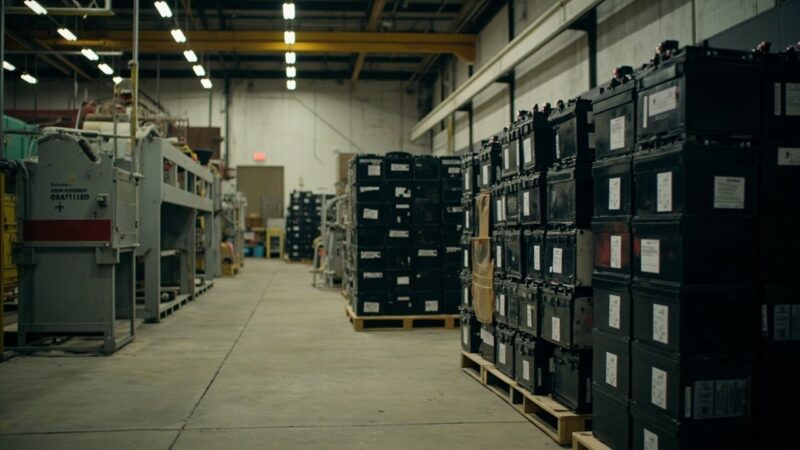
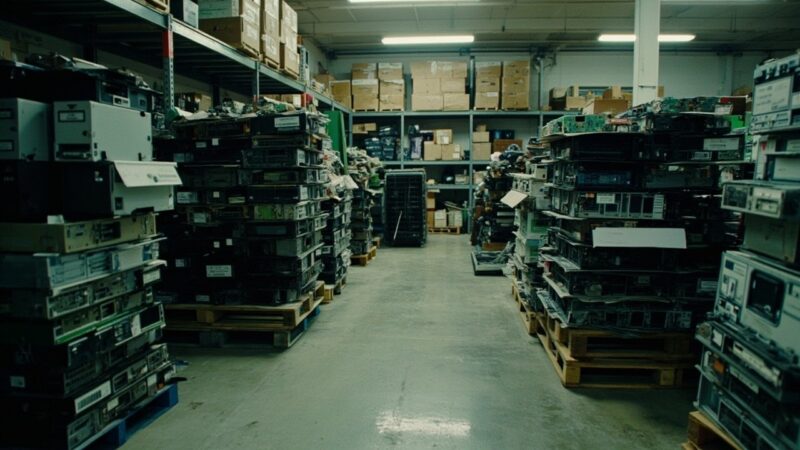
The “percentage of waste recycled” metric is the fourth place of inflation. The common practice is to report as “recycled” any waste delivered to a hazardous waste management service provider with SEMARNAT authorization. What the provider does with the waste afterwards — whether it actually recycles it, disposes of it, or stores it temporarily — is rarely tracked through to the end.
The UN Global E-Waste Monitor 2024 documented that only 22.3% of global electronic waste is formally collected and recycled. If a data center reports 95% recycling, the figure is plausible if the operator has contracts with R2v3 or e-Stewards certified recyclers. If it does not, the figure is probably self-reported without final disposal verification.
The CNBV framework that should audit
The CNBV Resolution published on January 28, 2025 in the DOF, which modifies the Single Circular of Issuers, requires issuers listed in the RNV to report sustainability aligned with IFRS S1 and S2. The first mandatory report was in 2026 covering 2025 data. Mandatory limited external assurance starting with the 2027 report. Reasonable assurance from 2028.
The CINIF issued the Sustainability Information Standards (NIS A-1 and NIS B-1) in force since January 1, 2025. NIS B-1 requires disclosure of 30 Basic Sustainability Indicators (Indicadores Básicos de Sostenibilidad, IBSO): 16 environmental, 6 social and human capital, and 8 governance. The four inflated metrics described above correspond to specific environmental IBSOs.
What the current framework does not do is cross sustainability report data with verifiable operational data. The CNBV does not require that the renewable energy report be accompanied by granular hourly matching evidence. The CNBV does not require that the WUE report be accompanied by the indirect water factor. The CNBV does not require that the recycling report include final disposal certificates from the recycler.
Why this is the moment to correct
There is an operational window between 2026 and 2028 where Mexican ESG reports will be in mandatory format but without external audit that verifies them thoroughly. That window is exactly where international corporate greenwashing practices have proven most active.
In Europe, where IFRS S1 and S2 are already mandatory under the CSRD, 2025 reports already generated the first adjustments by external auditors. Mexico is two years behind. What is reported in 2026 and 2027 without auditors will set precedent for the metrics that the 2027 limited assurance will have to review.
The cost of correcting an inflated metric in the 2026 report is much lower than correcting it in 2028 when external audit is already documenting the discrepancy. The reasonable question for a CFO signing the report is: how defensible is each figure if an auditor challenges it in 18 months?
What can already be done in the 2026 report
For a data center operator filing ESG report in 2026 covering 2025 data:
- Change the renewable energy metric from “100% annual matching” to “X% hourly carbon-free energy matching”. The hourly metric is defensible and comparable with the international standard. The annual metric is the one that will be questioned in the first round of limited assurance.
- Accompany the self-reported PUE with the measurement methodology. That includes: period covered, whether it includes auxiliary systems, IT energy calculation base, instrumentation used. The documented methodology allows an auditor to validate it, not just the figure.
- Add to the direct WUE the indirect water estimate with the applicable electricity mix factor. It is additional disclosure that the auditor will eventually ask for; reporting it proactively in 2026 prevents it from appearing as a finding in 2028.
- Verify the waste recycling chain through to the final recycler. If the recycler is not R2v3 or e-Stewards, document the real destination. The self-reported “95% recycled” metric without verification will be the first place where an auditor asks.
Sources
- CINIF (2025). Normas de Información de Sostenibilidad NIS A-1 y NIS B-1. https://www.cinif.org.mx
- Diario Oficial de la Federación (28 January 2025). Resolución CNBV que modifica la Circular Única de Emisores — Reportes de sostenibilidad. https://www.dof.gob.mx
- ISSB (2023). IFRS S1 — General Requirements for Disclosure of Sustainability-related Financial Information. https://www.ifrs.org/issued-standards/ifrs-sustainability-standards-navigator/ifrs-s1-general-requirements/
- ISSB (2023). IFRS S2 — Climate-related Disclosures. https://www.ifrs.org/issued-standards/ifrs-sustainability-standards-navigator/ifrs-s2-climate-related-disclosures/
- Zevero (2025). Mexico Sustainability Reporting: NIS and CNBV Explained. https://zevero.earth/blog/mexicos-sustainability-reporting-cnbv-resolution-nis
Want to master this?
Noxtel Academy →