Why data centers are the next greenwashing scandal: what the EU has already started to regulate and Mexico has not
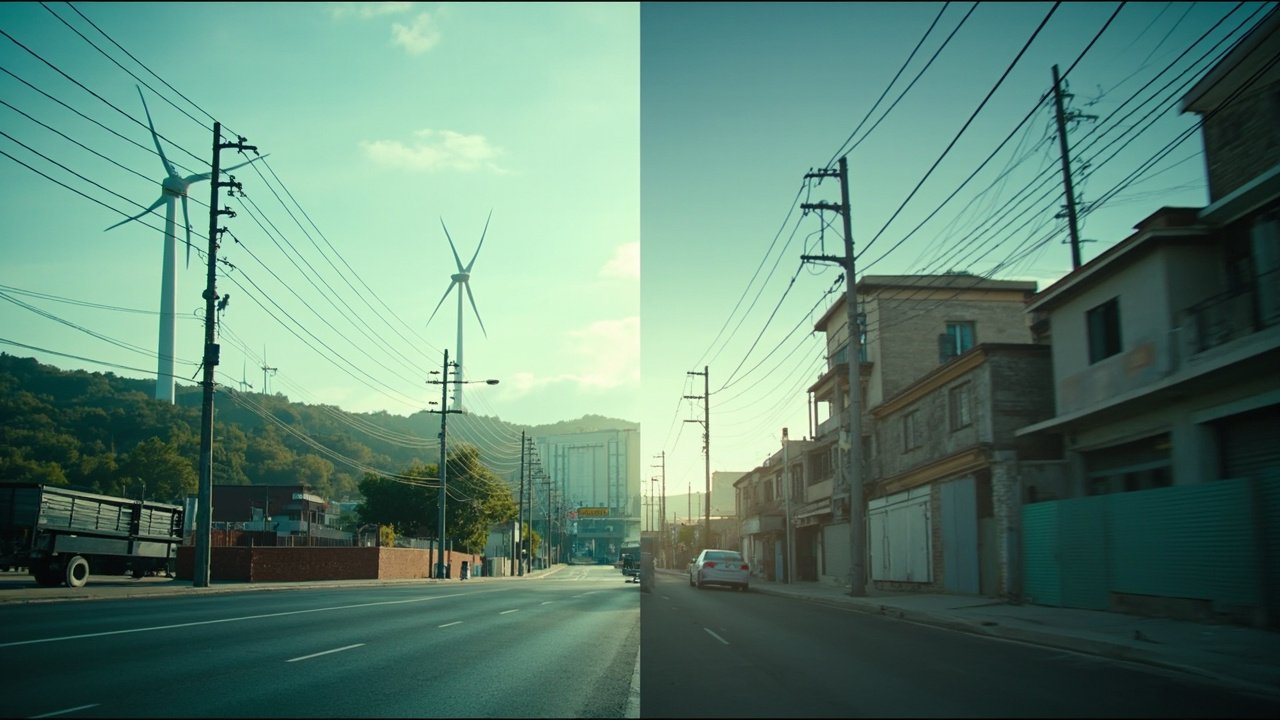
The case the European Union would rather not air out
The European Union Energy Efficiency Directive (EED) 2023/1791 has required, since September 2024, every data center with more than 500 kW of installed IT power to report annually sustainability indicators: PUE, WUE, renewable energy factor, waste heat reuse factor, refrigerant composition, operating temperature, and more. The regulation sounds robust on paper. The investigation published by Corporate Europe Observatory, AlgorithmWatch, and Investigate Europe in April 2026 shows that Microsoft and the lobbying group DigitalEurope drafted, word for word, the confidentiality clauses that turned that public database into a closed box. The rest of the operators got what the industry asked for: report without anyone being able to verify what each individual site reported.
What European regulation actually requires
Delegated Regulation 2024/1364 specifies 24 indicators that data centers must report. Implementation was phased in:
- September 2024: First reporting cycle. Initial estimated coverage at 33% of eligible centers.
- 2025-2026: Improved reporting rate, estimated at 50% or more.
- September 21, 2026 (upcoming): Start of the electronic sustainability label scheme, comparable across facilities.
The declared objective of the European Commission is “to increase transparency about the energy use of data centers and become a resource that informs better public policies and more sustainable digital asset acquisitions.” So far, the regulatory framework is legitimate and useful.
What the confidentiality clause — drafted by Microsoft according to the CEO investigation — modified was the access to individual data. The aggregated information at national level is available; the data per specific data center is protected as a trade secret. A Google data center that reports excellent PUE could be consuming an undocumented gigawatt and nobody could verify it through a freedom of information request.
The annual matching problem
One of the most widespread practices in the data center industry is the “annual matching” of renewable energy: buying as many MWh of renewables per year as MWh were consumed, regardless of when or where that electricity was generated. It is the practice that allows Google to report “100% renewable” since 2017.
Google was also a pioneer in “hourly Carbon-Free Energy matching,” reporting 64% carbon-free energy 24/7 across its global fleet during 2023 according to its 2024 environmental report. The difference between 100% annual and 64% hourly is the crack through which greenwashing enters: the rest of the time the data center is taking fossil electricity from the grid, but the annual purchase of renewables compensates it on paper.
Microsoft’s 2025 sustainability report documented that its Scope 2 emissions rose 30% year over year despite maintaining 100% annual matching of renewables, driven by massive AI compute demand. Annual matching stops working when consumption grows faster than the ability to add renewables to the corporate portfolio.
The context figures
According to the European Commission’s report on EED implementation:
- 2024: Data centers in Europe consumed 68 TWh of electricity.
- 2030 (projection): 114 TWh, equivalent to 3.2% of the bloc’s electricity consumption, up from 2.5% currently.
- The global average PUE documented by Uptime Institute 2025 is 1.54. Hyperscalers report PUE between 1.08 and 1.15.
- The IEA estimates that renewables contribute approximately 27% of data center electricity globally, with coal still near 30% (mainly in Asia).
The gap between the average PUE (1.54) and the hyperscaler PUE (1.10) does not translate linearly into lower environmental impact. A hyperscale campus consuming 500 MW at PUE 1.15 uses more total energy than 100 enterprise data centers consuming 2 MW each at PUE 1.80. Unit efficiency hides absolute scale.
What Mexico has and what it does not have
Mexico does not have a specific regulatory framework for reporting data center sustainability. What exists:
- NOM-001-SEDE-2012 (electrical installations) and energy efficiency regulations for commercial buildings from the National Commission for the Efficient Use of Energy (CONUEE).
- Energy Transition Law and international commitments under the Paris Agreement.
- Voluntary reporting under standards such as ISO 14001, ISO 14064 (GHG inventories), ISO 50001 (energy management), and certifications such as LEED or BREEAM for buildings.
What Mexico does not have is the mandatory reporting of PUE, WUE, and refrigerant composition by site. It also does not have a label comparable to the European one. That means the information about the environmental impact of a data center in Mexico depends on the operator’s willingness to document and publish.
Why this is the next scandal
Three dynamics make it predictable that the topic will escalate in the next two years:
- European regulation is hardening. The confidentiality clause is already weakened by the journalistic investigation. The European Commission has political pressure to open individual data. When that happens, companies with operations in Europe will have to publish what they hide today.
- Affected communities are organizing. In Mexico there are already documented cases of communities near new data centers asking for information on environmental impact. Social pressure increases when projects become more visible because of their electricity consumption.
- Corporate clients demand evidence. Global companies with net-zero targets are demanding auditable evidence of their data center providers’ electricity consumption and energy mix. A self-reported PUE without verifiable data will stop being acceptable in RFPs.
The regulatory risk for a Mexican company that provides data center services to global clients is concrete: if your client asks you for auditable evidence of your electricity consumption, energy mix, and waste disposal, and you cannot deliver it, the contract goes to another provider that can.
What can already be anticipated
For a data center operator in Mexico, the moves that make sense before Mexican regulation requires them:
- Instrument the site with electrical meters per rack and per cooling system. That turns consumption into verifiable data.
- Document the composition of monthly electricity consumption, not just annual. The hourly vs annual distinction is where greenwashing lives.
- Report PUE and WUE following the format of European Delegated Regulation 2024/1364, even if the Mexican authority does not require it. A report aligned with a recognized international standard is easier to audit than a proprietary format.
- Publish aggregated data at the site level and reserve operational details (specific capacity of each client, for example) as confidential. That is the balance the EU tried to strike and did not achieve.
Sources
- European Commission (2024). Delegated Regulation 2024/1364 — Sustainability indicators for data centres. https://eur-lex.europa.eu/legal-content/ES/TXT/?uri=CELEX:32024R1364
- Investigate Europe, Corporate Europe Observatory, AlgorithmWatch (April 2026). Big Tech data centres secrecy: EU law. https://www.investigate-europe.eu/posts/big-tech-data-centres-secrecy-eu-law-environment-footprint
- Uptime Institute (2025). Global Data Center Survey 2025. https://uptimeinstitute.com/resources/research-reports
- IEA (2025). Energy and AI — Special Report. https://www.iea.org/reports/energy-and-ai
- Sustainable Atlas (2025). Myth-busting Green IT & sustainable data centers. https://sustainableatlas.org/post/myth-busting-green-it-sustainable-data-centers-separating-hype-from-reality-2428
Want to master this?
Noxtel Academy →