
NFPA 75 vs NFPA 76: which standard applies to your data center in Mexico
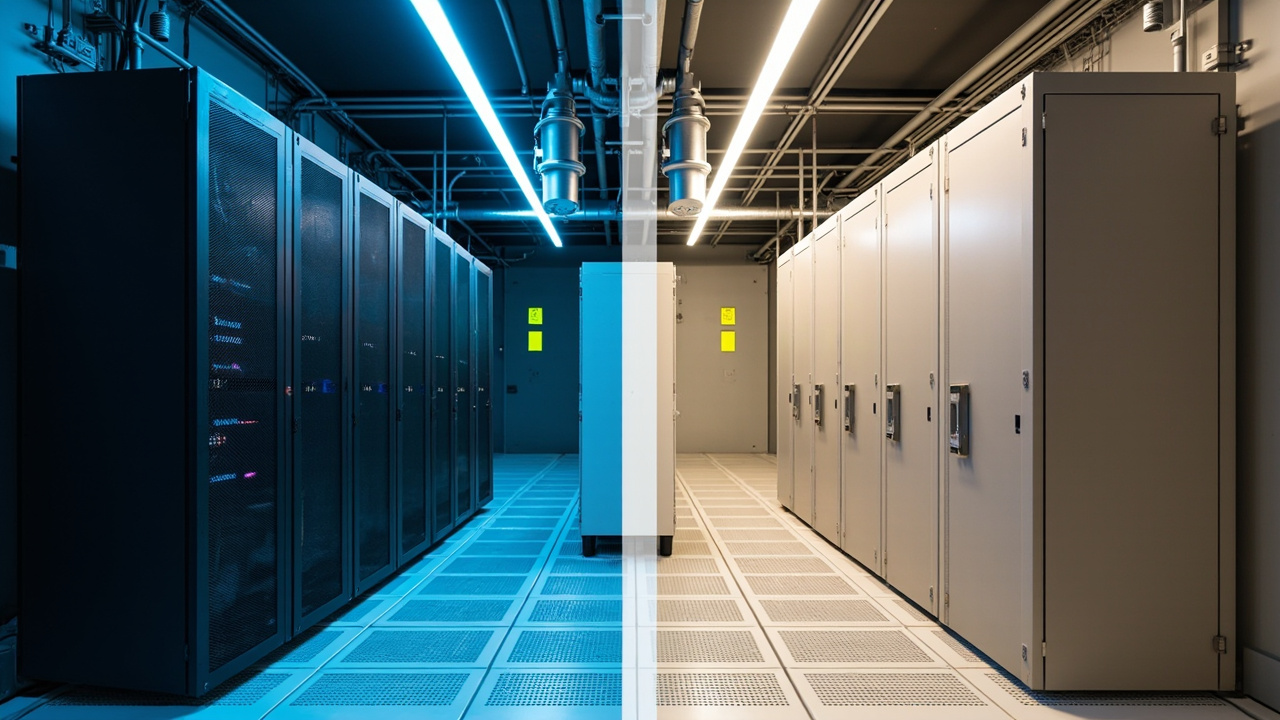
Data centers in Mexico that are not under SEMARNAT jurisdiction, nor under specific CFE electrical generation regulations, are usually audited against NFPA (National Fire Protection Association) standards. The two most important for site infrastructure are NFPA 75 (Standard for the Fire Protection of Information Technology Equipment) and NFPA 76 (Standard for the Fire Protection of Telecommunications Facilities).
For many operators and enterprise clients, the most common confusion is which one applies when there are mixed compute and telecom loads. This article breaks down the applicability criteria, the points where the standards diverge in requirements, and how to avoid over-designing or under-sizing your site’s fire protection system.
What each standard covers and who it applies to
NFPA 75 applies to fire protection of electronic data-processing equipment: servers, storage, local network equipment, compute infrastructure. NFPA 76 applies to fire protection of telecommunications facilities and equipment: telephone exchanges, switching systems, transmission equipment, fiber optics. Both are NFPA standards recognized in the United States and commonly referenced in Mexican local regulations (such as NOM-001-SEDE on electrical installations) but are not legally mandatory in Mexico, unless the client contract or insurance makes them enforceable. For modern data centers with mixed loads (compute, networking, telecom), the designer usually applies both in parallel: NFPA 75 for the white space area (where compute racks and associated electrical equipment reside) and NFPA 76 for telecommunications equipment (Meet-Me Room, carrier terminations, long-distance fiber infrastructure). This has been standard practice in Tier III and IV sites in Mexico since 2018; Tier II sites with limited equipment usually apply only NFPA 75.
The 5 technical differences between NFPA 75 and NFPA 76
Five points where the two standards diverge in practical requirements:
- Detection system: NFPA 75 requires air sampling smoke detection (ASD) for sites with more than 30 continuous racks. NFPA 76 allows traditional spot detectors (photoelectric) in lower-density sites, with ASD recommended but not mandatory.
- Suppression system: NFPA 75 accepts several alternatives (FM-200, Novec 1230, water mist for non-electronic spaces, oxygen reduction). NFPA 76 historically preferred FM-200 or similar, but editions 2020 onwards accept Novec 1230 and equivalents. In current data centers, suppression is typically with clean agents (Novec 1230 or FM-200) for equipment protection.
- Firestopping of penetrations: NFPA 75 is strict about sealing every opening that connects white space with adjacent areas (minimum T-rating of 2 hours for penetrations in firewalls). NFPA 76 allows equivalent sealing but treats telecom cabling with specific requirements to maintain signal integrity under fire conditions.
- Raised floor requirements: NFPA 75 requires raised floor with anti-fire seal at the floor-wall joint to maintain positive pressure and delay smoke. NFPA 76 treats raised floor as optional, given that historically many telecom sites did not use raised floor.
- Post-incident operational continuity: NFPA 75 incorporates operator response time clauses to limit propagation and maintain operation (loss prevention). NFPA 76 focuses more on telecommunications continuity (emergency calls, critical public services), with similar clauses but applied to network operation.
When only NFPA 75 applies (not NFPA 76)
Two cases where only NFPA 75 is needed:
- Edge data center without dedicated telecom equipment: only compute racks and associated electrical equipment. Carrier connectivity arrives via fiber that terminates in transceivers inside the racks, without a dedicated Meet-Me Room, without intermediate telecom equipment.
- Tier II or Tier I site with fewer than 30 continuous racks and no separate telecom room. The operation is essentially compute with standard connectivity.
When only NFPA 76 applies (rare in data centers)
One specific case where only NFPA 76 applies: telephone central office (CO) or Point of Presence (POP) that does not host client compute. The installation is essentially telecommunications: switching equipment, transmission, multiplexers, copper and fiber terminations, without data-processing equipment.
Common errors when designing or auditing
Four frequent errors in Mexican data centers that audit or certify against NFPA:
- Applying NFPA 75 to the Meet-Me Room: the MMR is fundamentally telecom and must comply with NFPA 76; applying NFPA 75 over-restricts penetration sealing options.
- Not documenting the physical separation between white space and MMR: if they share a wall or are in the same room, the auditor records the deficiency.
- Confusing FM-200 with Novec 1230 in legacy contractual clauses. FM-200 is being withdrawn from the market due to environmental impact potential (GWP > 3000); Novec 1230 (GWP < 1) is the de facto replacement. Contracts specifying FM-200 exclusively require updating.
- Underestimating the cost of the air sampling detection (ASD) system: a system for a 500 m² white space costs between USD 18,000 and 32,000 just for ASD detectors; traditional spot detectors cost between USD 5 and 15 each. The difference is recovered in lower consequences of a false positive, but requires budgetary justification.
Sources
- NFPA 75: Standard for the Fire Protection of Information Technology Equipment — https://www.nfpa.org/codes-and-standards/all-codes-and-standards/list-of-codes-and-standards/detail?code=75
- NFPA 76: Standard for the Fire Protection of Telecommunications Facilities — https://www.nfpa.org/codes-and-standards/all-codes-and-standards/list-of-codes-and-standards/detail?code=76
- NFPA (general): codes, standards and guides for fire protection — https://www.nfpa.org/
- OSHA 29 CFR 1910: Electrical Standards (complementary regulatory reference) — https://www.osha.gov/laws-regs/regulations/standardnumber/1910
- 7×24 Contacto: Mexican association specialized in operational continuity for data centers — https://www.7x24contacto.com/solutions
Want to master this?
Noxtel Academy →
