Environmental compliance for data centers in Mexico: the 4 SEMARNAT permits your CFO doesn’t know about
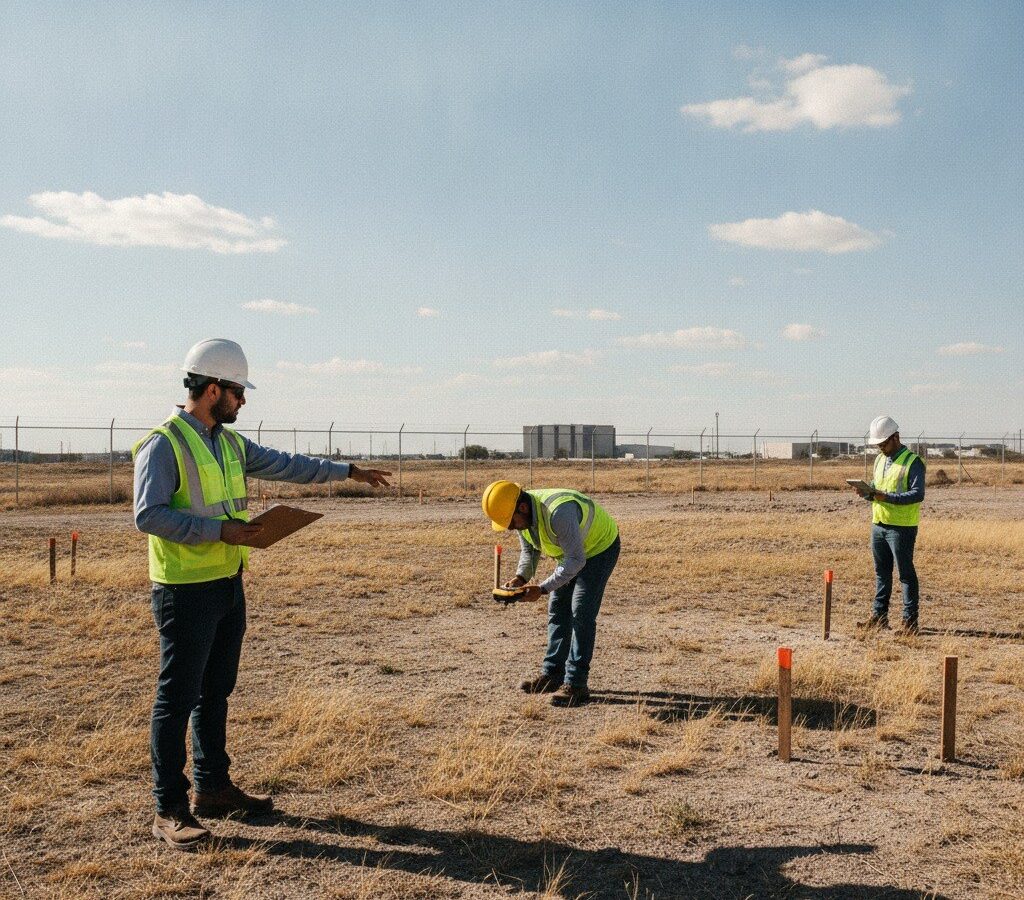
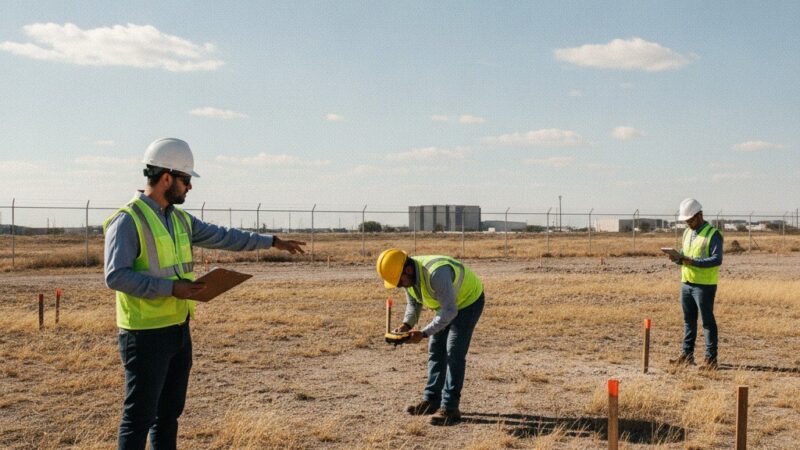
A 20 MW data center in Mexico generates 4 critical environmental permits before the first stone. The 4 procedures typically take between 8 and 18 months from kickoff to favorable resolution, and most greenfield projects underestimate this timeline by 50%. The reason: these permits are not only technical; they involve public consultation, social impact assessment, and coordination with three or more federal authorities and two or more state authorities.
Why data center environmental compliance is different from other industries
A data center has an environmental profile that differs from a manufacturing plant or a commercial building. What distinguishes it:
These five factors combined place the data center in a compliance zone that is not trivial but is not that of a refinery either. The authorities know it and the processes are reasonably well established, but the documentation for each permit is extensive and review times are what they are.
- Massive electricity consumption (typically between 5 and 50 MW per site) that translates into indirect CO₂ emissions if electricity comes from the CFE grid. This is the main driver of environmental impact.
- Water consumption for the cooling system (typically between 0.5 and 2.5 L/kWh if using a cooling tower, or 0 if using closed-loop dry cooling).
- Residual heat generation that, if not recovered, is vented to the atmosphere.
- Electronic waste at end of life (typically every 7-10 years a major server refresh is done).
- 24/7 operation with reduced staff, which in some jurisdictions simplifies public consultation (there is not so much impact on the local community).
The 4 permits (in order of when you need them)
1. Environmental Impact Manifestation (MIA) — SEMARNAT
The MIA is the federal environmental permit that evaluates the project’s environmental impact as a whole. It is processed before SEMARNAT through its Procedures portal. For data centers, the required MIA is the “Particular Modality” (because they are in zones where the impact is not critical, typically industrial parks or designated industrial zones).
- Land use compatible with high-intensity industrial activity.
- Compliance with state atmospheric emissions and noise standards.
- Solid urban waste and special waste management plan.
- Civil protection opinion (another sub-procedure within the license).
The MIA includes evaluation of: land use, impact on flora and fauna, water management, atmospheric emissions, hazardous waste generation, social impact, and mitigation plan. For a data center, the critical points are water consumption (if using a tower) and proximity to protected natural areas. The MIA takes between 4 and 10 months to resolve, depending on site complexity.
2. Operating License as Industrial Establishment — State/Municipality
This is a state or municipal license that authorizes the operation of the establishment. The authority varies by state: in Querétaro it is issued by the Secretariat of Sustainable Development (SEDESU), in Nuevo León by the Secretariat of the Environment, in San Luis Potosí by the Secretariat of Ecology and Environmental Management. It typically requires:
The state license takes between 2 and 6 months, and must be coordinated with the federal MIA. If the MIA has conditions (for example, installing a water treatment system), the state license will reflect those conditions.
3. Registration as Hazardous Waste Generator — SEMARNAT
A data center generates hazardous waste through several channels: UPS batteries at end of life (lead-acid or lithium), circuit boards with heavy metals, printer toners, and transformer oils. NOM-052-SEMARNAT-2005 (reformed in 2024) is the standard that establishes the identification, classification and characteristics of hazardous waste; it must be complemented by NOM-053-SEMARNAT-2005 (which determines the procedure for evaluating reactivity) and NOM-054-SEMARNAT-2005 (for evaluating leaching). These three standards, together, obligate hazardous waste generators to register before SEMARNAT and to submit a hazardous waste management plan.
Registration as a generator is done once (at the start of operations) and is kept up to date. The management plan is submitted at the start and reported annually. It takes between 1 and 3 months for the first registration, depending on documentation. This permit is independent of the MIA but is typically obtained in parallel.
4. Water use authorization (CONAGUA) — if applicable
If the data center will consume water from its own well, from a river, or from a municipal network that requires a federal concession, CONAGUA authorization is needed. For data centers in industrial parks that connect to the municipal drinking water network, a federal concession is typically not required, but the wastewater discharge permit is required (which is federal if the discharge is to a federal water body).
The wastewater discharge permit (NOM-001, NOM-002, NOM-003 according to discharge type) is processed before CONAGUA. For data centers with closed-loop systems and no process discharge (only sanitary), the permit is of lower complexity, but it is still required.
Realistic timeline for a greenfield project
For a 20 MW greenfield data center in Mexico, the typical environmental compliance timeline is this:
- Months -12 to -8: environmental project kickoff, consultant selection, start of the MIA. This phase includes site visit, flora/fauna survey if applicable, and the environmental baseline.
- Months -8 to -3: preparation and submission of the MIA to SEMARNAT’s portal. Includes integration of all technical studies (hydrology, noise, air, waste).
- Months -3 to 0: SEMARNAT review, possibility of additional requirements, favorable resolution. In parallel, state license processing and hazardous waste generator registration.
- Months 0 to 2: once with favorable MIA and state license, construction start with all environmental permits in hand.
The total process is 12-18 months. If the developer underestimates and starts the environmental process only 6 months before the target energization date, it will face a 6-12 month delay. This is the #1 cause of delay in greenfield data centers in Mexico, not power availability.
The 3 most common mistakes
- Starting the MIA too late. The data center development team typically prioritizes the electrical connection and connectivity (because they are the most visible permits), and leaves the MIA for last. The reality is that the MIA is the one that takes the longest and carries the most regulatory risk. The rule: start the MIA at least 12 months before the target energization date, ideally 15-18 months.
- Not correctly sizing water consumption in the MIA. If the MIA declares lower water consumption than the data center will actually have, it is exposed to an environmental sanction and a complementary MIA. For a tower cooling system, the calculation must consider the worst-case (maximum outdoor temperature, relative humidity, maximum evaporation). For a closed-loop system, make-up water is lower but not zero.
- Underestimating public consultation. Depending on the state and municipality, the MIA may require a public consultation with the local community. That consultation can extend the process 3-6 months if there is opposition. The way to mitigate is early community engagement (present the project before the formal MIA, answer questions, incorporate concerns into the design) instead of waiting for the regulatory consultation.
How to choose an environmental consultant for your data center
- Previous experience with MIAs for data centers in the specific state where your project is located. Each state has regulatory particularities; a consultant with experience in Querétaro knows SEDESU’s real timelines, while one with experience in CDMX may not be useful.
- Track record of MIAs approved without severe conditions. Ask the consultant for 3 references of recent MIAs in the industrial sector, and ask clients whether there were operating conditions that affected the project’s CAPEX or OPEX.
- Ability to integrate all permits into a single file. A good consultant does not only do the MIA; integrates the generator registration, the discharge permit, and the state license into a single deliverable, avoiding duplication and accelerating the process.
- Availability for public consultation. If your project will require public consultation, the consultant must have experience facilitating community meetings, not just delivering technical documents.
Not all environmental consultants have experience with data centers. The choice of consultant directly affects the timeline. Four criteria:
The verdict
Data center environmental compliance in Mexico is a serious process, not a checkbox. The 4 permits take between 8 and 18 months, and most projects that underestimate this timeline end up with 6-12 months of delay and additional costs. The right decision is to start the environmental process 15-18 months before energization, choose a consultant with verifiable data center experience, and correctly size water consumption and emissions. If your project is short on time, there are two ways to accelerate: early community engagement (reduces public consultation duration) and choosing a site in an industrial park with a regional MIA already approved (some industrial parks have a framework MIA covering individual projects, reducing the process to a specific MIA). Both require advance planning. There are no regulatory shortcuts in Mexico, and the ones that exist are risky and expensive. Starting early is the only robust strategy.
Sources
- SEMARNAT — Environmental Impact Manifestation procedures (Procedures portal) — https://www.gob.mx/tramites
- CONAGUA — National Waters Law and its Regulations (discharge permits and concessions) — https://www.gob.mx/conagua
- NOM-052-SEMARNAT-2005 — Identification, classification and characteristics of hazardous waste (complemented by NOM-053 for reactivity and NOM-054 for leaching) — https://www.gob.mx/semarnat
- PROFEPA — Federal Attorney for Environmental Protection (verification and sanctions) — https://www.gob.mx/profepa
- General Law of Ecological Balance and Environmental Protection (LGEEPA) — federal environmental framework — https://www.diputados.gob.mx/LeyesBiblio/pdf/LGEEPA.pdf
Want to master this?
Noxtel Academy →