Why 600 mm wide racks became the standard of the modern data center
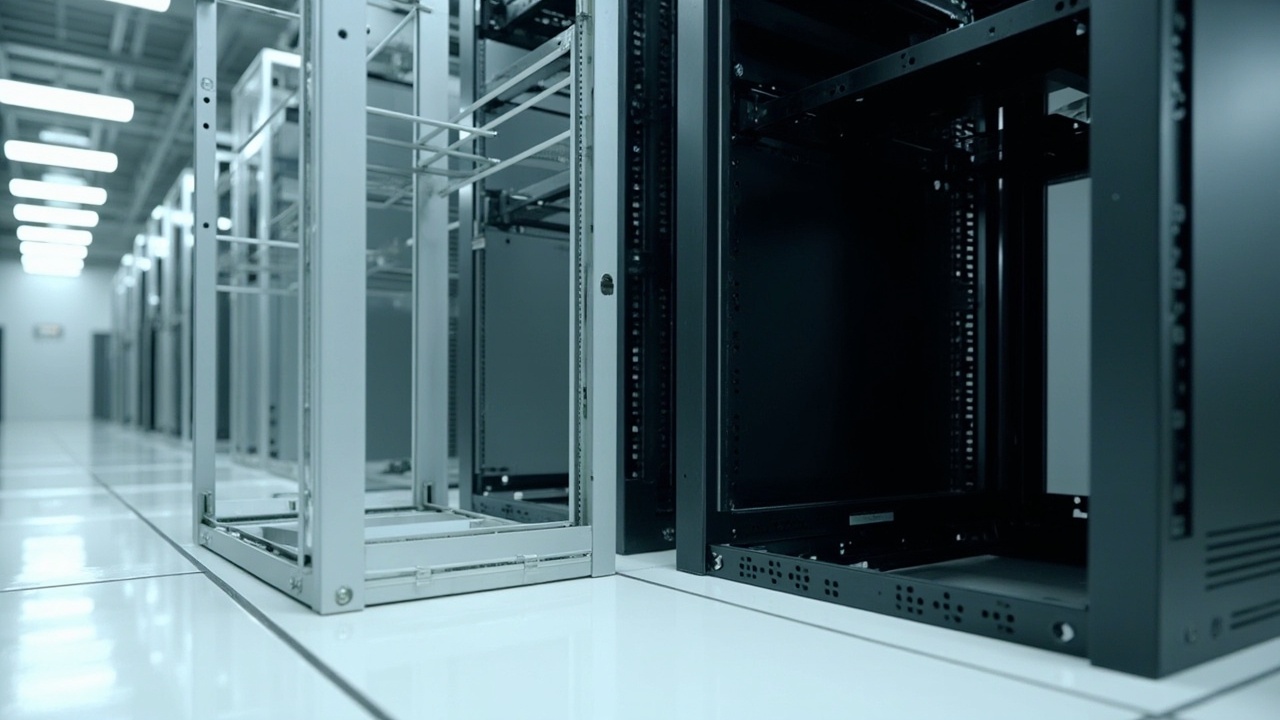
The 600-millimeter-wide standard rack consolidated over the past decade as the dominant format in new data centers, progressively replacing the traditional 19-inch rack (which in reality measures 450 mm of exterior width) inherited from the telecom era. The transition was not marketing or a vendor whim: it responded to a physical change in the equipment that the previous rack could no longer house. Understanding why it happened helps you decide whether your operation should follow the standard or whether it makes sense to break from it in specific cases.
This article describes what the problem was with the inherited 19″ width, what the technical difference is between 450 mm and 600 mm, why 600 mm solves concrete operational problems, what the TIA-942 standard says about it, and in which cases it makes sense to evaluate different formats. The goal is for the reader to end up with criteria to decide between the standard or the exception.
The problem with the inherited 19-inch rack
The EIA-310 standard (the rule that defines the 19-inch rack) dates from the 1960s and was dimensioned for the telecommunications equipment of that era: patch panels, small switches, low-density gear. It is worth clarifying the geometric dimensions precisely: the 19 inches (482.6 mm) define only the front equipment mounting width per the EIA-310 standard, while the 450 mm corresponds to the internal clear span between the mounting rails (i.e., the usable space inside the cabinet where 19″ equipment is installed). For servers, the standard exterior cabinet width is 600 mm, which leaves dedicated side channels for cabling routing. The 800 mm wide cabinets, on the other hand, are reserved for high-density network switches and for sites that require massive fiber optic and copper routing, in addition to housing one or more Zero-U PDUs (power distribution units that do not occupy vertical U space) without sacrificing cable management space. For decades, that dimension was sufficient because the equipment was physically small and the cabling was light.
The problem appeared when modern servers and switches became deeper, denser, and more demanding in cabling. A typical current blade server consumes between 800 W and 2,500 W per unit, requires two power cables (redundancy) and between 4 and 8 network or fiber cables. A 48-port switch at 25G requires 48 fiber cables plus 2 power cables. Multiplied by 42 units in a rack, the volume of cabling at the rear far exceeds the space that the 450 mm rack can accommodate in an orderly fashion. The result in many operations is cramped cabling, bends that exceed the minimum fiber bend radius, and restricted airflow that drives cooling consumption up between 15% and 30%.
What physical difference is there between 450 mm and 600 mm
The 150 additional mm of width are distributed between the two sides of the rack. This creates between 60 and 80 mm of additional space per side for cable routing, depending on the specific rack design. That space is what allows the installation of cable management arms, vertical routing of fiber bundles along the side rails, and proper bend radius for fiber optic cables (which require a minimum bend radius of 10 times their diameter to avoid signal degradation).
In the 450 mm rack, cables have to bend sharply to fit, which causes three operational problems: signal degradation in fibers (insertion loss and signal reflection), airflow restriction (every cable is an obstacle to cooling), and intervention difficulty (changing a cable in the middle of a tight bundle is a 30- to 60-minute operation where in a well-organized rack it is 5 minutes).
Why 600 mm solves the cable management problem
Three concrete operational benefits justify the standard. The first is the reduction of intervention time: in measured operation, changing a network cable or adding a server takes between 50% and 70% less time in a well-organized 600 mm rack than in a saturated 450 mm one. For an operation with high equipment turnover, this translates into significant person-hours per year.
The second is the improvement in cooling efficiency: racks with orderly cable management have between 15% and 25% less airflow restriction, which lowers the intake temperature of the equipment and allows operating the data center cooling at higher setpoints (24-26°C / 75-79°F instead of 20-22°C / 68-72°F), with the corresponding energy savings in chillers and CRAC units (Computer Room Air Conditioning).
The third is the reduction of incidents caused by damaged cable: fiber optic and high-category copper cables (Cat6A, Cat7) are sensitive to excessive bending. In a poorly managed 450 mm rack, it is common to find between 3% and 8% of fibers operating out of specification due to bend damage. In a well-managed 600 mm, that figure drops to less than 1%.
Compatibility with TIA-942 and other standards
The TIA-942-C standard (Telecommunications Infrastructure for Data Centers) explicitly recognizes the 600 mm and 800 mm widths as options for data centers, and treats the 450 mm as legacy. The standard does not impose 600 mm as mandatory, but the cable management and density recommendations assume dimensions of 600 mm or higher.
As for EIA-310 (the historical 19-inch standard), it remains the rule for the width between mounting rails (which defines what equipment is compatible), regardless of the exterior width of the rack. That is: a 600 mm rack is still a 19-inch rack in terms of compatible equipment, just like an 800 mm rack; what changes between the three formats (450, 600, and 800 mm) is the space available for cabling, thermal management, and side PDUs.
When an 800 mm cabinet makes sense
The 800 mm exterior-width cabinet exists for one specific use case: sites with high-density network switches (48 ports or more per unit, in multiple stacked units) and massive fiber optic and copper cable routing. The 200 additional mm compared to the 600 mm cabinet allow housing one or more Zero-U PDUs on the side without sacrificing rear cable management space, and they comfortably accommodate bundles of 96 fibers or more per rack unit. They are also the typical choice for telecommunications and carrier-neutral sites (data centers where multiple network operators offer their services), where the volume of interconnection cables between carriers exceeds the capacity of a 600 mm.
The extra cost of 800 mm versus 600 mm is typically 15% to 25% per cabinet, plus the cost of additional floor footprint (each cabinet occupies 200 mm more in width, which in a row of 20 cabinets adds 4 linear meters of room). The decision between 600 and 800 mm must be made before designing the data center layout: once the raised floor and cable trays are installed, switching format means redesigning the layout.
When it makes sense to break from the standard
Three scenarios make a format other than 600 mm the best decision. The first is edge computing at a remote site (telecommunications tower, factory site, manufacturing cabinet): in these cases physical space is limited and a more compact 450 mm rack is preferable to maximize density per square meter of room. The second is the laboratory or test environment: where equipment rotates frequently and cable management is less critical, the cost savings of a 450 mm rack may be preferable. The third is the specialized rack for non-standard equipment (measurement equipment, instrumentation): these may require specific widths by physical design.
When 600 mm is clearly the right decision
For any new operation with more than 10 racks and a projection of more than 5 years, the 600 mm rack is the default decision. The extra cost versus 450 mm is typically 10% to 20% of the empty rack, but the operational savings in cable management, cooling efficiency, and intervention time over the service life far exceed the initial investment. For existing operations with 450 mm racks, the transition is not cost-effective except at the end of the racks’ service life; until then, optimizations within the existing format (vertical cable management, articulating arms, higher-density patch panels) are more cost-effective.
Sources
[1] TIA-942-C — Telecommunications Infrastructure for Data Centers — https://tiaonline.org/product/tia-942-c/
[2] IEEE — Institute of Electrical and Electronics Engineers — https://www.ieee.org/
[3] ASHRAE — Technical Resources (thermal management guidance) — https://www.ashrae.org/technical-resources
Want to master this?
Noxtel Academy →