When free cooling stops paying off: payback by Mexican climate zone
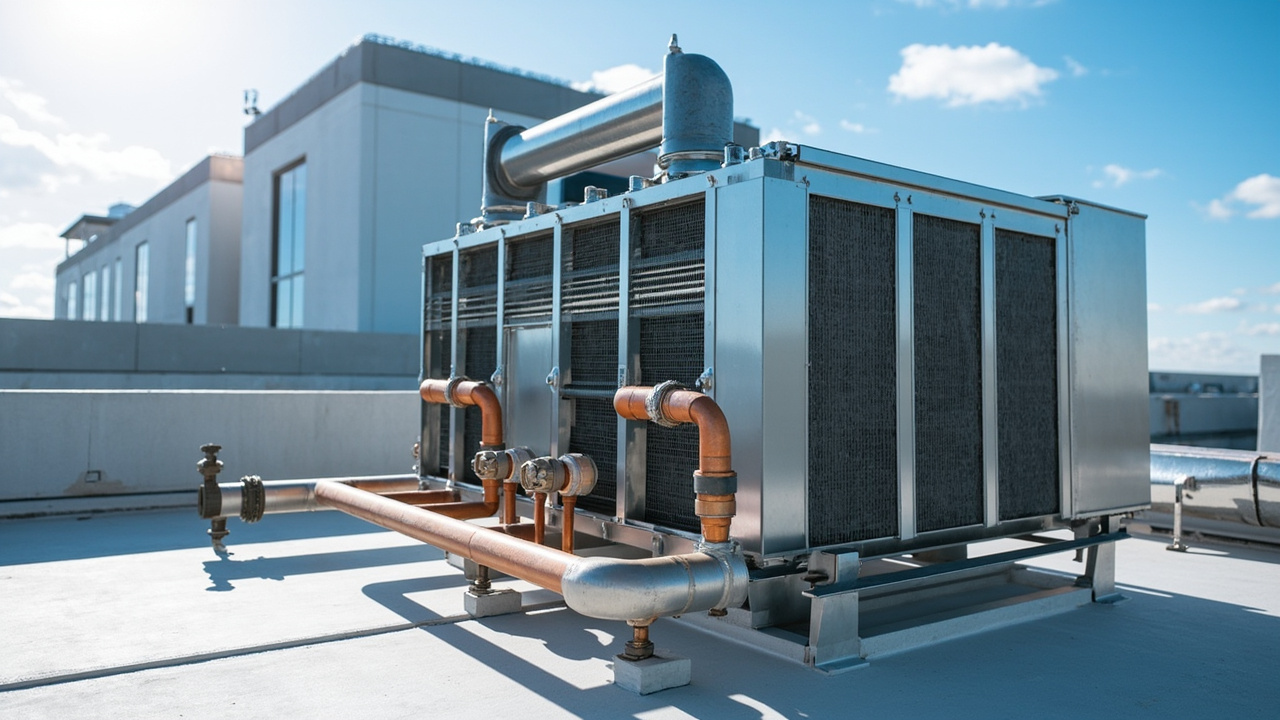
Free cooling uses outside air to cool the DC when the ambient temperature and humidity allow it. It drastically reduces the electrical consumption of the cooling system. The question is not whether it works, but in which Mexican zones it is cost-effective and when it stops being so.
Cost-effectiveness depends on the annual hours during which outdoor conditions allow direct, partial, or indirect free cooling. Each Mexican climate zone has a different profile.
How free cooling works in a DC
A traditional cooling system cools the DC air through chillers that consume a lot of electricity. Free cooling incorporates outside air into the cooling process when its conditions (temperature and humidity) are compatible with the DC operating ranges, defined by ASHRAE.
Mexican climate zones relevant to a DC
Mexico has notable climatic diversity. For free cooling purposes in data centers, it makes sense to group by temperature and humidity ranges throughout the year.
When free cooling stops being cost-effective
The cost-effectiveness of free cooling depends on comparing the expected electrical savings to the additional system investment. There are three cases where the math does not close.
Payback estimate by zone
For a reasonable estimate, three variables are used: annual free cooling hours possible, electrical savings per free cooling hour versus mechanical cooling, and cost of additional infrastructure.
A mid-sized DC with 200 kW of IT load in a temperate zone (Mexico City) can expect between 5,000 and 6,000 annual hours of free cooling. Estimated electrical savings per hour, assuming average CFE industrial tariff and cooling consumption of approximately 70 kW, is on the order of 8 to 12 USD per hour. That yields annual savings between 40,000 and 70,000 USD.
With an additional CAPEX for indirect free cooling between 80,000 and 180,000 USD, realistic payback in the temperate zone is between 2 and 3.5 years, which is still an excellent return for infrastructure that lasts 10-15 years. In the humid tropical zone with only 2,000 annual hours of free cooling, the same system has a payback of 5 to 8 years, and in some cases the math does not close.
Operational recommendation
Before specifying a free cooling system, it makes sense to obtain the climate data of the specific site (not the generic zone) and calculate the annual hours within the recommended ASHRAE range. The official source in Mexico is the Servicio Meteorológico Nacional of CONAGUA.
With that information, system sizing and payback estimation are straightforward. Skipping that step leads to installing free cooling on a site where it is not cost-effective, or not installing it on a site where the investment is recovered in less than a year.
Free cooling is not a universal improvement. It is a tool with a very defined geographic profile and return profile. The informed decision is the one made with the site’s climate data in hand.
Sources
[1] ASHRAE TC 9.9 — Thermal Guidelines for Data Processing Environments (recommended operating ranges) — https://tpc.ashrae.org/?cmtKey=fd4a4ee6-96a3-4f61-8b85-43418dfa988d
[2] IEA — Data Centres and Data Transmission Networks (global sector energy consumption profile) — https://www.iea.org/energy-system/buildings/data-centres-and-data-transmission-networks
[3] CONAGUA — Servicio Meteorológico Nacional (official Mexican climate data) — https://www.gob.mx/conagua/acciones-y-programas/servicio-meteorologico-nacional
Want to master this?
Noxtel Academy →