What is a backup generator for data centers and why you need one even if CFE gives you stability
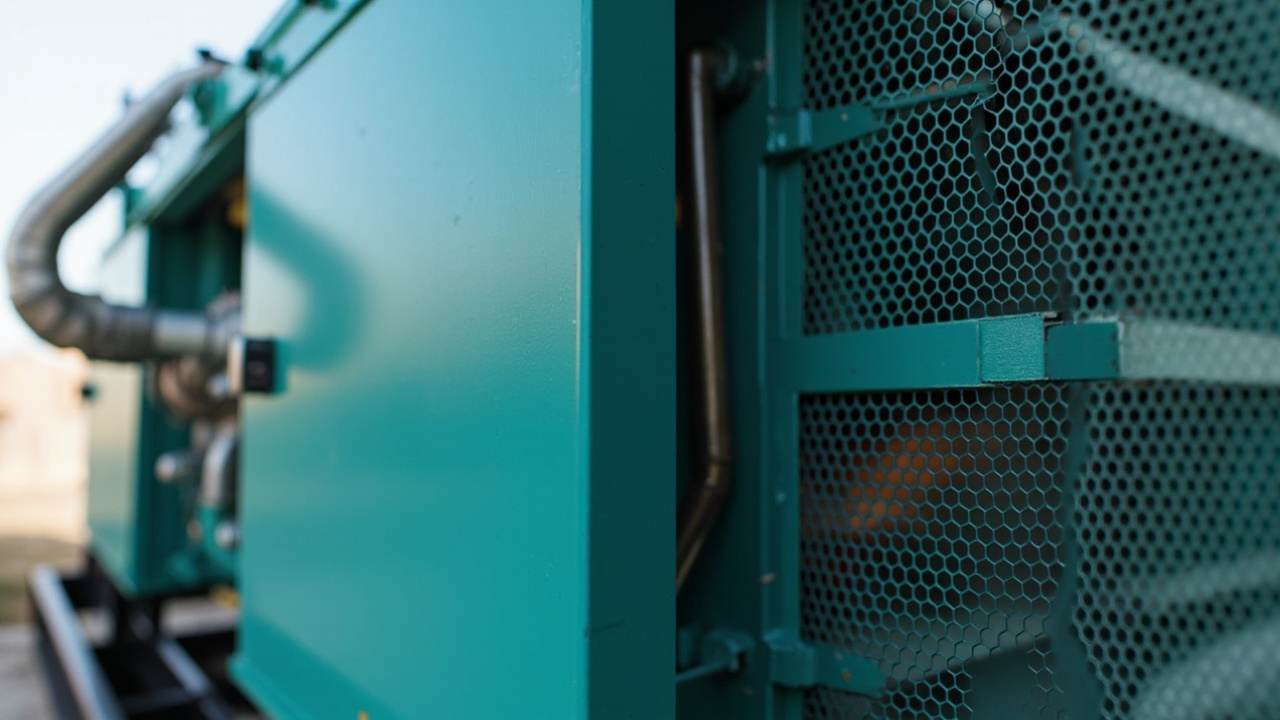
Mexico’s electrical grid has reasonable availability. For a DC operating 24×7, that is not enough. Redundancy is built with a backup generator that comes online when the commercial grid fails.
A UPS lasts between 5 and 30 minutes depending on the load. A properly sized generator lasts as long as the fuel tank holds, with periodic maintenance and refueling. That is the difference between a controllable outage and an operational shutdown.
Why CFE is not enough even when it gives you stability
CFE reports aggregate availability indicators at the national level. The metric does not count the frequency or duration of outages at a specific site. A DC in an industrial zone can experience between 6 and 20 interruptions per year, some of a few seconds, others of several minutes.
The UPS covers the immediate transition. The generator covers sustained operation. Without a generator, any interruption longer than 30 minutes leaves the DC without service until CFE returns or the UPS runs out.
What a backup generator does for a DC
It is an internal combustion engine (diesel or natural gas) coupled to an alternator that produces three-phase electrical power. When commercial grid drop is detected, the Automatic Transfer Switch (ATS) starts the generator and transfers the DC load to the new source within seconds.
Typical capacity and sizing
A small DC (10 to 30 kW of IT load range) needs a 30 to 80 kVA generator. A mid-sized DC (50 to 200 kW of IT load) needs between 150 and 500 kVA. A large DC (over 500 kW) requires parallel generators of 1 MVA or more.
Generator capacity must account for IT load plus cooling, because the DC cannot operate without air conditioning. A frequent mistake is sizing the generator only for IT load and discovering that without the chiller the DC shuts down from temperature within 15 minutes.
Growth factor also applies. It is wise to oversize between 25 and 40 percent over current maximum load to leave margin for natural DC growth over the next 3 to 5 years.
Critical generator subsystems
Mandatory testing and maintenance
A generator that is never tested is a generator that will not start when needed. Tests must be part of the monthly routine.
Common mistakes when installing a generator
The most expensive installation mistakes are the ones you do not see until the first real failure.
Applicable regulations
Electrical installation in Mexico is governed by NOM-001-SEDE (electrical installations) and by local municipal and CFE provisions. NFPA 110 is the most widely used international standard for emergency and standby systems in DCs and specifies the performance, installation, and maintenance requirements for the emergency generator system, including the Type, Class, and Level classification tiers.
Before installing a generator, it is advisable to review local regulations on noise (municipal ordinances), emissions (SEMARNAT for engines above certain power), and fuel storage (Civil Protection for diesel storage).
A DC operating 24×7 without a generator is one storm away from an operational shutdown. The UPS buys you time; the generator buys you continuity.
Sources
[1] Caterpillar — Diesel Generator Sets (manufacturer catalog for data center backup) — https://web.archive.org/web/20240419162311/https://www.cat.com/en_US/products/new/power-systems/electric-power-generation/diesel-generator-sets/
[2] NFPA 110 — Standard for Emergency and Standby Power Systems — https://www.nfpa.org/codes-and-standards/nfpa-110-standard-development/110
[3] IEEE 141 — Recommended Practice for Electric Power Distribution for Industrial Plants (Red Book) — https://standards.ieee.org/ieee/141/2053/
Want to master this?
Noxtel Academy →