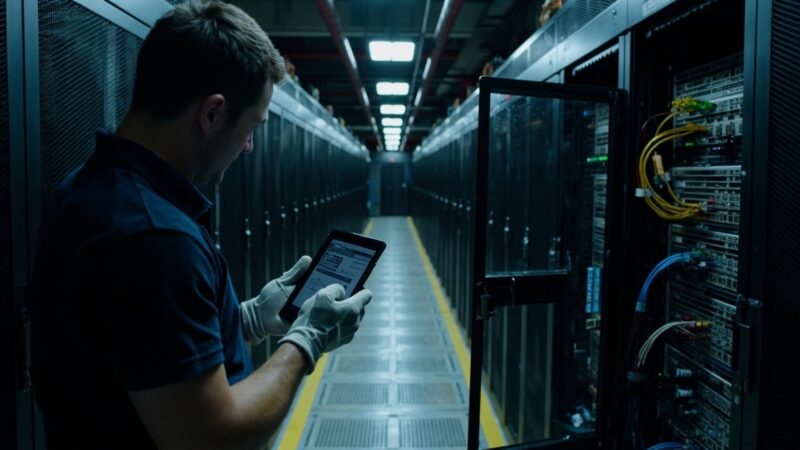
Remote hands in a small data center (10 racks or less): why the enterprise model does not work
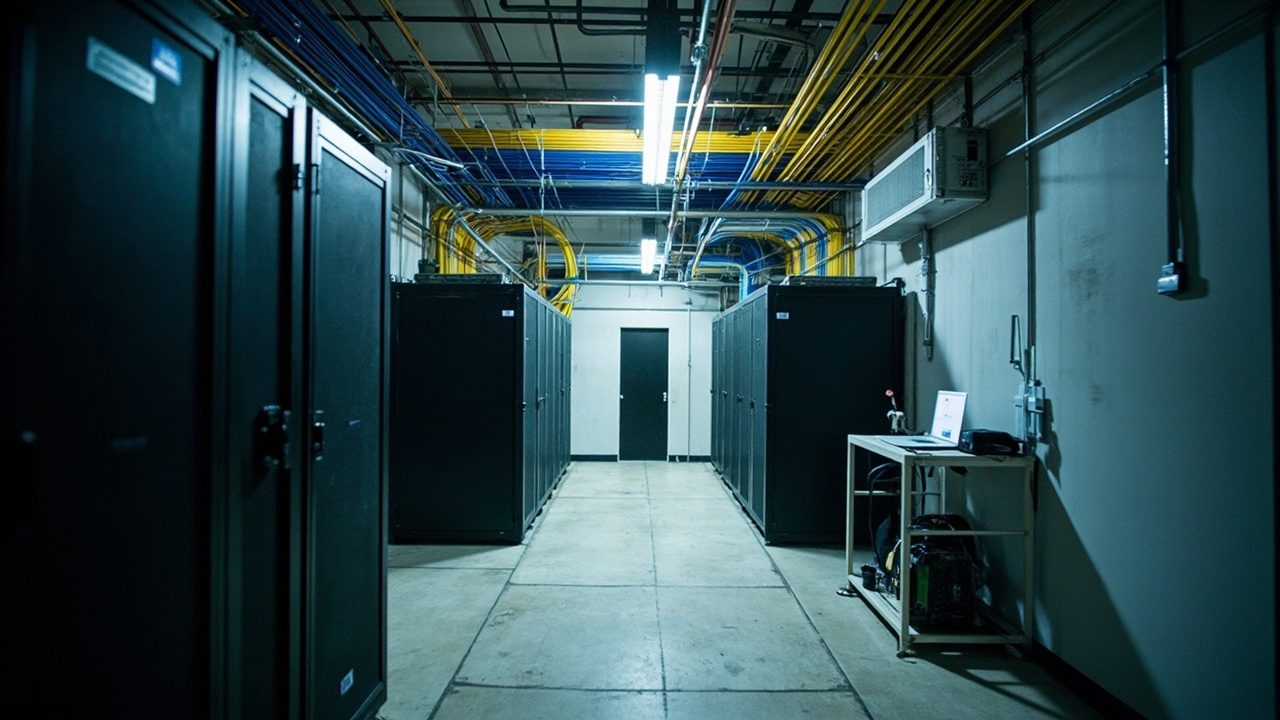
A UPS in alarm at eleven at night, six racks in a room and nobody on site. This scene almost always opens the conversation between an operations director and a remote hands provider when the site has ten racks or fewer.
The problem is not whether the service works. It is that the price you are quoted is designed for a model your room cannot pay for, and that gap only shows up when someone asks for the breakdown.
A facility technician in Mexico, with benefits, costs between $25,000 and $45,000 MXN per month. Hiring one is justified. What is not justified is the enterprise scaffolding around it: hour minimums, an SLA with penalties and 24×7 on-call coverage. That costs more than the technician and does not scale to ten racks.
The calculation that breaks the enterprise model
The enterprise package comes with three components, and each one has a cost floor that does not come down in a small site:
The math does not work. Forty minimum hours are $72,000 MXN per month, and a ten-rack room generates between six and twelve tickets per month: about fifteen hours of real work. You are paying for forty and using fifteen.
There is one detail about the penalty that almost nobody mentions: without availability monitoring or an entry log at a small site, that clause never triggers. It ends up being dead letter.
Realistic minimums: a bag of hours, not a volume commitment
What does work is changing the unit of sale: ask for a monthly bag of hours with no commitment, which does not expire if you do not use it and accumulates if the month was quiet. And negotiate the minimum down: 4 to 8 hours per month is a reasonable floor.
The second adjustment is coverage. Instead of a ‘24×7’ promise, negotiate on-call with a technician less than 60 minutes from the site and a two-hour response overnight. It resolves most real cases, and it costs a fraction.
A third useful adjustment is separating price by time of day: the same hour during business hours can cost you half of what it does at three in the morning. That way you do not penalize yourself for coverage when the bulk of your tickets arrive during normal hours.
The scope shrinks: what is included and what is not
At ten racks the work does not look like the work of an enterprise DC, and the contract should say so in plain terms:
The prices you will see on the table
The market band in Mexico for remote hands runs roughly $900 to $1,800 MXN per hour, and $2,500 to $6,000 MXN per closed ticket with up to two hours of work. In Monterrey and Querétaro it is usually below the Mexico City price.
One detail is worth more than the price: every intervention must be documented with a before photo and an after photo, and with a record of who did it and when. A cheap provider without evidence becomes expensive the first time you have to prove the work was done.
Where to find a provider that actually serves small sites
In Mexico the supply divides into three types: data centers that sell remote hands as a complement to the rack rental, integrators that bill per project, and facility management providers that sell hours. For ten racks, the second one almost never works.
Before you get a quote, confirm three things: that the base technician is in the same city as your site, that they have experience with rooms of fewer than ten racks, and that they issue field evidence. A provider that only works with banking will quote you as if you were that.
When an in-house technician does make sense
There are three clear signals that the enterprise model, or directly a technician on payroll, is the right path for your site:
Below those three signals, an in-house technician is a fixed cost you pay for 30 days to use fifteen hours. Above them, the enterprise contract starts to make sense, and the hour minimum is the hardest part to negotiate.
Sources
Uptime Institute: Tier Classification System.
TIA Online: TIA-942 certification for data centers.
BICSI: standards and best practices for electrical and telecommunications installations.
Data México, Government of Mexico: wages for the occupation of electricians and linemen.
Want to master this?
Noxtel Academy →