Power Purchase Agreements (PPA) in Mexico: how AWS, Google, and Microsoft buy renewables for their DCs
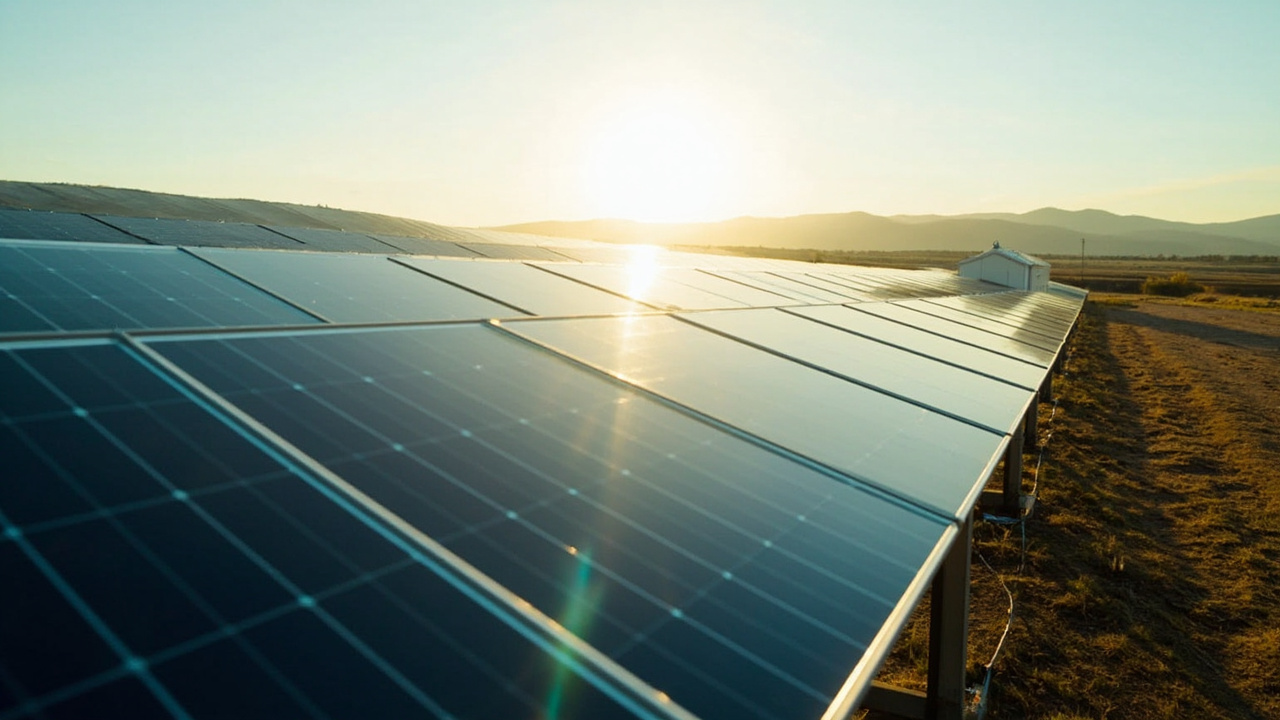
Power Purchase Agreements (PPA, long-term electricity purchase contracts) are the central piece of the business model that has allowed hyperscalers (operators of data centers at massive scale such as AWS, Google, and Microsoft) to get closer to their carbon-neutral goals in Mexico and other markets. A PPA is not a conventional electricity purchase contract: it is a 10- to 20-year financial commitment that finances the construction of a renewable generation plant in exchange for receiving electricity at a fixed price throughout the term.
This article describes how the PPA model works in Mexico, which actors participate, why hyperscalers use it instead of buying wholesale electricity, and what lessons a mid-sized data center can draw to participate in or get closer to the model. The regulatory part of the Mexican framework (CRE, CENACE, SENER) is covered in another article; here we focus on the business model.
What a PPA is and why it is not a conventional electricity contract
A PPA is a bilateral contract between an electricity generator (typically a solar or wind park developer) and a buyer with enough consumption volume to absorb the production of the project. The buyer commits to purchasing a minimum volume of energy at a fixed price for 10, 15, or 20 years, and the generator uses that commitment as collateral to finance the construction of the plant with bank debt.
The difference with a conventional electricity contract is structural. In a conventional contract, the buyer pays the wholesale market or CFE (Federal Electricity Commission) tariff based on actual demand; the price varies hour by hour and can double during peaks. In a PPA, the price is fixed for the entire term, the volume is contractual (with shortfall penalties), and the market risk is assumed by the generator. This turns electricity into a predictable cost, similar to a capital payment, instead of an operating variable.
How AWS, Google, and Microsoft use it in Mexico
Hyperscalers arrived in Mexico between 2017 and 2020 with a common goal: operating their cloud regions with 100% renewable electricity in the shortest possible time. The PPA was the vehicle that allowed them to achieve that. The mechanism is the same in all cases: the hyperscaler signs a PPA with a solar or wind park developer in Mexico, commits to a multi-year purchase volume, and the developer uses that commitment as collateral to obtain bank financing and build the plant.
What varies between operators is the hedging strategy. Some prefer to sign virtual PPAs (financial contracts without physical delivery, where the difference between the agreed price and the market price is settled) to maintain operational flexibility. Others prefer physical PPAs (direct supply from a specific plant) to guarantee real additionality. The choice depends on the maturity of the local electricity market, on the availability of generation in the data center zone, and on the sustainability strategy that the company wants to communicate.
The aggregate figures reported by the industry are eloquent: hyperscalers have signed PPAs for tens of gigawatts accumulated globally between 2015 and 2024, which has financed the construction of a significant share of the new renewable generation in the markets where they operate. In Mexico, public reports from IEA and CENACE show that corporate PPAs represent a growing share of the new renewable capacity installed, although not all of it goes to data centers.
Why PPAs are not accessible to all data centers
PPAs were designed for consumers with large and predictable load profiles. A hyperscaler in a cloud region consumes between 100 MW and 500 MW, with a constant load profile 24/7, which makes it possible to absorb the production of a 200 MW to 500 MW solar plant with room for variability. A corporate data center of 5 MW to 20 MW does not have the volume to justify a bilateral PPA with a developer, and even less the financial capacity to commit to 15 years of minimum volume.
This asymmetry explains why the PPA model in data center remains hyperscaler territory and that of a few large operators in Mexico. For mid-sized data centers, the alternatives are: purchasing renewable electricity through I-REC certificates (International Renewable Energy Certificate) issued by generators in Mexico without long-term financial commitment, or participating in demand aggregators that negotiate virtual PPAs on behalf of a group of consumers. Neither option finances new generation with the same multiplier effect as a direct PPA, but they bring the mid-sized data center closer to the goal of renewable electricity without the 15-year commitment.
Business model: why it works for all parties
The PPA works as a business model because each party solves a different problem. The generator solves the financing problem: without a long-term purchase commitment, a solar or wind project does not qualify for bank financing because the future cash flow is uncertain. The PPA converts that future flow into a predictable one and allows the developer to obtain debt for 15 to 20 years at attractive rates.
The buyer solves the price problem. Instead of paying the market tariff (which in Mexico has high peaks during peak hours and dry season), they pay a fixed price agreed for the entire term. For a data center with a constant load profile, that predictability is worth more than any percentage reduction: it allows budgeting electricity as a fixed cost, not as a variable, which changes the financing structure of the entire data center.
The electricity system as a whole benefits because the PPA finances new capacity that would otherwise not be built. Without corporate PPAs, the new renewable generation in Mexico would depend exclusively on CFE auctions and on public investment, at the deployment pace that each one determines. With corporate PPAs, there is a second financing path that complements the first.
Four PPA risks worth documenting before signing
Four risks are typical in any PPA, and a data center considering signing one should have them documented in its financial model.
- Counterparty risk: the park developer may default on its delivery commitment due to financial, technical, or regulatory issues. A PPA with bank performance guarantees reduces this risk; a PPA without guarantees leaves it on the buyer.
- Shadow price risk: the agreed price may end up higher than the market price if wholesale prices fall significantly during the term. The buyer pays more for the electricity than the market equivalent in some years.
- Volume risk: if the data center consumes less than projected (operational efficiency improvements, migration of workloads to the cloud, closing of operations), the buyer keeps paying the committed minimum volume or incurs penalties.
- Curtailment risk: in areas with high renewable penetration, the system operator may cut renewable generation during hours of high production and low demand. The data center may receive less renewable energy than agreed, while still paying for the volume.
Sources
[1] IEA — Data Centres and Data Transmission Networks (energy consumption) — https://www.iea.org/energy-system/digitalisation/data-centres-and-data-transmission-networks
[2] Wikipedia — Power purchase agreement (background reference) — https://en.wikipedia.org/wiki/Power_purchase_agreement
[3] IEA — Renewables 2021 (global renewable energy trends) — https://www.iea.org/reports/renewables-2021
[4] The Green Grid — Data center efficiency industry resources — https://www.thegreengrid.org/
[5] Wikipedia — Electricity sector in Mexico (background reference) — https://en.wikipedia.org/wiki/Electricity_sector_in_Mexico
Want to master this?
Noxtel Academy →