PDU vs UPS: the differences that matter (and why confusing them costs money)
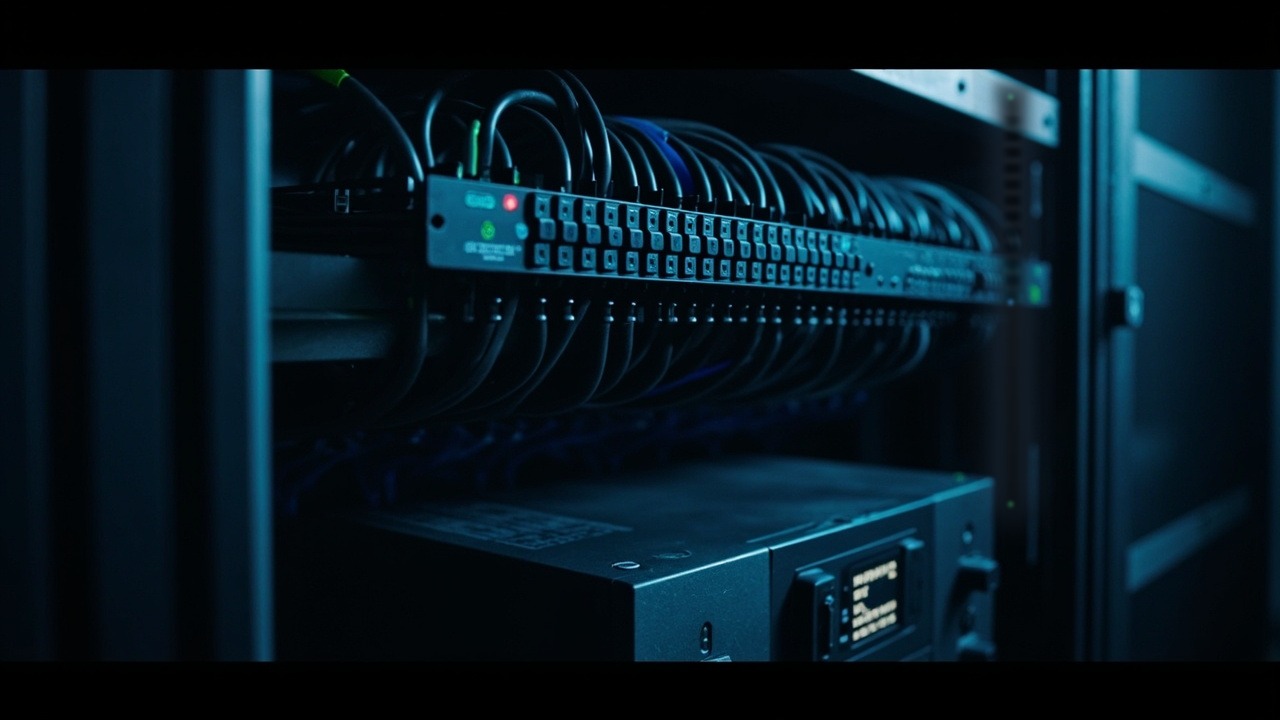
PDUs and UPSs serve complementary functions and are often confused in operations because both manage electrical power in the rack. The operational difference is large: the UPS protects the load against electrical grid disturbances and keeps operations running during brief outages; the PDU distributes power from the UPS to the equipment and, in its intelligent versions, measures and manages consumption per outlet. Confusing them in a purchasing decision leads to oversizing one and undersizing the other, or to duplicating functionality.
This article describes what each device does, how they differ, when they are used together and when they are used separately, which PDU topology fits each operation, and the most common mistakes when sizing the UPS + PDU chain. The goal is for the reader to finish with a clear decision map for their facility.
What a UPS does and what a PDU does
The UPS (Uninterruptible Power Supply) takes power from the electrical grid, conditions it (regulates voltage, filters harmonics, removes spikes), and delivers it to the load. Internally it has batteries that keep the output running during grid outages, typically between 5 and 15 minutes in a data center, while the generator starts and takes the load. The PDU (Power Distribution Unit) takes the power coming out of the UPS and distributes it to the rack equipment, typically via multiple IEC C13 or C19 outlets. The PDU does not condition or store power: it only distributes and, in intelligent versions, measures.
The operational consequence: the UPS protects, the PDU delivers. A correct installation has both devices in series: utility feed → UPS → PDU → equipment. An installation with only a PDU has no protection against outages; an installation with only a UPS but no intelligent PDU has no per-outlet visibility or remote switching capability.
When they are used together and when separately
In any production rack with critical loads (servers, storage, network), the UPS and PDU are used together: the UPS protects the chain and the PDU distributes with visibility. In scenarios where only distribution is needed without protection (racks for auxiliary equipment such as lighting, environmental monitoring, out-of-band management switches), only a PDU can be used without a UPS because power loss in these devices does not impact IT operations.
In scenarios where only basic protection is needed without intelligent distribution (offices, single-server racks), only a UPS can be used because tower-format UPS versions (independent vertical form factor) include built-in outlets on the cabinet and do not require a separate PDU. This is the typical configuration in offices and small operations.
PDU topologies and when each one fits
Four levels of functionality exist in PDUs, with marked differences in cost and operational capability:
The choice depends on the operating model. An operation that needs to power equipment on and off remotely (server commissioning without on-site presence, capacity management during off-hours) needs the fourth topology. An operation that only wants visibility is well served by the third.
Common mistakes when sizing UPS and PDU together
Five mistakes account for most of the decisions that get revisited after two years.
How to decide what you need
Three questions filter out 90% of the cases.
Answering these three questions before requesting a quote avoids 80% of the decisions that get revisited at 24 months.
Sources
[1] Vertiv — Products overview — https://www.vertiv.com/en-us/
[2] IEEE — Institute of Electrical and Electronics Engineers — https://www.ieee.org/
[3] Wikipedia — Data center (background reference) — https://en.wikipedia.org/wiki/Data_center
Want to master this?
Noxtel Academy →