Modular prefabricated data center: trend or real solution for Latam?
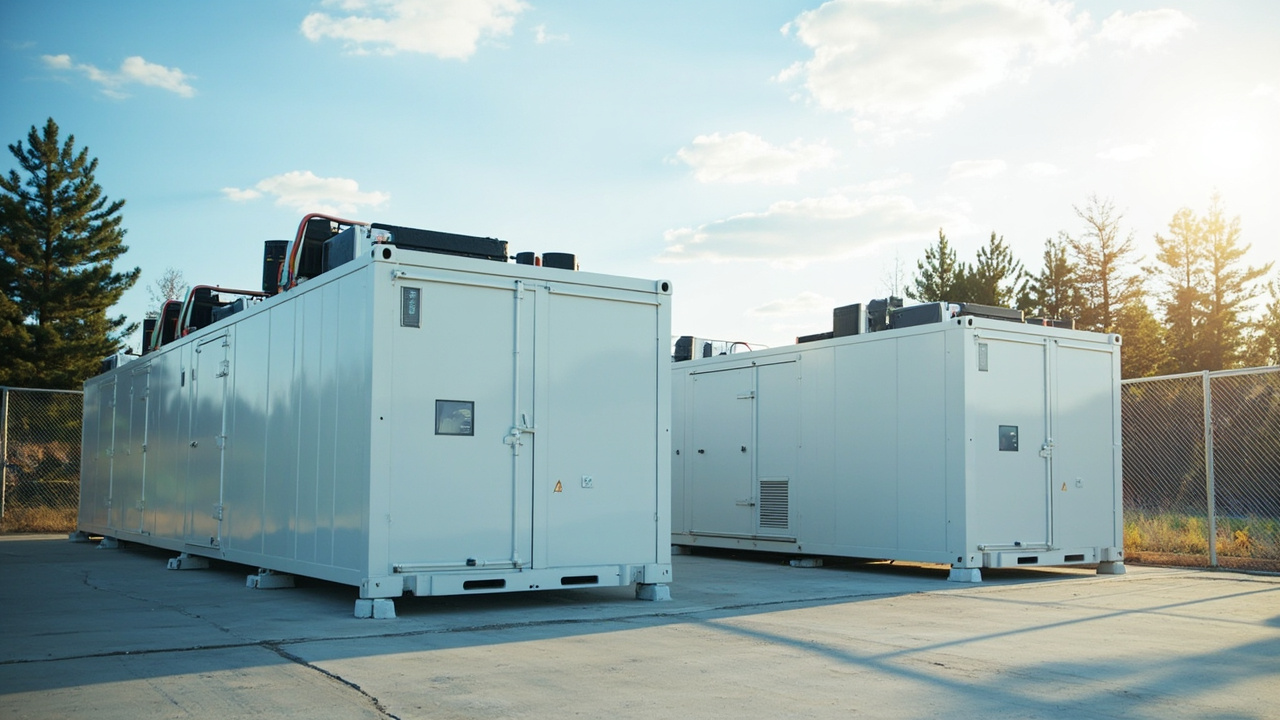
The modular prefabricated data center (sometimes called container data center or data center in a container) has stopped being an industrial trade-show curiosity and has become a real operational category. Hyperscalers have used it for years for edge computing and rapid expansion, and providers such as Schneider Electric, Vertiv, Huawei, and Dell Technologies offer commercial lines certified for Tier II and Tier III data centers. The question for a mid-sized data center in Latin America is not whether the category exists, but whether it actually solves the buyer’s real problem, or whether it is an elegant solution to a different problem.
This article describes what a modular prefabricated data center is, what advantages it offers compared to a built-in-place data center, what real limitations it has, and under which specific conditions it makes sense to evaluate it as an option. The goal is that the reader finishes with a clear criterion to decide if it applies to their case, not with a generic recommendation.
What a modular prefabricated data center is
A modular prefabricated data center is a complete data center infrastructure delivered in one or several transportable physical modules (typically 20- or 40-foot ISO containers, or larger cabinets depending on the provider). Each module integrates everything a traditional data center has inside a room: racks, cooling systems, UPS, power distribution, fire detection and suppression, monitoring. Modules are factory pre-assembled, transported to the site, and connected to each other and to external infrastructure (power feed, fiber, water where applicable).
The idea is not new: the concept of a portable data center dates back to the 1960s in military operations. What changed in the last ten years is industrialization: providers such as Vertiv, Schneider Electric, Huawei, Dell, HPE, and ScaleMatrix offer lines certified against standards such as Uptime Institute Tier II/III and TIA-942, with capacities from 50 kW to over 1 MW per module, and with components identical to those that would be installed in a traditional data center.
Real advantages versus the built-in-place data center
Five advantages differentiate the modular data center from the built-in-place data center. The first is deployment time: a prefabricated module is delivered, installed, and energized in 8 to 16 weeks from contract signature. A built-in-place data center takes between 12 and 24 months to reach the same point. The difference is structural for operations with critical time-to-market or regulatory pressure.
The second is cost predictability. Prefabricated units are quoted as a product with a fixed price (defined CAPEX, no extras for unforeseen civil works). Built-in-place data centers suffer cost overruns from soil conditions, material availability, or regulatory changes during construction. For a CFO budgeting CAPEX, predictability is worth as much as the savings.
The third is manufacturing quality. Modules are assembled in factory under controlled conditions, with Factory Acceptance Tests (FAT) before shipment. This reduces the incidence of on-site failures, which in traditional data centers represent between 5% and 10% of total cost of ownership in the first two years.
The fourth is real modularity. If the load grows 12 months after energization, another prefabricated module is added without having to remodel the electrical or cooling room. In a built-in-place data center, expansion requires civil works and maintenance windows that interrupt operation.
The fifth is legal portability. If the site is sold, the hosting contract is renegotiated, or the operation needs to relocate, modules are dismantled and moved. A traditional data center is not portable; the concrete and infrastructure stay in the original site. For operations with an uncertain horizon or short hosting contracts, this flexibility has strategic value.
When the modular data center does NOT make sense
Four scenarios make the modular data center not the best option. The first is very high concentrated load: if the data center needs more than 5 MW at a single site, the number of required modules makes the solution more expensive than a built-in-place data center. The second is integration with existing infrastructure: if there is already a technical room with raised floor, cabling, and power feed, adapting prefabricated modules to that environment is more expensive than expanding what is already in place.
The third is maximum-level certification: TIA-942-C Tier IV with 2N redundancy requires concurrent maintainability and tolerance to concurrent failure. Commercial prefabricated units certify Tier II/III robustly; reaching Tier IV with prefabricated modules requires specific multi-module composition, which makes the solution more expensive than dedicated built-in-place construction.
The fourth is a long operating horizon. If the data center will operate 15 or 20 years at the same site, built-in-place construction has better TCO after a certain initial CAPEX. The prefabricated unit amortizes well over a 5 to 10 year horizon; beyond that, dedicated construction wins by scale and by the absence of the prefabrication margin.
Modular versus built-in-place comparison
The following table summarizes the most relevant operational and economic differences between the two options, for a 500 kW to 2 MW IT load data center in typical Latin American operation.
| Characteristic | Modular prefabricated | Built in place |
|---|---|---|
| Deployment time | 8 to 16 weeks | 12 to 24 months |
| Initial CAPEX | medium (product price) | high (civil works + materials) |
| Cost predictability | high (fixed price) | medium (construction risks) |
| Operational modularity | high (interchangeable modules) | limited (on-site upgrades) |
| Maximum certification | robust Tier II/III | Tier IV possible with dedicated design |
| Portability | high (transportable modules) | none (fixed infrastructure) |
| Optimal operating horizon | 5 to 10 years | over 10 to 15 years |
Application in Latam: the real case
In Latin America, the modular data center has three concrete applications where it has demonstrated operational value. The first is the expansion of telco and cable operators at regional sites where demand grew faster than the capacity of the original site. Bringing a prefabricated module to the site and energizing it in 12 weeks solves the bottleneck that built-in-place construction could not.
The second is hyperscaler edge computing in markets where traffic justifies a regional site but not a traditional data center. AWS, Google, and Microsoft use prefabricated modules for their points of presence in secondary Latin American cities, where the CAPEX of a module is a fraction of the CAPEX of an equivalent data center.
The third is government or defense operation in temporary or mobile sites. Field hospitals, military bases, emergency operations: the modular data center delivers computing capacity in environments where built-in-place construction is not feasible. For these operations, the unit price is not the deciding factor, but rather the deployment speed and the portability.
Five common mistakes when evaluating a modular data center
Five mistakes concentrate the majority of modular data center evaluations that end in wrong decisions. Recognizing them before buying avoids project rewrites.
- Assuming that modular means fast in everything: fast in deployment, but not in prior design. The module is delivered fast, but the project engineering (power feed, foundation, permits) still takes months. Total time may not be less than a well-planned built-in-place construction.
- Underestimating the site cost: the module costs X, but the site (foundation, power feed, fiber, perimeter security) costs an additional 0.5X to 1X. A poorly budgeted project sees only the module and is surprised by the total.
- Ignoring transport logistics: a 12-meter module does not fit on any road. Transport requires routes with clearance (free height under bridges), special transport permits, and sometimes partial disassembly. In narrow urban sites, this can block the entire project.
- Requesting configuration not supported by the provider: commercial prefabricated units have fixed configurations (module sizes, cooling topologies, UPS brands). Going outside the standard configuration makes the module up to 50% more expensive or unfeasible.
- Comparing against an ideal data center and not against a realistic one: comparing the module against a hypothetical perfectly executed built-in-place data center hides the fact that the real built-in-place has cost overruns and delays. The honest comparison is against a well-managed built-in-place, not against an ideal one.
Sources
[1] Uptime Institute — Data center industry resources — https://uptimeinstitute.com/
[2] Wikipedia — Modular data center (background reference) — https://en.wikipedia.org/wiki/Modular_data_center
[3] ISO 22237 — Data centre facilities and infrastructure — https://www.iso.org/standard/82168.html
[4] TIA-942-C — Telecommunications Infrastructure for Data Centers — https://tiaonline.org/product/tia-942-c/
[5] ASHRAE — Technical Resources (thermal management guidance) — https://www.ashrae.org/technical-resources
Want to master this?
Noxtel Academy →