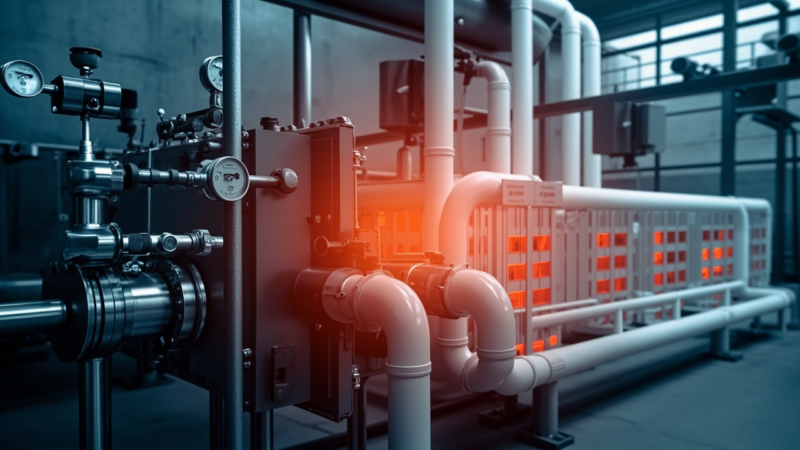
How to recover data center heat for district heating: the Nordic case Mexico can copy
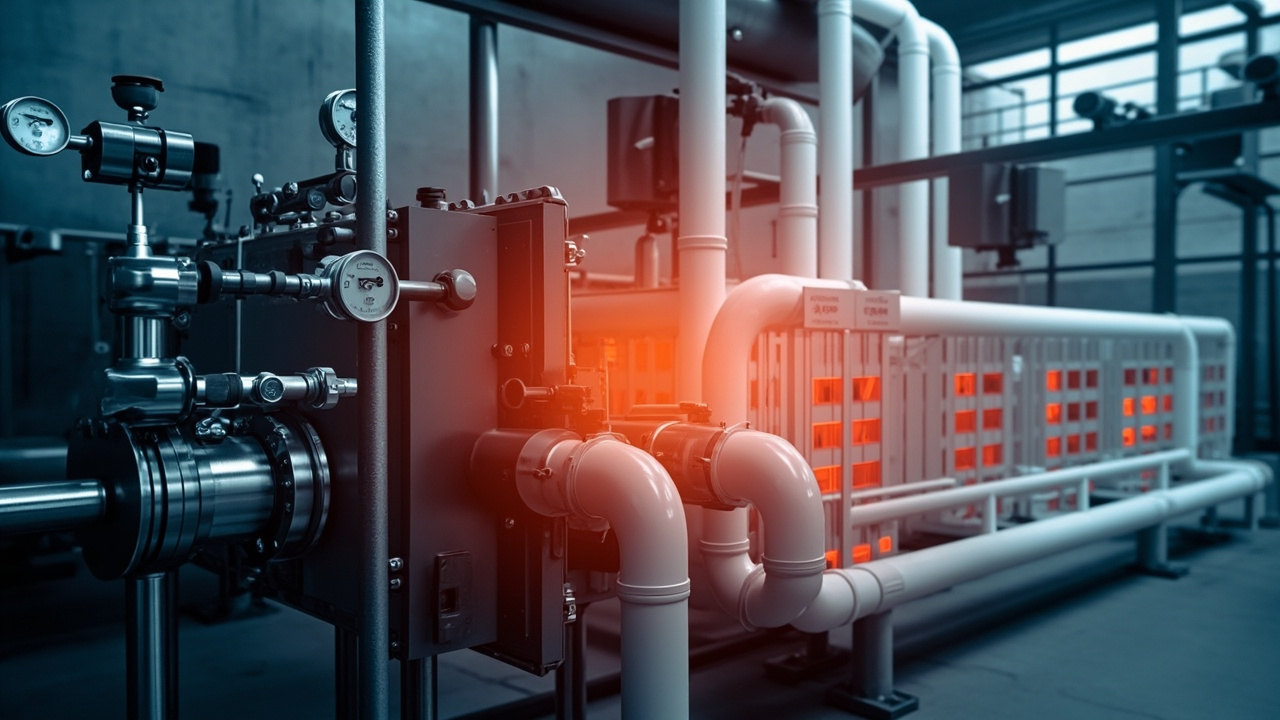
A 10 MW data center discharges into the atmosphere between 7 and 9 MW of waste heat. In Nordic countries (Sweden, Finland, Norway, Denmark), that residual heat is sold to the district heating network and covers between 30% and 50% of the data center’s cooling operating cost. In Mexico, that same heat is vented to the atmosphere. Not because the technology doesn’t exist, but because regulation, tariffs, and urban planning culture in Mexico aren’t designed to capture that value. This article covers how heat recovery works in data centers, where it has been implemented well, and why the opportunity in Mexico is real but will take longer than it seems.
How residual heat recovery works
Residual heat recovery from a data center is technically simple. The data center, by necessity of its cooling system, already transfers heat from the servers to a fluid (water or glycol). That fluid, once it has absorbed the heat from the IT load, is at a temperature between 25°C and 45°C depending on the design. For district heating, the typical supply temperature required is 55°C to 75°C in the district. The gap between 25-45°C and 55-75°C is covered with a heat pump that raises the temperature using additional electrical energy.
The system TCO depends on the COP of the heat pump: a COP of 3.5 means that for every 1 kW of electrical power to the pump, 3.5 kW of useful thermal energy are generated. Adding the energy already present in the data center water (the 7-9 MW from the example), the system delivers between 25 and 35 MW of useful thermal energy for every 10 MW of IT consumed. That thermal energy is sold to the district heating network at a tariff that in Nordic countries is 30 to 80 EUR per MWh.
The Nordic case: how they did it
The Nordic countries have the combination of 4 factors that make heat recovery economically viable:
- Sustained cold climate: heating demand is continuous for 8 to 10 months a year, not seasonal. The economics work if the heat sink is available.
- Pre-existing district heating network: Stockholm, Helsinki, Copenhagen, Oslo have district heating networks operated by municipalities or utilities that already deliver hot water at 60-80°C to residential, commercial, and industrial buildings. The data center connects to that existing network as just another supplier.
- Regulation that allows the sale of heat: there is a regulatory framework that defines the tariff, technical requirements, and purchase-sale contracts. The data center knows how much it will receive for its residual heat before investing.
- Electricity tariff that penalizes heat waste: in Sweden, electricity has a CO₂ emissions tax component on its generation. That raises energy costs, making heat recovery investment more profitable to reduce consumption.
The Stockholm case is the most mature. Stockholm Exergi operates the district heating network, and data centers like Bahnhof (operator of the data center that hosts The Pirate Bay) and other hyperscalers like AWS (in its eu-north-1 region) sell their residual heat to the network. AWS has reported that its Stockholm region recovers more than 90% of its residual heat for district heating.
What Mexico lacks for this to be viable
The technical opportunity exists. What does not exist is the combination of the 4 Nordic factors. Mexico has its own combination of barriers:
- Climate with seasonal demand: most of Mexico (except high northern areas and the altiplano) has mild winters with heating demand for 3 to 5 months a year, not 8 to 10. District heating economics work in CDMX or Guadalajara on a 6-month base, not 12.
- No pre-existing district heating network: Mexico never built municipal heating networks. Construction culture assumes individual heating (gas heating, electric heating, or no heating). Building a district heating network from scratch is enormous CAPEX no private party will undertake without public subsidy.
- Regulation that does not allow heat sales: the CRE (Energy Regulatory Commission) and the Geothermal Energy Law and other Mexican standards do not have a specific framework for ‘residual heat sales service’ as a regulated activity. That does not prevent a data center from selling heat to a nearby industrial or commercial customer by private contract, but it does not scale.
- Electricity tariff that does not penalize heat waste: CFE’s industrial tariff in Mexico (GDMTH for high voltage, DIST for medium voltage) does not include a significant CO₂ tax component. That makes heat recovery profitable in 7-10 years, not 3-5 as in Nordic countries.
Cases where heat recovery DOES work in Mexico
Although the Nordic district heating model does not apply, there are specific applications in Mexico where heat recovery does close financially:
- Data center adjacent to an industrial customer that needs process heat: a data center near a food plant, a chemical plant, or a greenhouse can sell steam or hot water directly, without going through a municipal network. Typical case: data center in Querétaro adjacent to an industrial park with process steam demand. Low connection CAPEX, shared OPEX.
- Domestic hot water heating for a campus or large development: on a university campus, a hospital, or a mixed-use development, the data center can feed the domestic hot water heating system. The heat pump COP is favorable because the target temperature (45-55°C) is lower than district heating.
- Municipal pool or swimming pool heating: target temperatures of 25-30°C are easily achievable with data center water without an additional heat pump, maximizing economic efficiency.
- Greenhouse agriculture: a data center in a semi-arid zone adjacent to greenhouses can sell residual heat to the agricultural operation. Greenhouses need controlled nighttime temperatures during winter, and data center residual heat is ideal.
TCO calculation for a Mexico implementation
Take a 5 MW data center with 3.5 MW of recoverable residual heat, adjacent to an industrial customer with continuous heat demand 12 months a year. Typical figures:
- CAPEX of the heat pump and distribution system: between 8 and 15 million pesos for 3.5 MW thermal, depending on distance to the customer and heat exchanger complexity.
- Heat pump electrical OPEX: between 1.0 and 1.5 million pesos per year (assuming COP 3.5 and GDMTH tariff).
- Heat sales revenue: between 4 and 8 million pesos per year, depending on the tariff negotiated with the industrial customer (typically 200-400 pesos per thermal GJ, comparable to industrial natural gas).
- ROI: 2.5 to 4 years, not counting the value of emission reductions for ESG reporting. If the industrial customer pays a premium for ‘green’ heat (replacing natural gas with zero CO₂), ROI drops to 1.5-2.5 years.
Why Mexico won’t copy the Nordic model (in the short term)
The political and regulatory reality in Mexico makes it unlikely we’ll see Nordic-scale district heating in the next 10 years. Initial investment in a municipal network is on the order of 50 to 100 million pesos per kilometer, and no Mexican municipality has that in its budget nor will subsidize it. The real opportunity for data centers in Mexico is in adjacent cases: industrial, campus, agriculture, hospital. Those specific cases can close financially with ROI of 2-4 years, but they don’t scale to the municipal network model.
The verdict
Recovering data center heat in Mexico is technically viable and financially attractive in adjacent cases, but the Nordic urban-scale district heating model will not be replicated in Mexico in the short term. The real opportunity for operators in Mexico is to identify industrial customers, campuses, or greenhouses adjacent to the site and design the cooling system from the outset with heat recovery in mind. The incremental investment is low (10-15% over cooling system CAPEX), and ROI is 2 to 4 years. If your site is in a zone with continuous thermal demand and an adjacent customer, the question is not whether you should do it, but how to structure the heat sales contract so the customer pays and the data center recovers its investment. Regulation will come later; the first movers in this space will have a competitive advantage that followers won’t easily match.
Sources
ASHRAE TC 9.9 — Thermal Guidelines for Data Processing Environments (5th Edition, 2021, heat reuse concepts) —.https://www.ashrae.org/technical-resources/bookstore/thermal-guidelines-for-data-processing-environments.
Uptime Institute — 2024 Global Data Center Survey (heat reuse trends and adoption rates) —.https://uptimeinstitute.com/resources/asset/2024-global-data-center-survey-results.
The Green Grid — Data Center Heat Reuse Best Practices —.https://www.thegreengrid.org/.
Stockholm Exergi — District heating technical specifications and pricing —.https://www.stockholmsenergi.se/.
CRE — Regulatory framework of the Energy Regulatory Commission (residual heat sales, district heating) —.https://www.gob.mx/cre-historico.
Want to master this?
Noxtel Academy →