Harmonics and THD: why “power quality” decides whether your UPS lasts 3 or 10 years
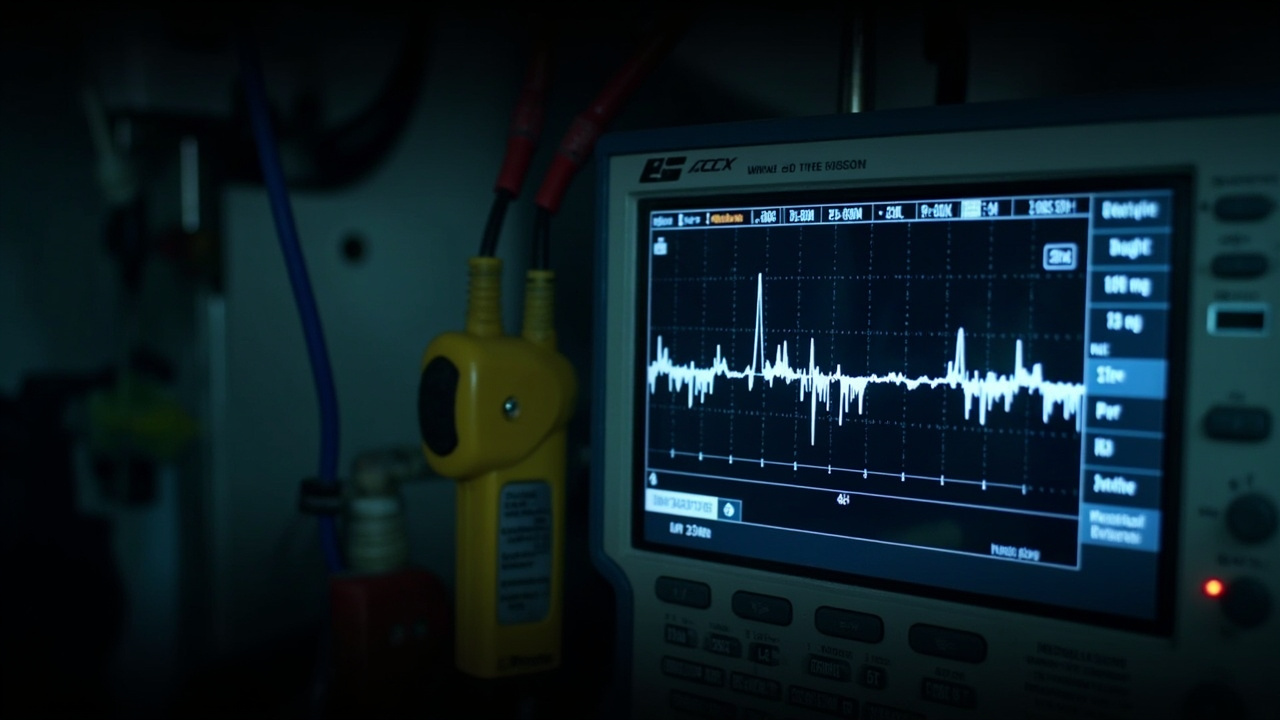
Power quality in your data center is not a technical luxury. It is a direct factor in UPS service life, operational efficiency, and the risk of premature failure. The metric that defines this is Total Harmonic Distortion, or THD.
Here is why THD decides whether your UPS lasts 3 years or 10, and how it is controlled in practice.
What harmonic distortion is and why it matters
Non-linear loads (rectifiers, motor drives, switched-mode power supplies, the UPSs themselves) draw current in pulses rather than a pure sinusoid. This generates harmonics: signals at multiples of the fundamental frequency (60 Hz typically in Mexico) that ride on top of the fundamental waveform.
THD (Total Harmonic Distortion) measures how much the waveform deviates from a pure sinusoid. A low THD means clean power. A high THD means thermal stress on cables, transformers, and capacitors.
How THD shortens UPS service life
- Heating in transformers and conductors. Harmonic current does not distribute evenly and concentrates heat in certain sections of the windings.
- Overheating of power factor correction capacitors. Capacitors are sized for the fundamental frequency, not for harmonics.
- Resonance with capacitor banks. At certain harmonics, system capacitances resonate with inductances, amplifying voltages and currents.
- Malfunction of protections. Breakers and protection devices may trip falsely or fail to trip when they should.
The IEEE 519 standard sets the limits
IEEE 519 (“Recommended Practice and Requirements for Harmonic Control in Electric Power Systems”) is the reference standard for power quality. It defines harmonic distortion limits according to system voltage and short-circuit current at the point of common coupling.
- For 480 V systems, the typical THD voltage limit is around 5%. Each individual harmonic must not exceed approximately 3%.
- For 120/208 V systems in IT, the limits are tighter. Small loads have less distortion margin.
- Compliance is measured at the point of common coupling (PCC), not inside the customer’s installation.
How to reduce THD in practice
- Properly size the UPS with a 12-pulse rectifier or AFE (Active Front End) technology. These topologies drastically reduce the harmonics injected into the grid.
- Install passive or active harmonic filters when non-linear load is already elevated.
- Size capacitor banks with resonance in mind. Capacitors without detuning reactors can make the problem worse.
- Conduct a power quality audit at least once a year, with extended measurement over one week. Hour-by-hour variations matter.
The cheap UPS on the invoice can be the expensive UPS in operation
An ideal application scenario is treating power quality as a design decision from the start, not as a corrective diagnosis. Buying the UPS with the right rectifier topology costs more upfront, but it protects the entire service life of downstream equipment. The other way around, you save on the UPS and spend more on capacitors, cabling, and replacements.
When a UPS fails prematurely in a data center, the root cause is almost always a THD that nobody measured. Preventing it costs less than diagnosing it.
Sources
[1] IEEE — IEEE 519 Recommended Practice for Harmonic Control: https://standards.ieee.org/ieee/519/7232/
[2] Eaton — Power Quality and Harmonics (vendor technical reference): https://www.eaton.com/mx/es-mx/products/backup-power-ups-surge-it-power-distribution.html
[3] Schneider Electric — Harmonic Distortion in Data Centers (vendor reference): https://www.se.com/ww/en/solutions/efficiency/data-center.html
[4] Vertiv — Power Quality Solutions (vendor reference): https://www.vertiv.com/en-us/products/backup-power/
[5] Wikipedia — Harmonics (electrical power reference): https://en.wikipedia.org/wiki/Harmonics_(electrical_power)
Want to master this?
Noxtel Academy →