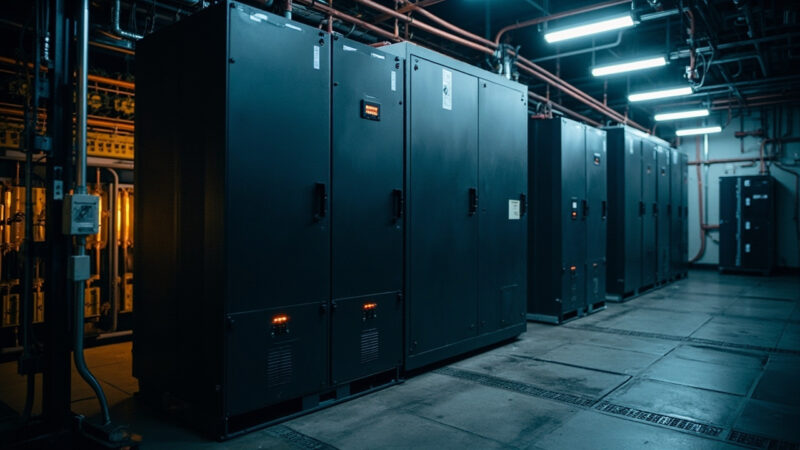
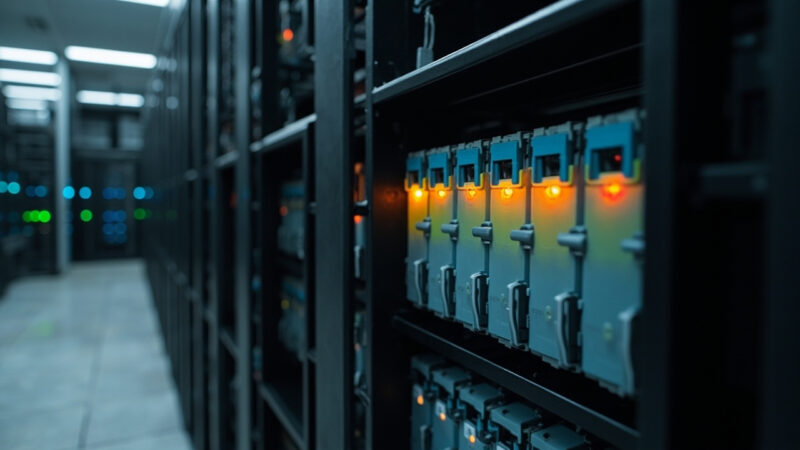
Why Does Your UPS Last Only 3 Years? How to Avoid It (+ Maintenance Checklist)
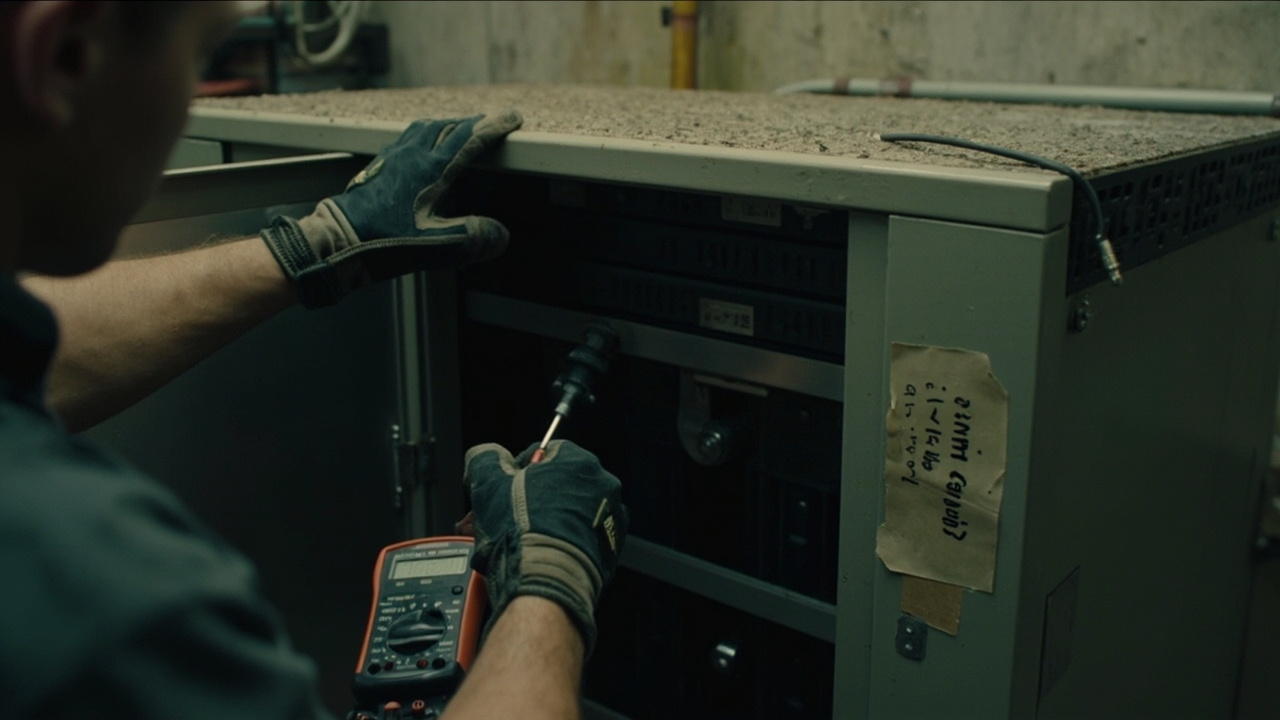
70% of the UPS systems we diagnose in Mexico fail before 5 years. The manufacturer promises 10 to 15 years. What is happening? After reviewing more than 200 UPS units in Mexican data centers, the causes are always the same. Here we explain them and give you the checklist that prevents them.
The 6 causes of premature death
1. High ambient temperature (over 25°C / 77°F). The 10°C rule: for every 10°C above 25°C, battery life is halved. The problem in Mexico: many data centers keep the UPS in a room without dedicated air conditioning, or the AC fails and nobody notices until it is too late. Solution: temperature sensor in the UPS room, alert if over 25°C (77°F), redundant AC.
2. Never tested under real load. UPS units are tested with panel self-tests that only verify the electronics, not the batteries. The problem: batteries can have 30% capacity and the UPS reads OK on the panel. When a real outage hits, the UPS lasts 5 minutes instead of 30. Solution: annual test under real load (load bank) plus recording of backup time.
3. Lack of cleaning. Dust accumulates on fans and reduces cooling. Connections sulfonate and generate resistance. Solution: quarterly cleaning with compressed air plus re-tightening of connections.
4. Generic or low-quality batteries. In Mexico, 40% of battery replacements use non-original brands to save 30%. The problem: generic batteries last 2 to 3 years versus 5 to 7 for originals. Solution: strict brand policy plus total cost of ownership analysis.
5. No preventive replacement plan. UPS batteries are consumables. Useful life: 3 to 5 years (VRLA), 8 to 12 years (lithium). The problem: if it works, leave it alone leads to catastrophic failures. Solution: replacement schedule at 3 years (VRLA) or 8 years (lithium), independent of condition.
6. No operating log. 80% of data centers in Mexico do not keep a UPS operation log. They do not know how many times it switched to battery mode, what the last maintenance date was, what the average room temperature is, or what the measured real autonomy is. Solution: digital log (can be Excel) with monthly review.
The maintenance checklist that works
Monthly checklist (30 min): UPS room temperature reading, battery voltage reading, visual sulfation inspection, panel event review, fan operation check. Quarterly checklist (2 hours): compressed air cleaning, connection re-tightening, panel self-test, connection thermography, log review. Annual checklist (1 day): load bank test (30 min at 80% load), sensor calibration, real versus theoretical autonomy analysis, battery replacement plan if over 3 years. Scheduled replacement: VRLA batteries every 3 to 5 years, lithium batteries every 8 to 12 years, capacitors every 7 to 10 years, fans every 5 to 7 years.
The ROI of proper maintenance
Annual maintenance cost: 5 to 8% of the UPS value. Failure cost: 10 to 50 times the maintenance cost. For a USD $28,500 (approx. $500K MXN) UPS: professional maintenance USD $1,700 to $2,300 per year (approx. $30K to $40K MXN). Failure cost: USD $28,500 to $114,000 (approx. $500K to $2M MXN, equipment plus load damage plus downtime).
Not maintaining your UPS is like not changing the oil in your car: it costs 10x more when it breaks.
Is your UPS at risk?
If you have a UPS that is over 3 years without battery change, is in a room without dedicated AC, has never been tested under real load, or has no operation log — it is probably at risk.
Sources
[1] IEEE 1188-2005 — Recommended Practice for Maintenance, Testing, and Replacement of Valve-Regulated Lead-Acid (VRLA) Batteries — https://standards.ieee.org/ieee/1188/4776/
[2] ASHRAE TC 9.9 — 2024 Thermal Guidelines for Data Centers (5th Edition) — https://www.ashrae.org/file%20library/technical%20resources/bookstore/ashrae_tc0909_5th_edition.pdf
[3] Schneider Electric — UPS Maintenance Best Practices — https://www.se.com/us/en/product-subcategory/3780-preventive-maintenance/
[4] Vertiv — UPS Service and Maintenance — https://www.vertiv.com/en-us/services/
[5] Wikipedia — Uninterruptible Power Supply (background reference) — https://en.wikipedia.org/wiki/Uninterruptible_power_supply
Want to master this?
Noxtel Academy →