What Is a Data Center and How Does It Work? Complete 2026 Guide
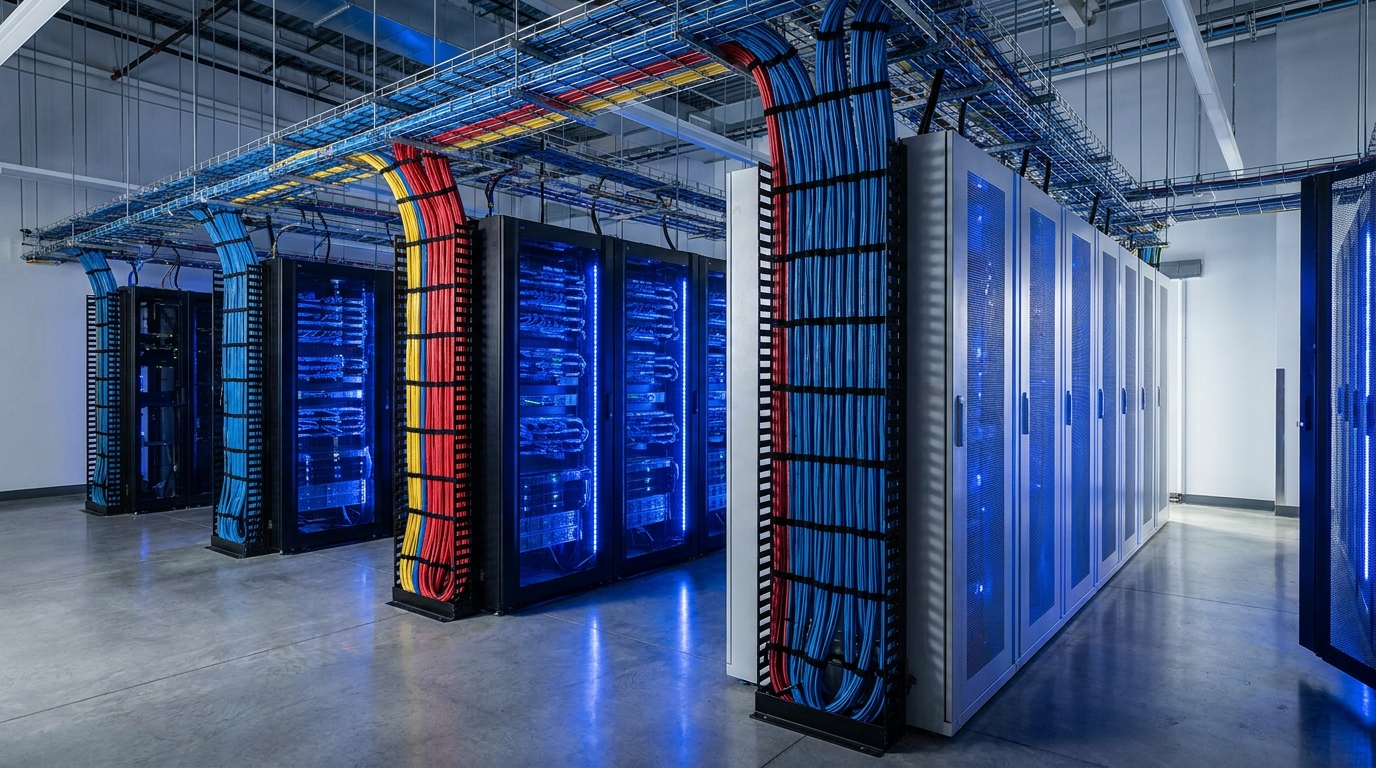
Your business depends on data. But do you know where it actually lives? A data center is a physical facility designed to store, process, and distribute large volumes of information in a secure and continuous way. It is not just a room with servers. It is a complete ecosystem of critical infrastructure.
Think of it as the digital heart of any modern organization. Your applications, databases, backups, email, ERP — everything that makes your business run lives there.
The 4 pillars of a data center
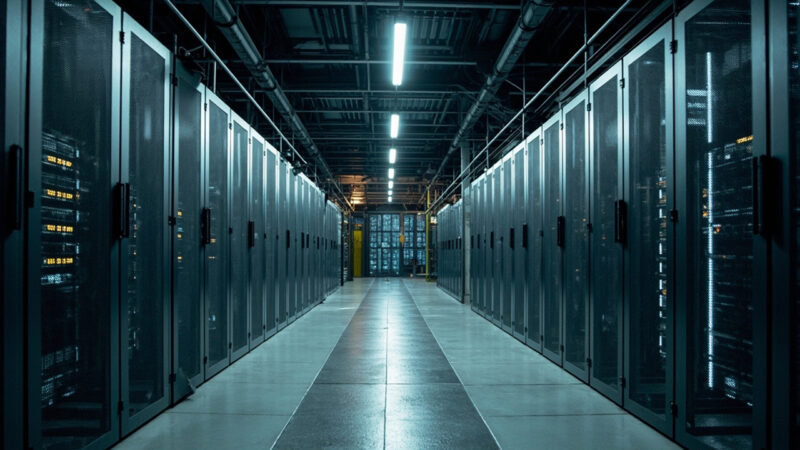
1. Compute infrastructure. Servers are the core. They can be: rack servers mounted in standardized cabinets, blade servers for high density in reduced space, or mainframes for massive transactional workloads. Each server runs the applications and processes your business needs to operate day to day.
2. Storage. Processing is not enough. You need to save, protect, and recover information. Modern storage systems include SAN (high speed, for databases and critical applications), NAS (medium-high speed, for shared files and backups), Object Storage (variable speed, for unstructured data and media), and All-Flash arrays (very high speed, for maximum performance).
3. Network and connectivity. A data center without robust connectivity is an expensive building with computers turned off. The network infrastructure includes high-density switches to interconnect servers, routers for external and internet connectivity, firewalls for perimeter security, Cat6A or fiber optic structured cabling for speeds of 10 Gbps and above, and multiple internet providers for redundancy.
4. Physical infrastructure (facility). This is where a data center differs from an improvised server room: precision cooling to maintain temperature between 18°C (64°F) and 27°C (80°F) and controlled humidity (40 to 60% RH), backup power with UPS + diesel generators to guarantee 99.999% uptime, clean agent fire detection and suppression systems (FM-200, Novec 1230), 24/7 environmental monitoring of temperature, humidity, water leaks, smoke, and access, and physical access control with biometrics, cards, and CCTV.
Tier classification (Uptime Institute)
The Uptime Institute classifies data centers into 4 levels based on availability and redundancy: Tier I — 99.671% availability, no redundancy, typical use: SMBs and testing. Tier II — 99.741%, partial redundancy, typical use: medium businesses. Tier III — 99.982%, concurrently maintainable, typical use: large enterprises. Tier IV — 99.995%, fault tolerant, typical use: banking, healthcare, government.
Most enterprises in Mexico operate between Tier II and Tier III. If your business cannot afford to stop for even 1 hour per year, you need Tier IV.
How a data center works on the inside
The basic flow is: data input — users, applications, or devices send information through the network. Processing — servers run applications and process requests. Storage — data is saved in redundant storage systems. Data output — processed information returns to the requester. Constant monitoring — monitoring systems watch every component 24/7. All of this happens in milliseconds. And it never stops.
Why your business needs a professional data center
If your data center is a closet with a fan and a supermarket UPS, you are one step away from losing everything. Reasons to invest in professional infrastructure: business continuity (every minute of downtime costs real money), data security (protection against unauthorized access, fire, flooding), scalability (grow without replacing your entire infrastructure), regulatory compliance (many regulations require specific infrastructure standards), and performance (faster applications = more productive employees = more satisfied customers).
Own data center vs. cloud vs. hybrid
It is not a simple decision. Each model has its place. An own data center gives you total control and upfront investment, but it is not a simple decision.
Sources
[1] Uptime Institute — Tier Classification Standard — https://uptimeinstitute.com/tiers
[2] TIA — ANSI/TIA-942-B Telecommunications Infrastructure Standard for Data Centers — https://tiaonline.org/product/ansi-tia-942/
[3] ASHRAE TC 9.9 — 2024 Thermal Guidelines for Data Centers (5th Edition) — https://www.ashrae.org/file%20library/technical%20resources/bookstore/ashrae_tc0909_5th_edition.pdf
[4] Wikipedia — Data Center (background reference) — https://en.wikipedia.org/wiki/Data_center
Want to master this?
Noxtel Academy →