Vertiv Geist: The Intelligent PDUs That Complete Vertiv’s Rack Ecosystem
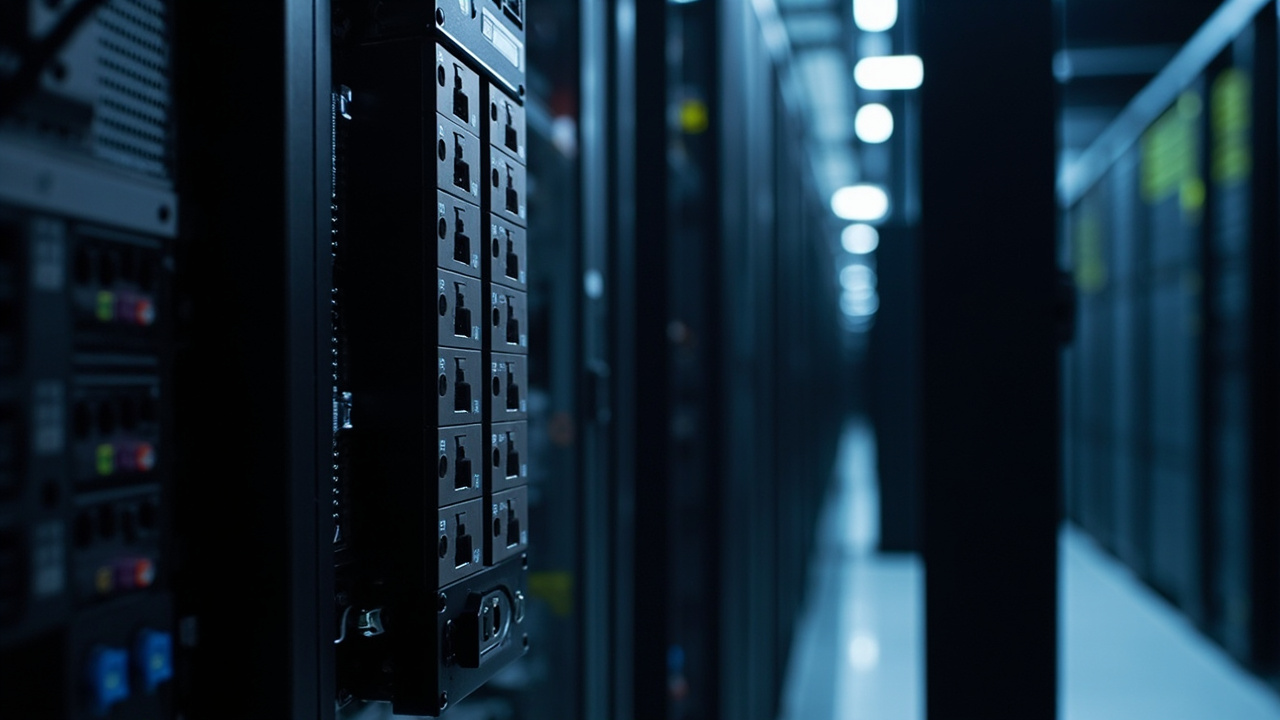
PDUs (Power Distribution Units) are one of the most underestimated components of the data center. Although they look simple — they distribute electricity to the equipment in the rack — their impact on operations is enormous: they determine the quality of the power that reaches the servers, enable granular per-outlet monitoring, and are critical for capacity management.
The Vertiv Geist line is one of the most widely deployed PDU families in the world, with a strong presence in the Mexican market through the Vertiv channel network. This guide summarizes the main categories and selection criteria.
Geist PDU Categories
Geist organizes its portfolio into five categories, ordered from least to greatest functionality:
- Basic: power distribution without monitoring or switching. The most economical option. Typically used in sites where monitoring is external (at the UPS or upstream PDU level).
- Metered: PDU with local metering at the input level. Allows viewing the total PDU consumption on an LCD screen. Does not monitor individual outlets.
- Monitored: in addition to total consumption, allows remote monitoring per outlet over the network. Useful for identifying which equipment consumes the most inside the rack.
- Monitored + Switched: same as Monitored, but with the ability to switch individual outlets remotely. Allows restarting equipment remotely without manual intervention.
- Switched: outlet switching only, without granular monitoring. Less common than the previous categories.
For modern data centers, Monitored and Monitored + Switched are the most popular options. They provide per-outlet visibility, which is critical for capacity optimization and remote troubleshooting.
Form factors and capacities
Geist PDUs are offered in different physical formats and electrical capacities:
- Vertical (0U): mounted at the rear of the rack, without occupying U space. Ideal for 42U or larger racks.
- Horizontal (1U or 2U): mounted in the U spaces of the rack. For racks with limited vertical space or where front access is desired.
- Common capacities: 16A, 32A, 63A for three-phase (415V); 20A, 30A, 50A for single-phase (120/208V).
- Outlet types: IEC C13, C19, NEMA 5-20R, NEMA L6-30R, and combinations depending on the market.
For modern data centers with blade and high-power servers, C19 outlets are increasingly common. Geist PDUs with C13/C19 mixes on the same PDU are popular for heterogeneous racks.
Integration with the Vertiv ecosystem
The strongest differentiator of Geist over other PDU brands is the native integration with the Vertiv ecosystem:
- Vertiv Trellis: DCIM platform that consolidates monitoring of PDU, UPS, cooling, and environmental sensors in a single console.
- Vertiv LIFE Services: remote monitoring 24/7 from Vertiv’s operations center, with automatic response to alerts.
- Vertiv Environet: monitoring software that allows viewing historical trends and configuring alert thresholds.
- Geist Sensors: temperature, humidity, airflow, and leak detection that connect directly to Geist PDUs via USB or RJ-12.
Key technological differentiators
In addition to the five functional categories, Vertiv Geist stands out for two hardware differentiators that few premium brands (APC, Raritan, Server Technology) offer at the same level:
- PDU Upgradeable: the PDU monitoring module is removable and can be replaced or upgraded without interrupting the rack’s power supply. This means that a Basic PDU installed 5 years ago can be converted to Monitored or Switched by replacing the module, without replacing the entire PDU and without downtime. It is an upgrade path that protects the initial investment and aligns monitoring capability with the data center’s growth.
- Combination Outlets C13/C19: Vertiv offers two-in-one universal outlets that accept both C13 and C19 plugs in the same receptacle. This eliminates the classic problem of heterogeneous data centers, where a rack with a mix of low- and high-power servers requires two different PDUs or the use of adapter cables. With Combination Outlets, a single PDU serves all equipment, simplifying cabling, cable inventory, and capacity management.
For data centers already operating with Vertiv UPS and cooling, specifying Geist maintains platform consistency and simplifies operations. Integration reduces man-hours for the operations team and improves incident response time.
When to specify Geist
The decision between Geist and other PDU brands depends on:
- Existing ecosystem: if the data center already has Vertiv UPS and cooling, Geist is the natural choice for integration.
- Per-outlet monitoring need: if granular visibility of consumption per server is required, Geist Monitored or Monitored + Switched are the option.
- Remote switching: if the operation requires restarting equipment remotely without physical intervention, Geist Switched or Monitored + Switched are necessary.
- Integrator capability: Geist has good documentation and support, which facilitates installation by any Vertiv-certified integrator.
- Premium competition: Geist competes directly with APC (Schneider), Raritan (Legrand), and Server Technology in the high-end smart PDU segment. The differentiator against these premium brands is native integration with Vertiv Trellis and the Vertiv ecosystem software platform, not a lower price.
When NOT to specify Geist
There are scenarios where other brands may be better:
- Different ecosystem from Vertiv: if the data center already operates with a BMS or DCIM from another provider and native integration with Trellis is not being sought, the premium alternatives from APC, Raritan, or Server Technology may offer an equivalent proposition in per-outlet monitoring.
- Small data center with external monitoring: if per-outlet monitoring is not required, a Basic PDU may be sufficient.
Maintenance and service life
Geist PDUs are designed for a service life of 10-15 years in continuous operation. The internal components (breakers, contactors, sensors) are industrial-grade and sized for 24/7 use.
Points to consider for maintenance:
- Firmware: periodic update via web interface. New versions add functionality and address vulnerabilities.
- External sensors: replacement every 5-7 years depending on environmental conditions.
- Outlet replacement: in case of mechanical wear, C13/C19 outlets can be replaced individually.
- Sensor calibration: every 3-5 years to maintain accuracy in consumption readings.
Sources
[1] Vertiv — Geist PDU product catalog: https://www.vertiv.com/en-us/products-catalog/rack-power-distribution/geist-pdu/
[2] Vertiv — Geist upgradeable PDU technology: https://www.vertiv.com/en-us/products-catalog/rack-power-distribution/geist-pdu/upgradeable/
[3] Vertiv — Trellis DCIM platform: https://www.vertiv.com/en-us/products-catalog/software/trellis-platform/
[4] Wikipedia — Vertiv: https://en.wikipedia.org/wiki/Vertiv
Want to master this?
Noxtel Academy →