The Myth of the Water-Guzzling Data Center in Mexico: What Has Changed in the Last 10 Years
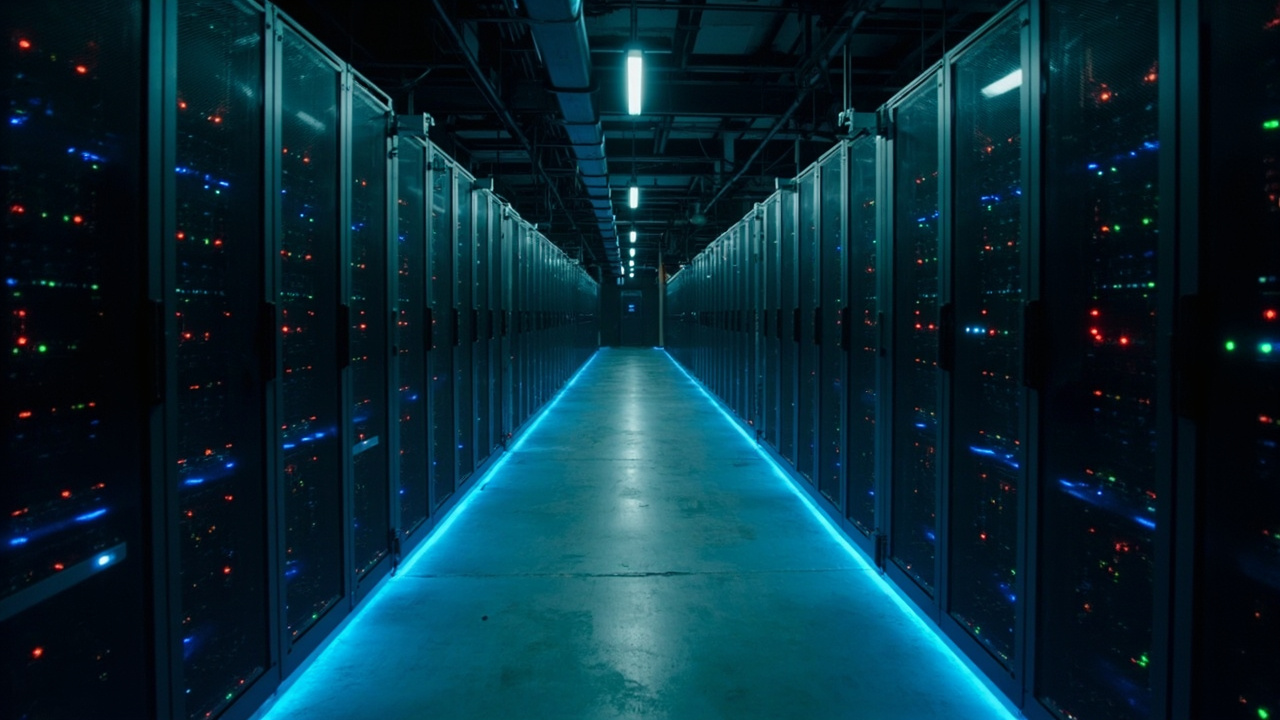
Every time a data center campus is announced in Querétaro, the debate is the same: “they’re going to run out of water in the region.” The conversation fills with headlines comparing a data center’s consumption to that of an entire city, and with opinion columns that have already taken as given that the country’s next water crisis will be signed by the technology industry.
The reality is more technical —and more boring— than the headline. The cooling technology of a modern data center is less like a pool evaporating and more like a car radiator: a closed loop where the liquid circulates without escaping. In the following lines we separate the engineering from the myth, explain the metric you actually need to read (WUE — Water Usage Effectiveness) and leave you with a short list of questions to bring to your next infrastructure committee.
Why did data centers earn their reputation as water vampires?
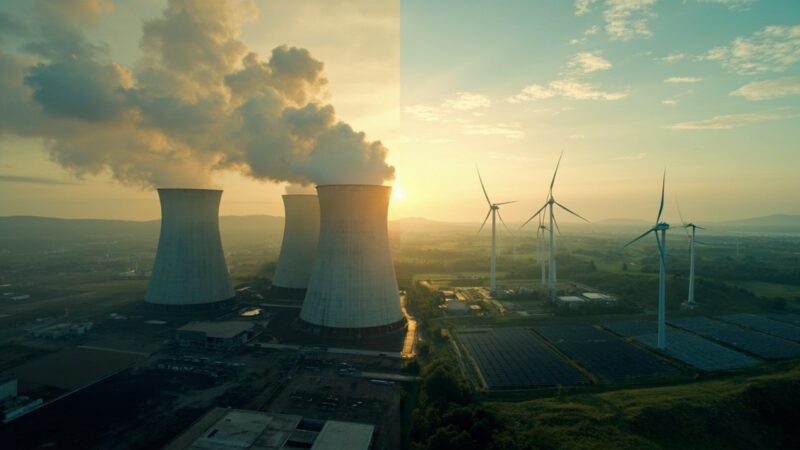
For nearly two decades, the standard way to cool a server room was the evaporative cooling tower: water that falls through a tower, evaporates on contact with the air, and as it evaporates it carries away the heat. It’s the same principle as the human body when it sweats — it works, but the water is lost.
The problem wasn’t the principle, it was the scale. A traditional tower could consume on the order of millions of liters per day in a single mid-sized operation. Multiplied by all the data centers in the world, the number started to look serious in sustainability reports.
And this is where the first myth lives: many people confuse extraction with consumption. Extraction is the water that enters the building. Consumption is the water that evaporates and never returns to the local network. In an old evaporative tower, consumption was high and that’s why it made headlines. In a modern closed loop, most of the water simply returns to the piping.
The three technologies that changed the calculation
Liquid cooling isn’t new, but its mass adoption is. Three technologies are responsible for the shift:
- Closed-loop circuits. The coolant circulates through sealed pipes between the servers and an external heat exchanger. It doesn’t evaporate. What’s lost is only what escapes through leaks or maintenance — negligible amounts in normal operation.
- Direct-to-chip and immersion cooling. Instead of cooling the entire room with air, a liquid-cooled cold plate is placed in direct contact with the processor, or the entire server is submerged in a dielectric fluid (a liquid that doesn’t conduct electricity and absorbs heat efficiently). Microsoft took this to the extreme in its Natick project, where a prototype data center operated under seawater for two years to investigate precisely this principle.
- Free cooling and adiabatic cooling. If the outside climate is cold or temperate, the mechanical system is simply turned off and outside air or water is used to absorb the heat. In regions like the Bajío, this technique can operate most of the year without using any water at all.
All three converge on the same point: less water, same thermal capacity.
WUE: the metric you really need to learn to read
If you only take away one concept from this article, take away WUE (Water Usage Effectiveness), defined by The Green Grid as the liters of water consumed per kilowatt-hour of IT load. It is to water what PUE (Power Usage Effectiveness) is to energy: a universal metric that allows comparing sites, operators, and designs regardless of size.
The reading is intuitive: lower WUE = greater water efficiency. Modern hyperscale operators publish annual WUE figures below 1.0 liters per kWh; several sites already operate below 0.5 and even near 0.2 in designs optimized with nearly permanent free cooling.
The number matters for one concrete reason: when a provider sells you a data center, they tell you PUE (energy efficiency), they tell you capacity, they tell you uptime. They almost never tell you WUE. Until the local operating authority asks you.
Mexico: the context that almost nobody mentions
The Bajío — Querétaro, San Luis Potosí, parts of Jalisco and Guanajuato — has become over the past five years one of the fastest-growing data center hubs in Latin America, according to industry reports. The reason is the combination of temperate climate, backbone fiber, proximity to the US, and lower operating costs than Monterrey or CDMX.
This brings two consequences that rarely make the headlines:
The local regulatory framework evolves more slowly than the industry. Technical standards for data centers in Mexico still rely to a large extent on international standards (ASHRAE — the association that defines the recommended thermal conditions for computing equipment — and TIA-942 — the standard that classifies redundancy of Tier I to Tier IV sites —) rather than on specific local regulation. This gives the developer and the client significant room — and significant responsibility — to set their own water efficiency standard.
Social pressure is already here. Communities in the Bajío have publicly expressed their concern about water use in announced projects. That pressure is legitimate, and, with the current regulatory framework, the only verifiable response an operator can give is its published WUE.
Five phrases worth retiring
- “Data centers consume the equivalent of a city.” True only for the subset of older sites with open evaporative towers. For modern designs with closed-loop and free cooling, the figure drops by several orders of magnitude.
- “They are going to dry up Querétaro.” The entire data center industry globally represents a very small fraction of national freshwater consumption — a figure typically reported below 1% in technology-intensive economies. In Mexico, with our dominant agricultural water-use mix, that fraction is even smaller.
- “All the water evaporates.” In closed-loop design, almost nothing evaporates. The confusion between withdrawal and consumption continues to fuel imprecise headlines.
- “They need drinking water.” Modern designs use recycled water, rainwater, or industrial water not suitable for human consumption.
- “They always need cooling.” In temperate climates like the Bajío, the mechanical cooling system is off a good part of the year. It only comes into operation during heat waves.
What to ask before contracting or expanding a data center
Bring this list — short and verifiable — to your next committee meeting:
- What is the published WUE of the site where I will operate? If the provider doesn’t know, be concerned.
- Is the system closed-loop, evaporative, adiabatic, or direct-to-chip? Each one has a different implication for annual water consumption.
- What water source does it use? Municipal potable water, treated water, rainwater, or industrial water completely changes the impact on the community.
- Is the free cooling operational most of the year, or is it an occasional-use backup? The difference between an enabled technology and a declared technology shows up on the invoice.
- What is its disclosure plan in the face of social pressure? Asking is already part of the due diligence standard.
No magic answer, no single tool. But whoever knows how to ask knows how to negotiate.
Ready to audit the water consumption of your data center with Noxtel?
If you’re evaluating where to operate your next site, expanding an existing data center, or simply need to translate into technical metrics what your operator is promising you, we can help. At Noxtel we work with clients and developers on thermal efficiency: WUE, PUE, free cooling, chiller sizing, Tier redundancy (TIA-942 standard ranging from Tier I to Tier IV), and the rest of the technical language that providers use (and sometimes hide).
Let’s talk on WhatsApp and get started with a short session to review your specific case.
Sources and references
[1] The Green Grid — Water Usage Effectiveness (WUE) (definition of the metric and main category of water efficiency in data centers) — https://www.thegreengrid.org/
[2] Microsoft — Becoming Water Positive (Microsoft’s commitment to achieving “water positive” status by 2030, with usage reduction, replenishment of local watersheds, and community investment) — https://www.microsoft.com/en-us/corporate-responsibility/sustainability/water
[3] IEA — Data Centres and Data Transmission Networks (thematic portal of the International Energy Agency on electricity and water consumption in the sector, with annual reports) — https://www.iea.org/energy-system/buildings/data-centres-and-data-transmission-networks
[4] ASHRAE — Thermal Guidelines for Data Processing Environments (international standard developed by ASHRAE Technical Committee TC 9.9 that defines recommended ranges of temperature, humidity, and airflow for computing equipment. Most recent version published as ASHRAE Datacom Series) — https://www.ashrae.org/technical-resources
[5] TIA — ANSI/TIA-942-C Telecommunications Infrastructure Standard for Data Centers (standard that classifies the redundancy and resilience of a site from Tier I to Tier IV) — https://tiaonline.org/product/tia-942-c/
[6] Uptime Institute — Annual Global Data Center Survey and Tier Classification System (annual industry survey and redundancy level classification system) — https://datacenter.uptimeinstitute.com/
Want to master this?
Noxtel Academy →