The Electrical Backbone ⚡️: PDUs, Busways, and How They Distribute Power in Your Data Center
In a modern data center, with its rows of racks and cabinets, delivering power to all IT equipment is a challenge. This is where the Power Distribution Unit (PDU) comes into play. Its job is to distribute electricity from the source, whether the utility grid, a generator, or a UPS, to the IT equipment.
There are two main types of PDUs in the data center:
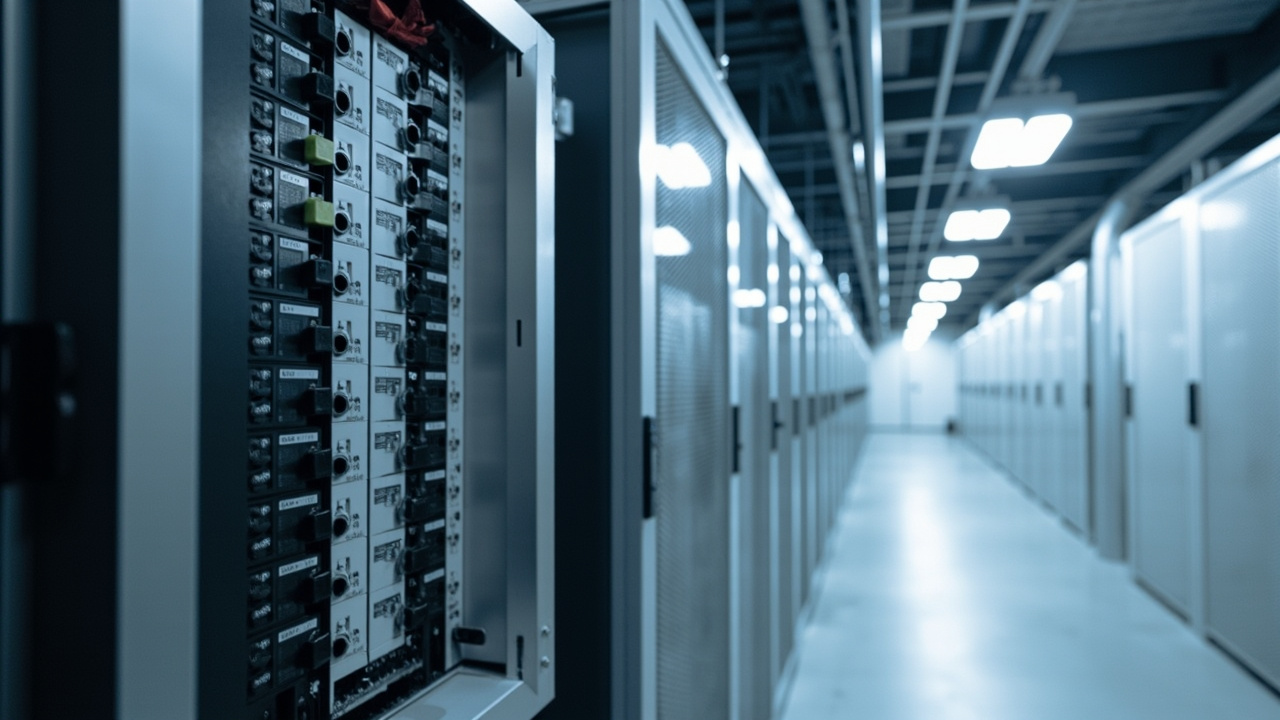
• Rack and Cabinet PDUs (Rackmount PDUs): Think of them as smart “power strips” for servers. They are installed horizontally or vertically in the racks and can have up to 60 outlets, depending on the height of the cabinet. The most advanced units offer power monitoring per outlet and remote management. Larger PDUs can have color-coded sections that coordinate outlets with a circuit breaker to prevent unbalanced loads. Locking features reduce the risk of accidental disconnections.
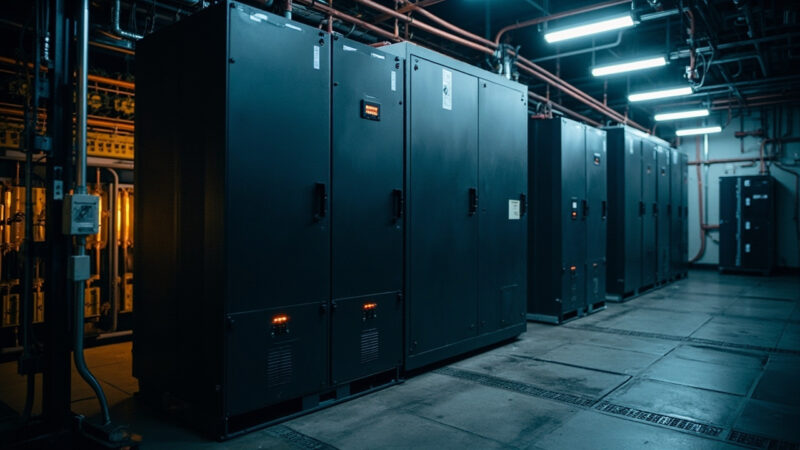
• Floor-Mounted PDUs (Floor PDUs): They are larger units, often the size of a rack or larger, located on the data center floor. They transform one or more high-capacity power sources into multiple lower-capacity supplies to power several rows of racks. They can include transformers and circuit breaker panels.
In addition to PDUs, high-density data centers are adopting an innovative alternative to traditional cables for power distribution: the busway systems.
• Traditionally, cable has been used as the main carrier for electrical power distribution. However, as demand in data centers has grown (up to 5000A and more!), busway has proven to be a very economical and viable alternative to cable in high-current applications. In fact, in many data centers, busway has already replaced cable for these high-current connections.
• A complete critical power distribution design based on busway can significantly reduce capital expenditures (CapEx) when implemented across the entire distribution system.
• Beyond costs, busway offers greater configuration flexibility, “pay-as-you-grow” options, and minimal maintenance. In fact, using busway can be almost 60% more economical than cable for the same system and can free up around 8% of the data center space by not requiring traditional PDU systems in the data room.
Finally, to ensure maximum reliability, the circuit breaker discrimination (selectivity) is crucial. This means that, in the event of a fault, the breaker closest to the problem must trip first, limiting service interruption to the minimum possible amount. This applies from a fault in a rack supply to a problem in a PDU, ensuring that only the minimum necessary portion of the system is affected. A well-thought-out design is the key to continuity! ?️
Sources: “Bus Way vs. Cable: a CapEx comparison – Amazon S3”, “Exploring Data Center PDUs: Floor PDUs vs. Rack & Cabinet PDUs – BLOG – Enconnex”, “Circuit Breaker Discrimination for Reliable Data Centre – Future-tech”, “The Basics of Electrical Data Center Design in 2025 – gbc engineers”, “can anyone help me understand PDUs with in a large Data Center? : r/datacenter – Reddit”
Want to master this?
Noxtel Academy →