Schneider Electric: 190 years from an arms factory to the digital energy revolution
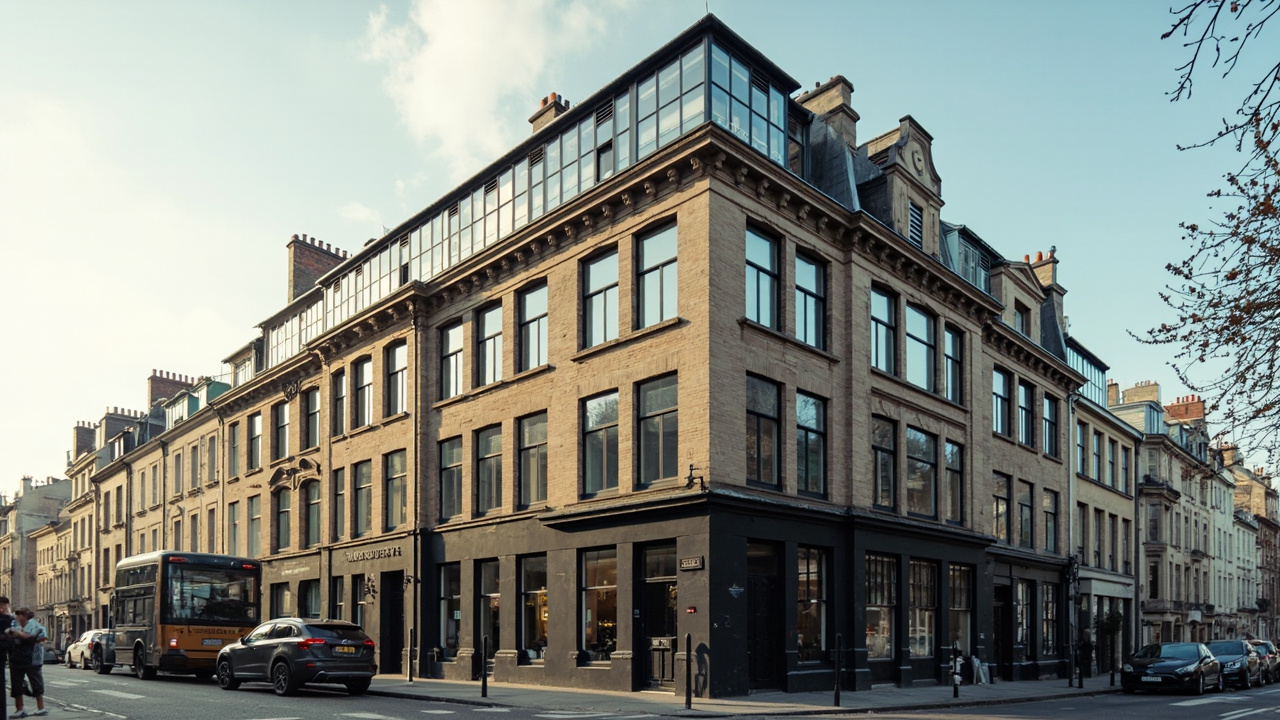
Schneider Electric, headquartered in Rueil-Malmaison, France, is one of the most long-standing industrial companies in the world. Its history spans 190 years, and that journey includes a metamorphosis that took it from manufacturing locomotives and weapons to becoming one of the global benchmarks in electrical management and industrial automation.
To understand why Schneider Electric holds the position it does today in the data center market — and why its brand is associated with reliability — it is worth reviewing the sequence of mergers, acquisitions, and strategic decisions that the company made over nearly two centuries.
1836–1980: From Schneider Creusot to the French Industrial Era
Schneider Electric has its formal origin in 1836, when the brothers Adolphe and Joseph-Eugène Schneider acquired a foundry in Le Creusot, France, called Schneider Creusot. In its first 80 years, the company focused on heavy industry: locomotives, railway equipment, weapons, and shipbuilding.
During the following decades, Schneider became one of the most important industrial conglomerates in France. It participated in the electrification of the country, in weapons production during both World Wars, and in the post-war industrial reconstruction. In 1981, the group faced a crisis that led to one of the deepest restructurings in its history.
1981-1999: The Shift to Electricity
In 1981, the Schneider group was nationalized by the French government of François Mitterrand. The nationalization included Schneider SA, but excluded a subsidiary that few know: Merlin Gerin, manufacturer of low-voltage electrical equipment.
In 1986, when the Chirac government began the privatizations, Didier Pineau-Valencienne — CEO of Schneider at that time — executed a visionary strategy: to concentrate the entire business on electricity and abandon heavy industries. The decision was controversial at the time, but set the course for the company for the following four decades.
1999-2010: The Global Acquisition Era
Starting in 1999, Schneider executed a series of acquisitions that transformed it:
- Lexel (1999): European manufacturer of electrical installation systems, the foundation for the electrical distribution business.
- Square D (1991): American manufacturer of switches and panels. A key operation to enter the North American market.
- Merlin Gerin was already in the group: a French manufacturer of UPS and panels.
- APC (2007): the most transformative acquisition. American Power Conversion was the global leader in small UPS, PDU, and monitoring software. The transaction cost USD 6.1 billion (approximately MXN 113 billion) and established Schneider as the dominant player in UPS for data centers.
- Areva T&D (2010): Areva’s transmission and distribution division, consolidating the medium-voltage business.
- Telvent (2011): software for smart grid and data center management.
During this period, Schneider also adopted the trade name Schneider Electric to reflect its new corporate identity, leaving behind the heavy industrial legacy of the 19th century.
2010-2020: The Digital Shift with EcoStruxure
Under the leadership of Jean-Pascal Tricoire (CEO 2013-2023), Schneider Electric executed the transition into the digital era. The EcoStruxure platform — officially launched in 2016 — became the centerpiece of the strategy: management software for buildings, data centers, industrial plants, and electrical grids, connected to a global installed base of millions of devices.
EcoStruxure is not just software: it is an architecture that integrates hardware, software, and services under a common umbrella. For data centers, EcoStruxure is probably Schneider’s most concrete competitive advantage over Vertiv and Eaton, which have not managed to build an equivalent ecosystem with that depth.
2020-2026: The Era of Electrification and AI
Under Olivier Blum (CEO since 2024), Schneider Electric has accelerated its commitment to electrification and energy efficiency, aligned with global sustainability and decarbonization trends. Demand for data centers for artificial intelligence has been one of the main growth drivers.
The company has reported double-digit growth in its data center portfolio between 2024 and 2025, driven by demand for high-power UPS, liquid cooling, and management software. Schneider operates plants in more than 30 countries, including its manufacturing plant in Monterrey, Mexico, which serves as a regional hub for North America.
What Schneider’s Trajectory Teaches
For a Mexican client, specifying Schneider Electric brings with it one of the most robust supply chains in the country, an extended technical service network, and a mature software ecosystem. The 190-year history is the foundation on which that operational capability was built — and is part of the value proposition that the brand presents in large tenders.
That longevity is also an implicit guarantee: few brands can promise that they will still provide support and spare parts 15 or 20 years from now. Schneider Electric has the financial structure, global coverage, and track record to do so.
Do you need help with solutions for Schneider Electric?
At Noxtel we specialize in the design, supply, installation, and preventive maintenance of critical infrastructure for data centers. If you are comparing equipment, need to size a project, or require certified technical support for Schneider Electric solutions, our engineering team is ready to help you.
? Contact us today and schedule a consultation with the Noxtel team
Sources
[1] Schneider Electric — Corporate history: https://www.se.com/ww/en/about-us/our-history/
[2] Schneider Electric — Annual report 2024: https://www.se.com/ww/en/about-us/investor-relations/financial-results/
[3] Wikipedia — Schneider Electric: https://en.wikipedia.org/wiki/Schneider_Electric
Want to master this?
Noxtel Academy →