PUE: How to Measure the Energy Efficiency of Your Data Center
Your data center consumes electricity. The question is: how much actually reaches the servers? PUE (Power Usage Effectiveness) is the industry standard indicator for measuring the energy efficiency of a data center. It was developed by The Green Grid and has become the universal metric.
The formula is simple: PUE = Total Data Center Energy ÷ Energy that reaches IT Equipment. A PUE of 1.0 would be perfect (all energy goes to servers). In practice, that is impossible. But the closer to 1.0, the better.
Interpreting PUE
1.0 — perfect, impossible in practice. 1.1 to 1.3 — excellent, latest-generation data centers. 1.3 to 1.5 — good, modern industry standard. 1.5 to 2.0 — average, most existing data centers. 2.0+ — deficient, significant improvement opportunity.
The global average is around 1.58. Hyperscalers (Google, AWS) operate between 1.10 and 1.20.
Where the energy is lost
The energy that does NOT reach the servers is consumed in cooling (the largest consumer after servers, 30 to 50% of the total), UPS and electrical distribution (AC/DC conversions, transformers, 5 to 15%), lighting (smaller but constant, 2 to 5%), monitoring and control systems (sensors, BMS, consoles, 2 to 3%), and other (pumping, humidification, dehumidification).
If your PUE is 2.0, for every watt that reaches the server, another watt is lost in infrastructure. You are paying twice what you need.
How to calculate your PUE
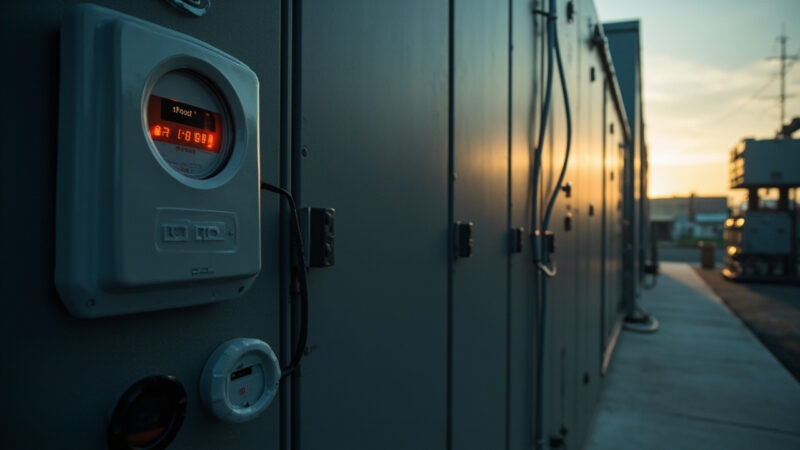
Step 1: measure total data center energy. Use the main entry meter. Include ALL consumption: IT equipment, cooling systems (CRAC, chillers, cooling towers), UPS, PDUs, transformers, lighting, monitoring, and auxiliary systems.
Step 2: measure IT equipment energy. Measure at the outputs of the PDUs that directly feed the racks. Do not include UPS own consumption, distribution losses, or cooling.
Step 3: divide. PUE = Total Energy ÷ IT Energy. Example: total energy 100 kW, energy at servers 65 kW → PUE = 100 / 65 = 1.54 (industry average).
How to improve your PUE
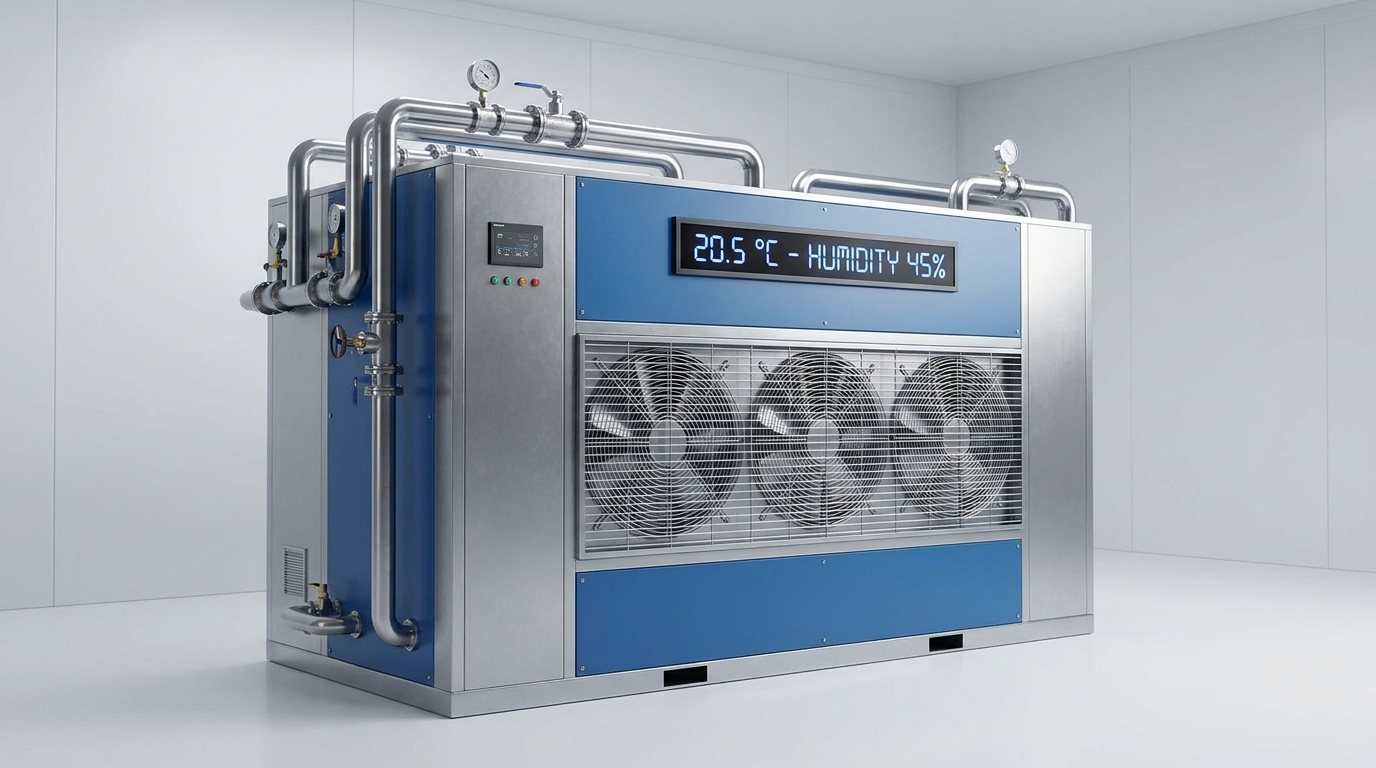
Cooling (the biggest impact): aisle containment to isolate cold from hot aisle (improves PUE by 0.2 to 0.4), higher supply temperature since ASHRAE allows up to 27°C (80°F) inlet, free cooling using outside air when temperature permits, precision cooling vs. commercial air conditioning (the first is 30 to 40% more efficient), and variable-speed fans and pumps that adjust to real demand.
Electrical distribution: high-efficiency UPS at 96%+ (modern double-conversion reaches 97.5%), UPS eco mode (99% efficiency when load permits), and higher-voltage distribution to reduce transformation losses.
Continuous monitoring: temperature sensors per rack to identify hot spots, energy meters per circuit to know exactly where consumption occurs, and DCIM (Data Center Infrastructure Management) software for integrated PUE optimization.
PUE and Mexican regulations
In Mexico, NOM-001-SEDE-2012 and NOM-021-ENER-2014 establish energy efficiency requirements for electrical installations and air conditioning systems. Although there is no specific PUE standard, companies seeking LEED or TIER certifications need to demonstrate energy efficiency. Investors and enterprise customers increasingly demand sustainability metrics. A high PUE is a red flag.
You cannot improve what you do not measure
If you do not know your current PUE, you cannot improve. The first step is always instrumentation: install energy meters at the main entry, install meters at the rack PDUs, calculate your baseline PUE, implement improvements one at a time, and measure the impact of each change.
Sources
[1] The Green Grid — PUE (Power Usage Effectiveness) — https://www.thegreengrid.org/
[2] ASHRAE TC 9.9 — 2024 Thermal Guidelines for Data Centers (5th Edition) — https://www.ashrae.org/file%20library/technical%20resources/bookstore/ashrae_tc0909_5th_edition.pdf
[3] Uptime Institute — 2024 Global Data Center Survey (industry PUE benchmarks) — https://datacenter.uptimeinstitute.com/rs/711-RIA-165/images/2024.GlobalDataCenterSurvey.pdf
[4] DOF — NOM-001-SEDE-2012 (Norma Oficial Mexicana, instalaciones eléctricas) — https://www.dof.gob.mx/
[5] Wikipedia — Power Usage Effectiveness (background reference) — https://en.wikipedia.org/wiki/Power_usage_effectiveness
Want to master this?
Noxtel Academy →