How to deploy a modular data center in 30 days: checklist and common errors
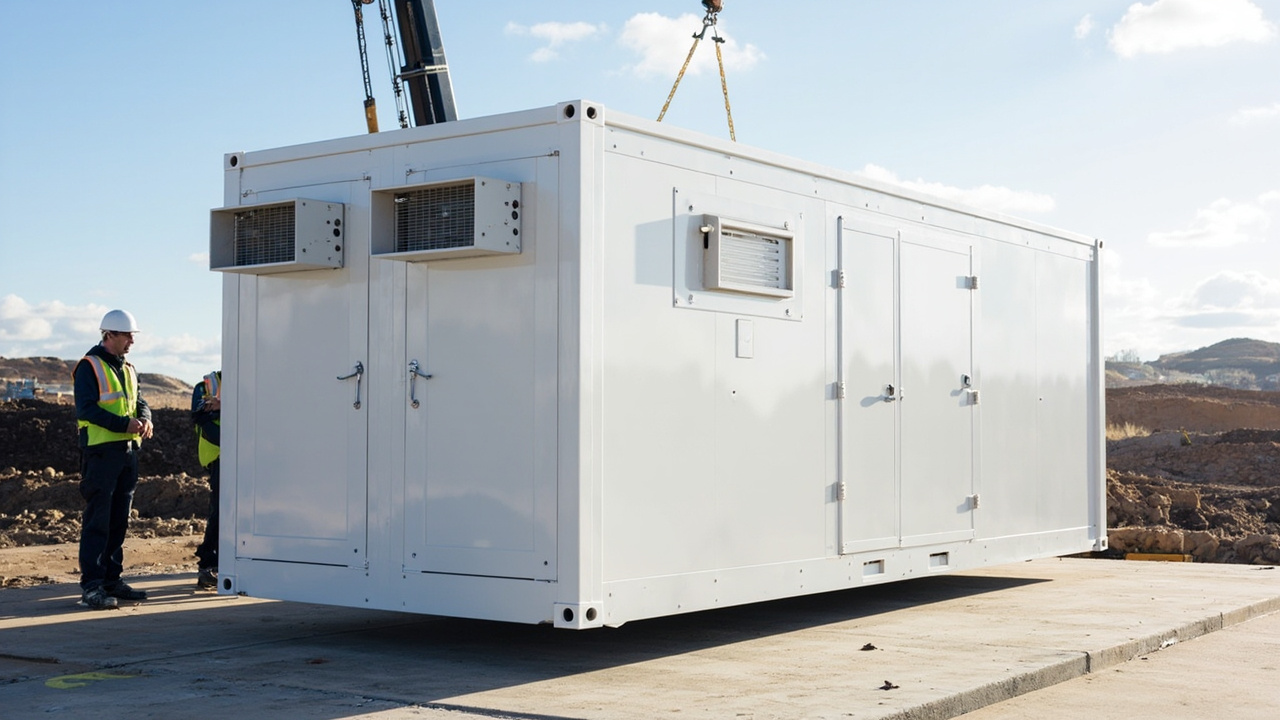
Deploying a modular data center in a few weeks is achievable when the scope is well-defined and stakeholders know what to expect. What slows down the project is not the technology; it is the unresolved questions.
Below is a practical methodology based on real deployments, with no magic timelines.
What goes in and what does not in a modular data center
A modular data center (also called prefabricated or all-in-one) typically covers mid-range capacity needs: 10 to 50 racks, 50 to 500 kW of load, dedicated connectivity. It is not a hyperscaler and not an edge cabinet. It is a modular unit integrated on site, delivered as one or more factory-preconfigured modules.
When it comes to time, what methodology accelerates is capex integration, not equipment manufacturing. The critical path is the supply chain and civil coordination.
Phase 1: weeks 1 to 2, design and procurement
- Define scope precisely. Load, racks, network, electrical topology. Without this, no serious quote is possible.
- Survey the site. Electrical service, slab, vehicle access, backbone fiber. If the site is not validated, surprises appear in week 3.
- Order the critical equipment. UPS, chillers, racks, PDUs, core switches. Typical lead time: 4 to 8 weeks, so some items must be ordered earlier.
Phase 2: weeks 2 to 3, civil works and site preparation
- Electrical fit-out. Service entrance, transformer, distribution panel, conduit. This is what consumes the most time.
- Raised floor or access floor. If applicable, the most expensive and longest item in the schedule.
- Fiber connection. Carrier splice, site arrival, testing.
Phase 3: weeks 3 to 4, installation and integration
- Equipment reception and mounting. Racks, UPS, chillers. Each supplier in sequence.
- Power and data cabling. Category 6A / fiber, per design.
- BMS / DCIM integration. Sensor connection and monitoring software setup.
- Individual testing. Every UPS, every chiller, every breaker. Before energizing anything.
Phase 4: week 4, commissioning and handover
- Progressive load tests. From 25% to 100% in steps.
- Failure simulation. Controlled service interruption, validate UPS autonomy.
- Final documentation. As-built diagrams, manuals, calibration certificates.
- Operations team training. Without this, the handover is incomplete.
Errors that cost the most time
- Underestimating the electrical service. Most serious delays originate here.
- Procuring the UPS without correctly sizing the battery bank. This leads to reorders.
- Not coordinating heavy equipment arrival with site access. There are days when modules cannot be moved through the door.
- Skipping or omitting the individual commissioning tests. Without them, the operations team receives a data center without knowing what actually works and what is pending.
- Closing the project without updated documentation. Operations start with the debt of having no drawings.
Thirty days is realistic when the scope is clear and the supply chain has no bottlenecks. When there are gray zones, the timeline doubles. Honest planning avoids that scenario.
Sources
[1] TIA — ANSI/TIA-942-B (Telecommunications Infrastructure for Data Centers): https://www.tiaonline.org/
[2] Uptime Institute — Tier Classification and Operational Sustainability: https://uptimeinstitute.com/tier-classification/
[3] Schneider Electric — Prefabricated Modular Data Centers (vendor reference): https://www.se.com/
[4] Vertiv — Modular Data Center Solutions (vendor reference): https://www.vertiv.com/en-us/solutions/edge-computing/
[5] Wikipedia — Modular Data Center (background reference): https://en.wikipedia.org/wiki/Modular_data_center
Want to master this?
Noxtel Academy →