How to Build a Data Center in Mexico: A Step-by-Step DPI Playbook
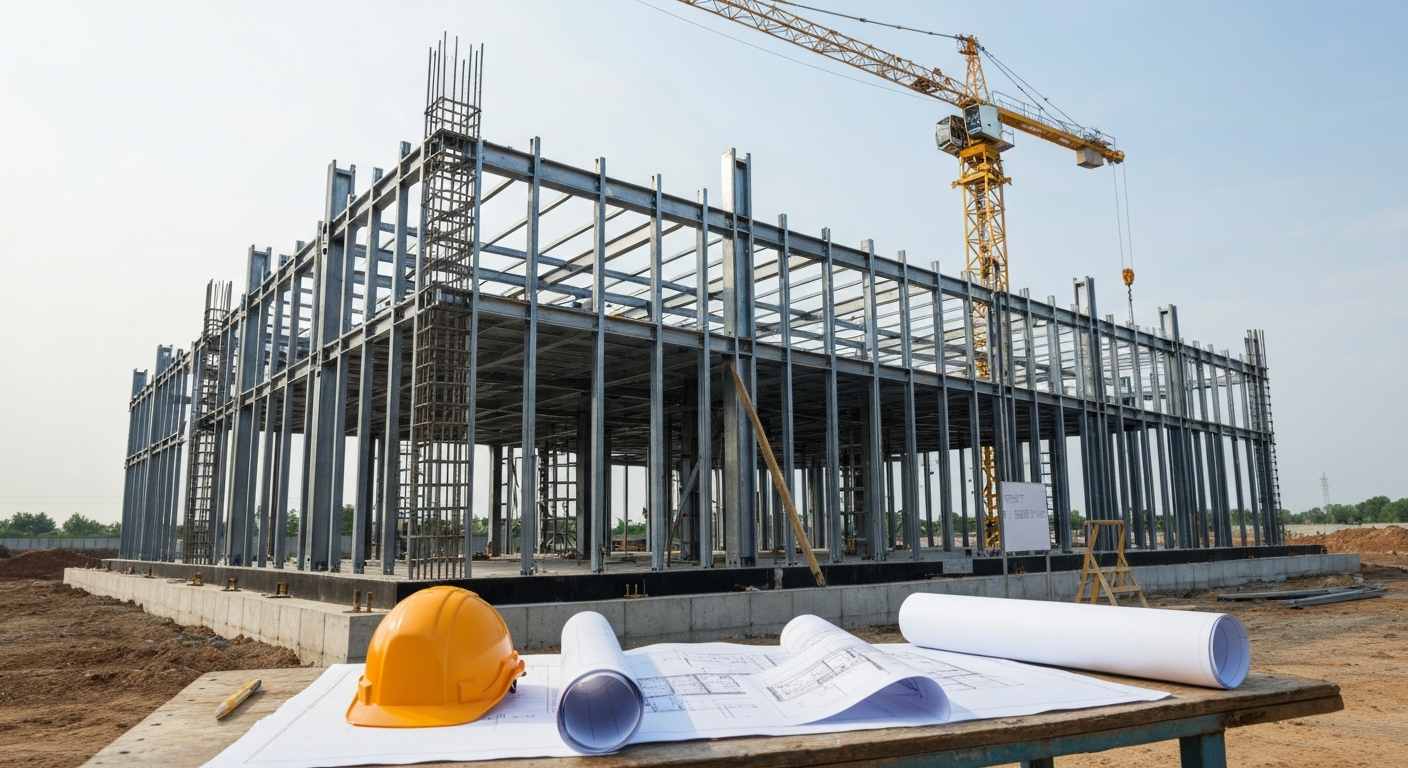
Building a data center in Mexico is not a civil construction project with servers inside. It is a critical infrastructure project with zero tolerance for failure, where the design phase concentrates 80% of the decisions that later reflect in operating cost, availability, and growth capacity. Most projects that are delayed and become more expensive do not fail due to civil works or technology, but because the Design, Procurement, and Installation (DPI) phases were treated as sequential when they are actually iterative.
This playbook describes the three phases with the necessary depth so that a project director, facility manager, or corporate CTO can evaluate whether their general contractor is executing with critical infrastructure discipline or commercial construction discipline.
Phase 1 — Design: the project’s most expensive decision
The most common mistake is to start the design phase with a predefined layout. A data center design must begin with four parameters, in this order:
- Target IT load for 5 years: not the current load, but the projected one. It defines density per rack, initial number of racks, and phased growth plan.
- Uptime Institute Tier objective: Tier III is the operational floor for 24/7. Tier IV is only justified if the cost of downtime exceeds the additional cost of duplicating all components. The Tier decision defines the entire electrical and mechanical architecture.
- Site climate: Querétaro, Monterrey, and Guadalajara have different climates that directly affect mechanical design. Querétaro requires cooling capacity up to 38 °C dry bulb; in coastal areas, saline corrosion must be considered.
- Availability of power and water: the quality of CFE (Comisión Federal de Electricidad) electrical supply in the area defines whether the design requires dual utility feeds, parallel generators, or storage systems (lithium-ion batteries). Water defines the viability of free cooling and adiabatic cooling.
With these four parameters fixed, the design is developed across five specialties that must be coordinated from the outset: civil architecture, electrical system, mechanical system (HVAC, heating, ventilation, and air conditioning), telecommunications networks, and physical security. If any one is developed in isolation, interferences between them will appear during construction with their corresponding additional cost.
Phase 2 — Procurement: how to bid without costs rising by 25%
The purchase of critical equipment for a Mexican data center has three peculiarities that make it different from a commercial construction bid:
- Real vs. declared lead time: UPS, chillers, and generators from manufacturers like Vertiv, Schneider, Trane, and Eaton have lead times of 12 to 26 weeks from factory to site. If the supplier declares 8 weeks, they are fabricating or using in-stock equipment without full specification. The project schedule must be built from the worst lead time, not the average.
- Technical specification vs. equivalence: in Mexican bids, it is common to accept “technical equivalence” which results in equipment with lower specifications at the price of the leading brand. The clause must define verifiable parameters (partial load efficiency, MTBF, certifications) rather than just general characteristics.
- Exchange rate and peso-dollar parity: 85% of critical equipment is imported. The exchange rate adjustment clause in contracts longer than 6 months must be anticipated from the RFP. Projects that omit this are exposed to devaluations that can consume the margin in a week.
Phase 3 — Installation: the discipline of commissioning
Data center installation is measured by commissioning discipline (Cx, a formal process of verification and integrated testing), not by the speed of construction progress. A 2 MW project energized in 10 months without complete commissioning will operate poorly for the next 24 months while faults that should have been detected at the factory and during pre-energization are identified and corrected.
Tier III data center commissioning follows five progressive levels:
- Level 1 — Factory Acceptance Test (FAT): tests of each subsystem at the factory, before shipment. Documented with video and a logbook signed by the manufacturer.
- Level 2 — Site Acceptance Test (SAT): verification that each subsystem arrived complete and functional at the site, before installation.
- Level 3 — Pre-functional Testing (PFT): individual tests of each installed equipment, without load, verifying mechanical and electrical parameters.
- Level 4 — Functional Performance Testing (FPT): integrated tests of systems operating together, under simulated load conditions.
- Level 5 — Integrated Systems Testing (IST): final test of the complete site under real or simulated load, including controlled failure scenarios. This is the test that validates Tier certification.
Six Deliverables Your Contractor Must Sign
At project closeout, there are six documents that the general contractor and subcontractors must deliver signed. Without them, the operational warranty of the site remains incomplete:
- As-Built drawings (drawings that reflect the actual construction, not the original design) in native format (DWG, RVT) and PDF, delivered by all specialties.
- Commissioning reports for all five levels, with signatures from field technicians and the commissioning authority (an independent authority that supervises testing, usually a third party hired by the owner).
- Instrument calibration certificates (energy meters, temperature sensors, network analyzers) with traceability to national standards.
- Operations staff training logbook, including agenda, duration, and attendees.
- Operation and Maintenance (O&M) manuals per subsystem, in Spanish.
- Results of the Owner Acceptance Test (OAT) with the punch list 100% closed.
Mexico-Specific Regulatory Pitfalls
There are three Mexican regulations that a data center project frequently underestimates:
- NOM-001-SEDE-2018: governs electrical installations. Final verification by an accredited Verification Unit is mandatory to obtain the compliance opinion. Without it, there is no formal CFE electrical service.
- Environmental Impact Statement (MIA): depending on the municipality and project size, an MIA is required before SEMARNAT (Secretaría de Medio Ambiente y Recursos Naturales). Diesel generators over 1 MW trigger the threshold in most states.
- Land use and construction license: in Querétaro and Monterrey, data centers are compatible industrial land use, but in Mexico City and its metropolitan area, there are metropolitan restrictions that can make a site unfeasible.
A well-designed but poorly managed regulatory project is delayed for months. DPI discipline includes regulatory procedures from the design phase, not as a subsequent requirement.
Sources
[1] TIA — TIA-942 Telecommunications Infrastructure Standard for Data Centers: https://tiaonline.org/products/tia-942/
[2] BICSI — Telecommunications Standards and Methods: https://www.bicsi.org/standards
[3] IEEE — IEEE 1100 Recommended Practice for Powering and Grounding Electronic Equipment: https://standards.ieee.org/ieee/1100/7199/
[4] Uptime Institute — Tier Classification System and Operations: https://uptimeinstitute.com/
[5] ASHRAE — Technical Resources for Data Center Mechanical Design: https://www.ashrae.org/technical-resources
[6] Wikipedia — Data center: https://en.wikipedia.org/wiki/Data_center
Want to master this?
Noxtel Academy →