How much electricity does a data center consume in Mexico: 2026 outlook and energy efficiency opportunities
How much electricity does a data center consume in Mexico? The honest answer: it depends. What we do know is which variables drive consumption, which real opportunities exist to reduce it, and why PUE remains the metric that separates efficient operation from average operation.
Below is a 2026 outlook and the decisions that change measurable consumption.
The variables that define consumption
A data center’s electrical consumption is composed of four main loads:
- IT load. Servers, storage, switches, and network. This is the productive load. The load that pays the customer.
- Cooling system. CRAC, in-row, chillers, free cooling. Its consumption depends on the target PUE and the climate where the DC operates.
- UPS and PDU losses. The UPS introduces losses in the AC-DC-AC conversion. Efficiency ranges between 90% and 98% depending on topology.
- Lighting and auxiliary. BMS, security, lighting. Fixed load, low proportion of total.
How it is measured in practice
The standard indicator is PUE (Power Usage Effectiveness), defined by The Green Grid. It is calculated as the DC’s total consumption divided by IT load consumption. A PUE of 1.5 means that for every watt going to the server, there is an additional half-watt in infrastructure. PUE of 1.2 is efficient operation. PUE of 2.0 or higher indicates significant room for optimization.
Average PUE for corporate data centers in Mexico tends to be between 1.4 and 1.8 depending on the type of installation. Hyperscale operators report PUEs near 1.1. Small data centers in controlled climate operate above 2.0 if no efficiency investment has been made.
Real efficiency opportunities
- Isolate aisles and contain the air. Physical containment of hot or cold aisles reduces cooling work between 20% and 40% depending on baseline. It is the fastest ROI lever.
- Migrate to high-efficiency double-conversion UPS. Old UPS units operate at 88-92% efficiency. Modern models operate between 96% and 99% under nominal conditions.
- Optimize cooling setpoints. Raising the setpoint from 20°C (68°F) to 24°C (75°F) under ASHRAE A1-A2 thermal class reduces chiller and CRAC workload. Verify with the manufacturer that your hardware supports the range.
- Leverage free cooling in dry climate. Zones like northern Mexico and the Bajío have temperature and humidity conditions that allow free cooling most of the year. It is an initial physical design decision.
- Annual thermo-graphic audit. Detects hot spots, undersized cables, and failing CRACs. Cheap inspection, high return.
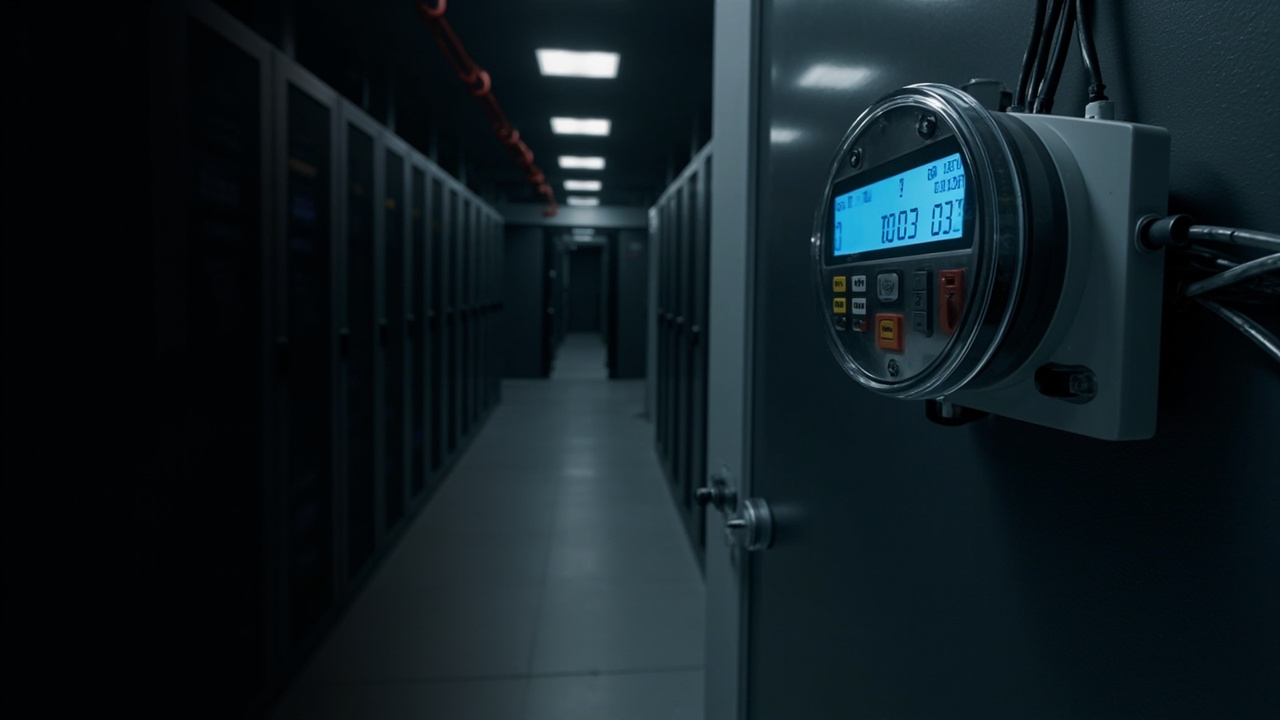
The first step is always to measure. Without meters on PDUs and on the CRAC side, real consumption is invisible, and any efficiency plan becomes an estimate.
Sources
[1] The Green Grid — PUE Definition and Measurement (industry standard): https://www.thegreengrid.org/
[2] ASHRAE — TC 9.9 Datacom Equipment Power Trends (thermal guidelines): https://www.ashrae.org/technical-resources/bookstore/datacom-series
[3] Uptime Institute — Global Data Center Survey (industry research): https://uptimeinstitute.com/
[4] Schneider Electric — Data Center Power Efficiency (vendor reference): https://www.se.com/ww/en/solutions/efficiency/data-center.html
[5] Vertiv — Data Center Efficiency Strategies (vendor reference): https://www.vertiv.com/en-us/solutions/efficiency/
[6] Wikipedia — Data Center Efficiency (background reference): https://en.wikipedia.org/wiki/Data_center
Want to master this?
Noxtel Academy →