How a Data Center Works Inside
A Look at the Heart of Digital Infrastructure
Data Centers are the backbone of the digital era. From data storage to cloud processing and artificial intelligence, these centers ensure information reaches millions of users quickly and securely.
Physical Infrastructure
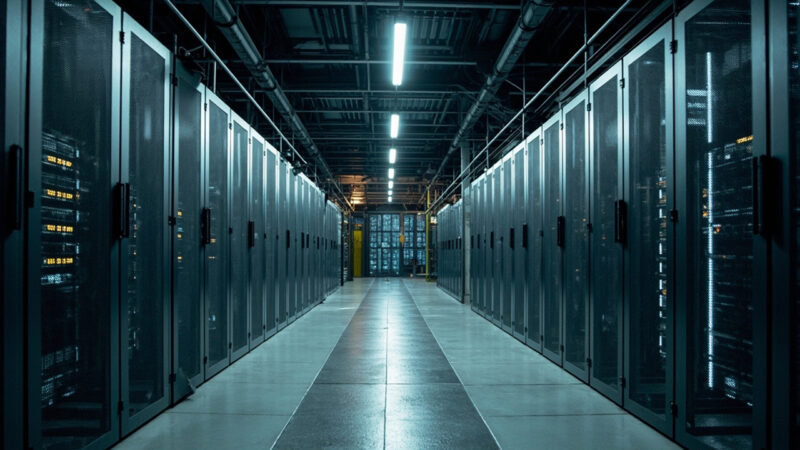
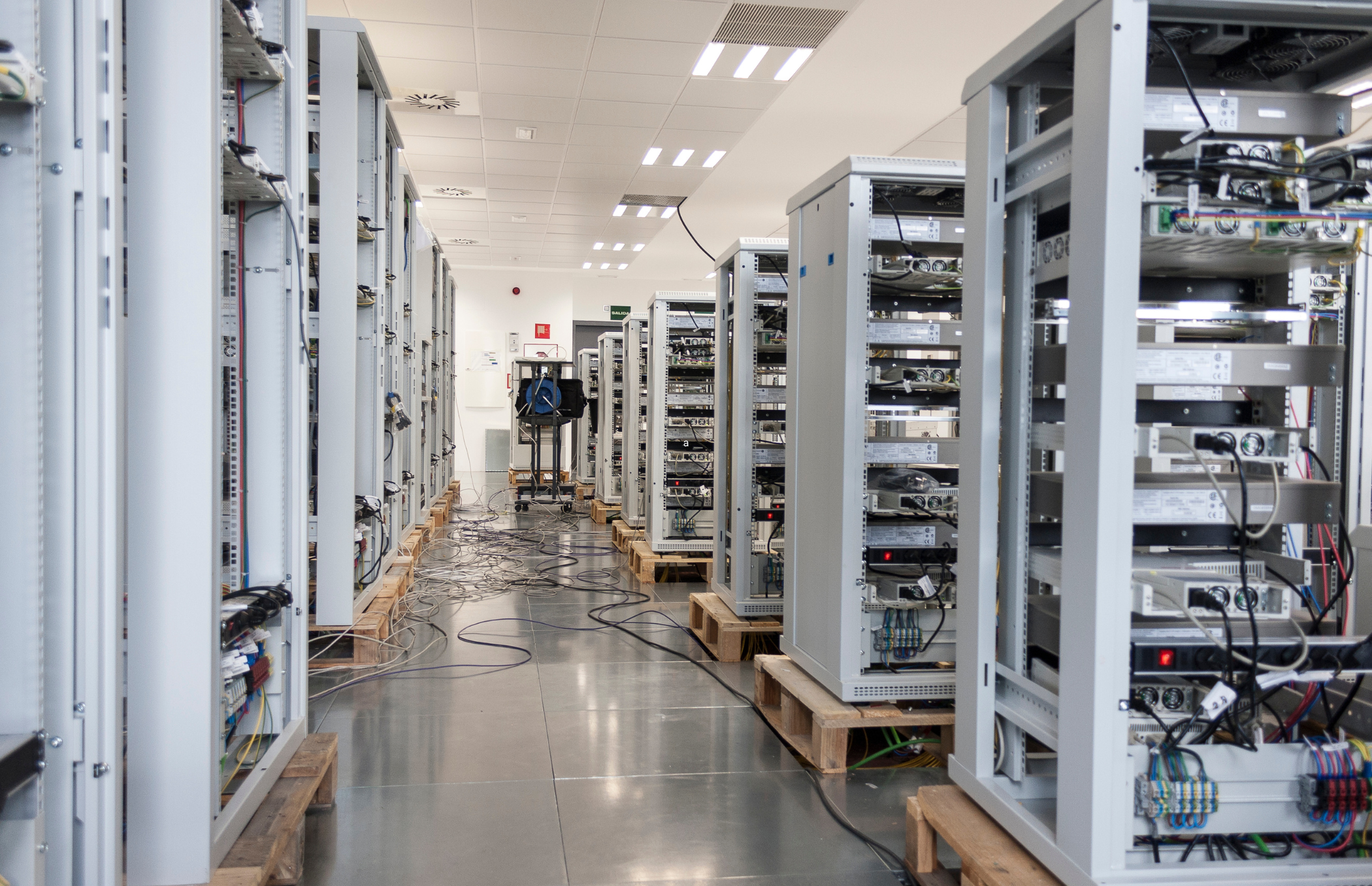
Inside a Data Center you find rows of server racks. Each rack is a metal frame that holds multiple pieces of equipment: processors, storage systems, and switches, all connected through a structured cabling network.
This organization optimizes space and simplifies management. Modern AI racks can host 40–80 kW per cabinet, up from the traditional 5–10 kW. Density has changed radically in recent years.
Cooling and Power Systems
Server operation generates significant heat. To maintain optimal temperatures, Data Centers combine multiple technologies: precision air conditioning, aisle containment, free cooling, liquid cooling (cold plates, immersion), and CDUs (Coolant Distribution Units).
Water as a cooling medium has become standard for AI clusters: the heat capacity of liquid far exceeds air and supports power densities that air cannot sustain.
These centers also require uninterrupted power. They feature redundant systems—UPS (with VRLA or lithium batteries), diesel or natural gas generators, and automated transfers—that guarantee continuous operation during power failures.
Security and Redundancy
Security is another critical aspect. Multiple layers are in place: physical access control with biometrics, CCTV surveillance cameras, perimeter alarms, and clean-agent fire detection and suppression systems.
On the digital side: encryption, firewalls, network segmentation, and zero-trust architectures. Redundancy is fundamental: critical components (power, cooling, networks) are duplicated (N+1) or triplicated (2N) to prevent interruptions.
Management and Monitoring
Data Center operations are managed through DCIM (Data Center Infrastructure Management) platforms that monitor the performance of all equipment in real time.
These platforms integrate power, temperature, humidity, airflow, and equipment status sensors. AI algorithms identify anomalous patterns and optimize resource use. Centralized management enables decision-making and corrective action within minutes, not hours.
The Growing Role of Artificial Intelligence
In 2026 Data Centers are no longer just places where data is stored: they are compute factories training AI models at global scale. This workload redefines design criteria: more power per rack, more liquid cooling, and greater demands on the backbone network.

Understanding how a Data Center works internally helps us appreciate the complexity and effort invested in keeping our digital services online.
From physical infrastructure to heat management, power, and security, every detail is designed to guarantee optimal and continuous performance. Data Centers remain a foundational pillar in digital transformation and in supporting the modern economy.
Sources
[1] Uptime Institute — Global Data Center Survey 2025 — https://uptimeinstitute.com/resources/research-and-reports
[2] ASHRAE — TC 9.9 Thermal Guidelines for Data Processing Environments — https://tc0909.ashraetcs.org/
[3] TIA — ANSI/TIA-942-B — https://tiaonline.org/product/ansi-tia-942/
[4] Schneider Electric — Data Center Solutions — https://www.se.com/us/en/work/solutions/for-business/data-centers-and-networks/
Want to master this?
Noxtel Academy →