Heat Reuse in Mexico: The Untapped Potential of Data Center Waste Heat
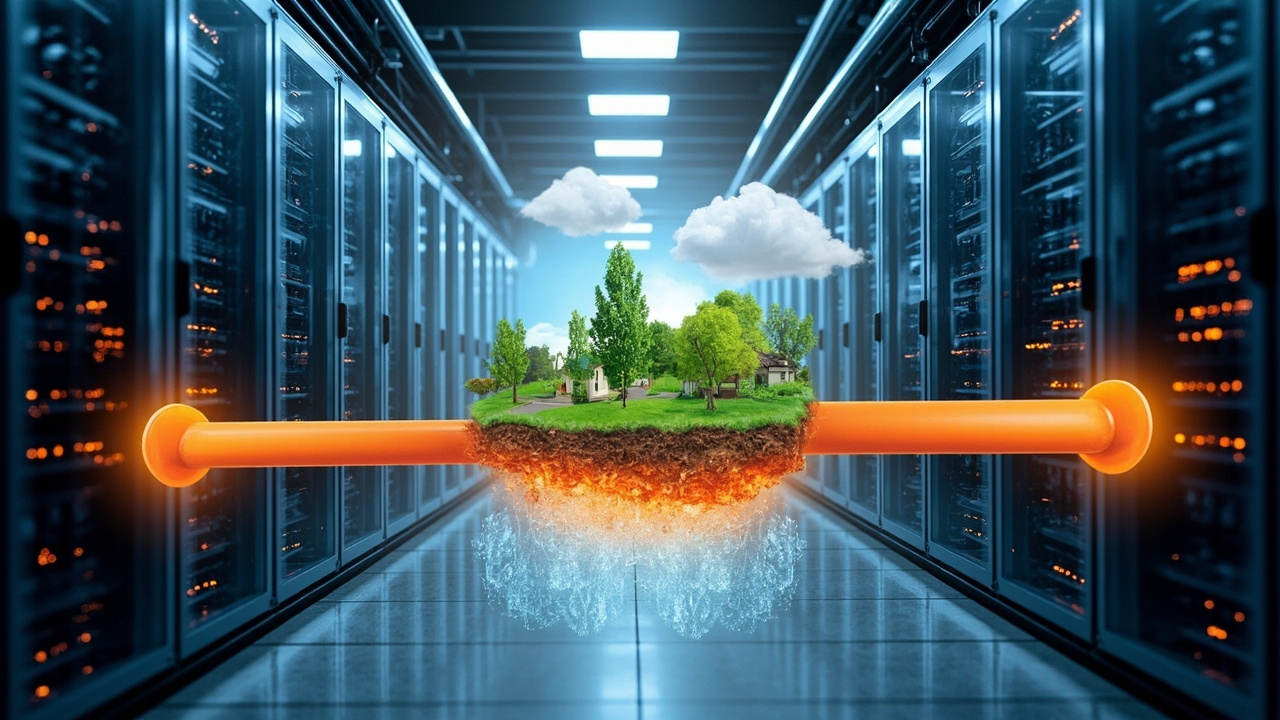
In Nordic countries, data centers heat entire residential buildings. In Mexico, that heat is released to the outside as waste. What is missing to close that gap? The question is no longer whether data center waste heat can be reused. The physics has confirmed it for decades. The question is why most operators in Mexico continue to discard it in 2026.
How heat reuse works
A data center consumes megawatts of electricity, and most of that energy ends up converted into heat. Traditional cooling systems (CRAC, in-row, chillers) extract that heat and release it outdoors. Heat reuse redirects that thermal flow toward useful applications: building heating, domestic hot water, greenhouse heating, pool water heating, low-temperature industrial processes.
The temperature of the water leaving the cooling system determines which application is viable: between 25°C (77°F) and 35°C (95°F) — radiant floors and preheating of service water. Between 35°C (95°F) and 55°C (131°F) — domestic hot water, conventional heating, pools. Between 55°C (131°F) and 80°C (176°F) — industrial processes, district heating, agricultural drying. Above 80°C (176°F) — requires an additional heat pump, which reduces the economic return.
Why Mexico is behind Europe
There are three structural reasons why heat reuse in Mexico is less developed: lower thermal demand for heating. The Mexican climate reduces the need for residential heating compared with Nordic countries. However, demand exists in hospitals, hotels, food industry, and greenhouses.
Neutral regulatory framework. The current local regulations on energy efficiency in Mexico do not yet establish a clear fiscal incentive that differentiates reused heat from heat simply expelled to the environment. This dynamic contrasts with European heat-recovery schemes.
Project culture. Most data centers are designed as thermal islands without considering the immediate surroundings. Few developments integrate heat reuse from the planning phase.
Viable application models in the Mexican context
An ideal application scenario for the Mexican context would combine computing infrastructure with stable thermal consumers throughout the year. Some configurations worth evaluating: hospitals with an attached data center — the data center’s waste heat feeds the hospital’s domestic hot water, where demand is constant and water quality is regulated. Hotels in tourist areas — the data center heat is directed to pool heating and sanitary water, especially in destinations with 24/7 service operations. Food industry — pasteurization processes, CIP cleaning, and drying that operate in temperature ranges where data center hot water is usable, especially in agro-industrial clusters. Greenhouses in temperate and cold zones — data center heat reduces dependence on gas or electric heating, with direct impact on the greenhouse’s operating costs.
The realistic first step
A highly viable model for companies evaluating this opportunity includes the following stages: audit the data center’s thermal profile — cooling system outlet temperatures, load seasonality, and peak hours. Identify thermal consumers within a nearby radius — hospitals, hotels, industrial complexes, greenhouses. Model the financial return by combining the local electricity tariff with the consumer’s alternative cost for heating or water heating. Validate that the business model has a reasonable horizon for the capital investment required in the thermal transfer loop.
Heat reuse in Mexico is not a utopia. It is a design decision that few are making and that will differentiate efficient data centers from obsolete ones in the coming years. The starting point is to treat heat as a resource, not as waste.
Sources
[1] Uptime Institute — 2024 Global Data Center Survey Results — https://uptimeinstitute.com/resources/asset/2024-global-data-center-survey-results/
[2] ASHRAE — 2023 Handbook — HVAC Applications (Table of Contents, Heat Rejection and Recovery chapter) — https://www.ashrae.org/technical-resources/ashrae-handbook/table-of-contents-2023-ashrae-handbook-hvac-applications
[3] IEA — Data Centres & Data Transmission Networks — https://www.iea.org/energy-system/buildings/data-centres-and-data-transmission-networks
[4] Vertiv — “Redefining Efficiency: How and Why Data Centers Are Embracing Heat Reuse” — https://www.vertiv.com/en-us/insights/articles/blog-posts/redefining-efficiency-how-and-why-data-centers-are-embracing-heat-reuse/
[5] Wikipedia — Data Center Heat Reuse (background reference) — https://en.wikipedia.org/wiki/Data_center#Heat_reuse
Want to master this?
Noxtel Academy →