Green financing for data centers: what the bank audits
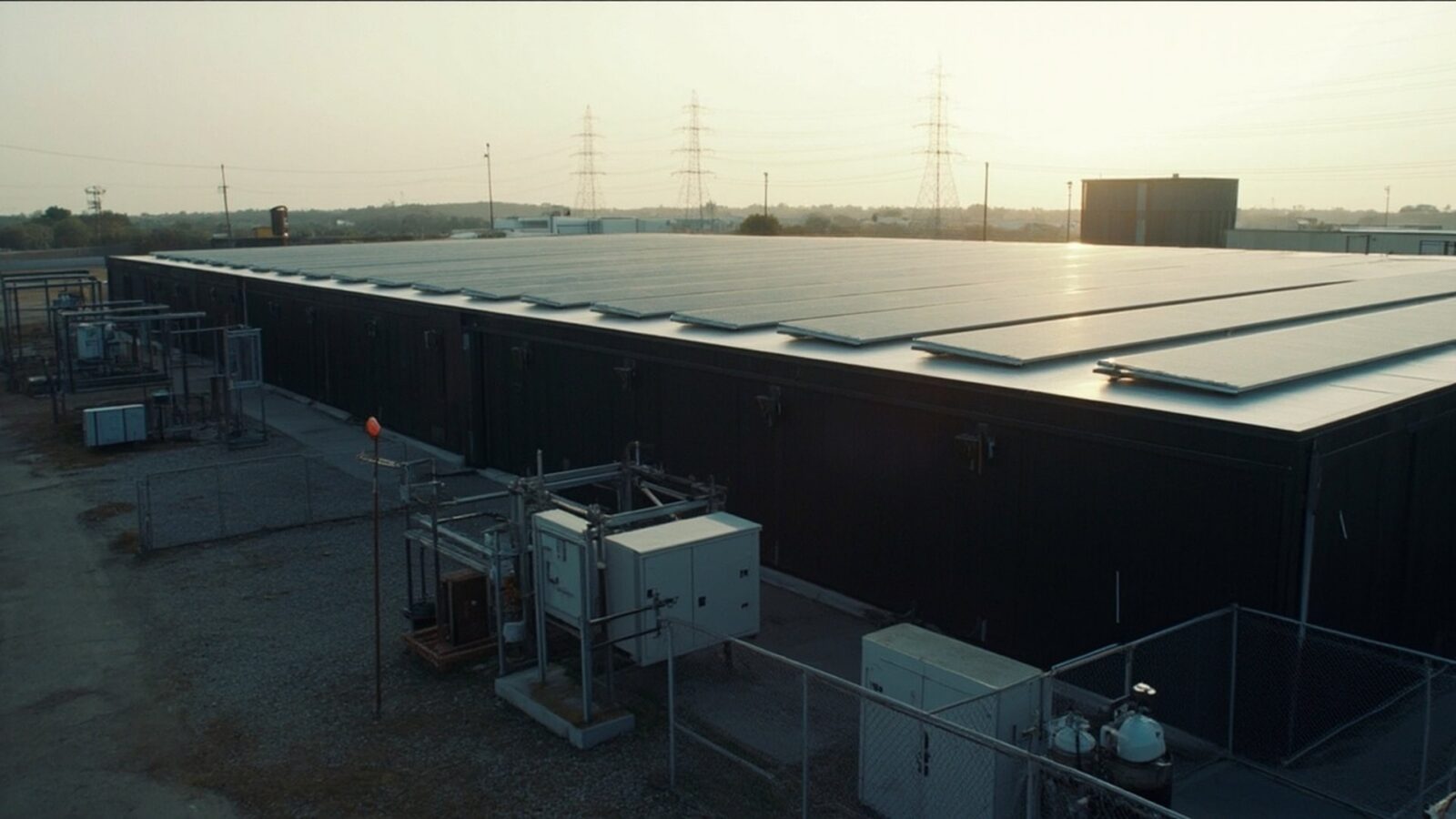
The sustainability of your data center stopped being a labeling argument and became a figure that someone is going to audit. On October 27, 2026, two operators closed green financing on the same day: AirTrunk raised AU$4.250 million (US$2.989 million) for its SYD3 campus in Sydney, and STTGDC raised JPY93.000 million (US$589,9 million) for its campus in Inzai City, Tokyo. The bankers did not buy a green seal: they bought measurable things. One deal moves the credit margin with the environmental performance of the campus; the other requires green building certification and a design PUE of 1.3 or lower. That difference decides whether your site gets to the corporate financing table or stays out of the placement
One clarification: this is neither financial advice nor a regulatory compliance opinion. The figures for the two credits come from the companies’ press releases and from trade press; the thresholds and definitions, from the issuers of each framework.
Two credits on the same day, two different logics
AirTrunk secured AU$4.250 million (US$2.989 million) for SYD3, in Western Sydney, backed by a consortium of 32 local and international financial institutions. The site occupies 8,3 hectares and is projected for 400 MW at full build-out, with completion in mid-2028. The structure is a green loan with margin adjustment, and where the savings go matters as much as the amount: the contributions generated by the margin are channeled to the company’s social impact program.
STTGDC took the opposite path: same date, different structure. Its credit finances the equipment and operation of TYO1 and TYO2, in the Goodman Business Park in Inzai City, Tokyo, and is structured in accordance with the Green Loan Principles of the Loan Market Association, with defined environmental criteria: green building certification and a design PUE of 1.3 or lower. TYO1 has already obtained LEED Gold, operates with closed-loop cooling that minimizes water consumption and sets itself a target of an annual average PUE below 1.25. TYO2 is aiming for TIA-942-C Design certification, with space reserved for liquid cooling.
The difference is not about marketing: AirTrunk tied the price of money to the result, and the margin moves with environmental performance; STTGDC tied the money to the specification, with a list of verifiable technical criteria. One punishes performance; the other keeps the project from drifting.
What each structure asks of your data center
| Concept | AirTrunk, SYD3 campus in Sydney | STTGDC, TYO1 and TYO2 campus in Tokyo |
|---|---|---|
| Amount | AU$4.250 million, US$2.989 million | JPY93.000 million, US$589,9 million |
| Capacity | Up to 400 MW, 42 data halls, 70.000 technical square meters | 70,8 MW of IT capacity |
| Structure | Green loan with margin adjustment | Borrowed in accordance with the Green Loan Principles |
| Environmental condition | Lower-footprint steel and concrete; at least 90% of construction waste kept out of sanitary landfill | Green building certification and a design PUE of 1.3 or lower |
| What is audited | Environmental performance, which moves the margin | The project specification and the use of the money |
| Intermediaries | 14 lead banks; coordinators SMBC, HSBC and UOB | Standard Chartered as lead coordinator; green loan coordinators Standard Chartered and Société Générale |
The price of green barely exists: what is left is the burden of measuring
It is worth saying this before the banker does: the sustainability discount is shrinking. An analysis from August 14, 2026 on the sustainable debt market in data centers makes the point: more than 45.000 million dollars in green and sustainability-linked debt have financed the sector’s expansion since 2019, and the penalty for missing targets rarely exceeds 25 basis points. On a 1.000 million dollar note, that is about 2,5 million a year, irrelevant against capital budgets in the tens of billions.
The discount for labeling an instrument as green compressed from 8 to 10 basis points in 2021 issuances to just 2 or 3 in the 2026 comparables.
The honest reading of the whole set is not that sustainability is worth zero: it is that the market no longer buys the label, it buys control. What an operator takes on with an instrument of this type is evidence: continuous measurements, with explicit limits and with a third party that can verify. That is a real operating cost, regardless of how many basis points the banker saves you.
Mexico is not a Designated Country: your project is audited against the strictest standard
The Equator Principles (EP4) govern environmental and social risk assessment for corporate and project finance. For your site in Mexico, there is one critical condition: the framework recognizes as a “Designated Country” only OECD members that the World Bank classifies as high-income economies. Mexico is not part of that list. This means an international bank will not audit your 10\text{ MW} campus under the laxer local criteria applicable in Australia or Japan, but under the demanding IFC Performance Standards. In addition, this level of audit is not limited to new construction: it applies to any existing expansion or improvement that exceeds 50\text{ million dollars} of investment over two or more years.
The SHCP Sustainable Taxonomy and indirect regulatory pressure
The Sustainable Taxonomy of the Ministry of Finance defines metrics, thresholds and “No Significant Harm” criteria to steer financing toward activities with positive environmental impact. Its third update phase consolidates the biodiversity chapter and a matrix of 30 economic activities. Although its direct adoption for a data center is still voluntary, the regulation for the financial sector has already made it mandatory. The rules issued for AFOREs, insurers and securities issuers require incorporating ESG criteria and reporting performance under the IFRS Sustainability Standards to the CNBV. Therefore, if your data center seeks institutional capital or local investment funds, you will have to provide continuous evidence aligned with this framework, regardless of whether the project has no direct sanction for not applying it.
The 5 key measurements and the next 30 days
A risk committee is not looking for an annual certificate or an advertising slogan; it audits continuous evidence and explicit measurement boundaries:
The Noxtel approach
The metrics a financial institution demands are not improvised in an ESG report; they come from a data center with continuous, traceable telemetry. If your report declares 100% annual renewable energy but your hourly measurement shows 66%, your project already has an audit finding.
Steps for the next 30 days:
Sources
Want to master this?
Noxtel Academy →