Edge Data Centers
In an increasingly connected world, the ability to process data in real time is fundamental.
Edge Data Centers have emerged as a solution to bring information processing closer to the end user, reducing latency and improving the experience.
What Are Edge Data Centers?
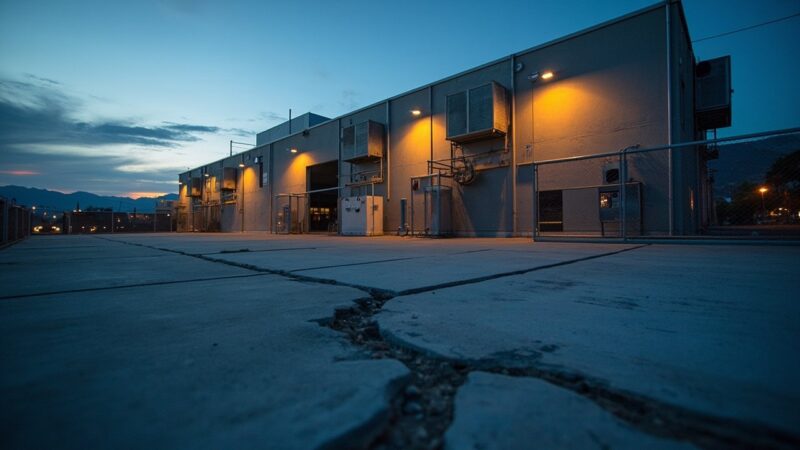
Edge Data Centers are smaller, distributed facilities located close to where data is generated, in contrast with traditional centralized Data Centers.
By being closer to devices and users, these centers can process and analyze information almost instantly.
Why Edge Data Centers Matter in 2026
Reduced Latency
Bringing data processing closer to the source reduces the time information takes to travel between user and server. This is vital for telemedicine, autonomous vehicles, and real-time security systems.
Edge AI: Inference Close to the User
In 2026 AI model inference runs increasingly at the Edge. This avoids sending data to the cloud and enables millisecond responses. Multimodal models and small LLMs run on specialized Edge infrastructure.
Data Sovereignty and Compliance
Regulations such as Mexico’s LFPDPPP and Europe’s GDPR drive architectures where sensitive data is processed locally, without crossing borders. Edge is the natural technical response to this requirement.
Resource and Connectivity Optimization
Distributing centers across different locations enables more efficient management of information traffic. This minimizes backbone congestion and improves the user experience.
Scalability and Adaptability
With the growth of the Internet of Things and the integration of more connected devices, Edge centers offer the flexibility to expand digital infrastructure as market demands evolve.
Greater Security and Privacy
Processing data locally can increase security: it reduces the amount of information traveling to centralized centers, decreases the risk of interception, and improves protection of sensitive data.
Relevant Use Cases in 2026
Internet of Things (IoT): smart devices generate data that requires immediate processing in domestic, industrial, and commercial applications.
Industrial Automation: in smart factories, real-time responsiveness is key to keeping processes efficient and safe.
Autonomous Vehicles: self-driving cars process up to 4 TB per day; they need Edge computing nearby for instant reaction.
Telemedicine and Remote Surgery: sub-10 ms latency is only viable with Edge processing.
Telecommunications and 5G: 5G network rollouts are complemented by Edge centers, enabling agile data traffic management.
Augmented and Virtual Reality: immersive experiences need computation close to the user to avoid motion-sickness latency.
Their ability to reduce latency, optimize resources, strengthen data sovereignty, and support real-time AI makes them an essential pillar of the digital future.
As companies depend more on immediate responses and constant connectivity, Edge centers will continue driving innovation and efficiency across all sectors.
This close, distributed approach lays the foundation for a digital infrastructure that is more resilient and prepared for tomorrow’s challenges.
Sources
[1] IEEE — Edge Computing Standards — https://www.ieee.org/initiatives/edge-computing.html
[2] Schneider Electric — Edge Computing Solutions — https://www.se.com/ww/en/work/solutions/for-business/data-centers-and-networks/data-center-edge-computing/
[3] Vertiv — Edge Infrastructure — https://www.vertiv.com/en-us/solutions/edge-computing/
[4] Wikipedia — Edge computing — https://en.wikipedia.org/wiki/Edge_computing
Want to master this?
Noxtel Academy →