Detailed Planning of Your Data Center: Keys and Mistakes to Avoid
The planning and requirements analysis phase is the first and most important step in creating a data center.
This infrastructure is a long-term investment, so it is essential to consider not only current needs, but also future growth.
Poor planning can lead to inefficient use of capital and increased operating expenses.
Here we detail the key elements to consider:
- Capacity: As Technology, the fundamental thing is to determine the storage and data processing capacity you need today and in the future. However, the Facility or Room needs to consider Electrical Capacity, in order to Determine the Cooling Capacity. The data center must be able to adapt to growth without the need for costly redesigns or downtime.
- Network Traffic: A data center handles an immense volume of data. In addition to planning a robust network infrastructure with sufficient bandwidth, the Conduits for Copper and Fiber that will need to reach the Data Center today and in the future must be sized.
- Security and Regulatory Compliance: Security is a critical factor. A multi-layered security approach is required. This includes physical security measures such as access control systems, camera surveillance, and protection against natural disasters. At the digital level, firewalls, intrusion detection and prevention systems, and data encryption are needed to protect against unauthorized access and cyber threats. In addition, the data center must comply with local and international data protection regulations.
- Location: The choice of location is vital. Look for a geographic location with low risk of natural disasters (earthquakes, floods, hurricanes). It must have access to a reliable electrical infrastructure and to multiple internet providers to guarantee redundancy in connectivity.
- Electrical Infrastructure: A constant power supply is indispensable. Redundant power systems must be included, such as uninterruptible power supplies (UPS) and backup generators, to avoid interruptions. The electrical design must calculate the power consumption for peak demand and daily operation.
- Cooling Systems: IT equipment generates a lot of heat. An efficient cooling system is crucial to maintain optimal temperature, prevent failures, and extend the useful life of equipment. This may involve air conditioning, liquid cooling systems, or even immersion cooling.
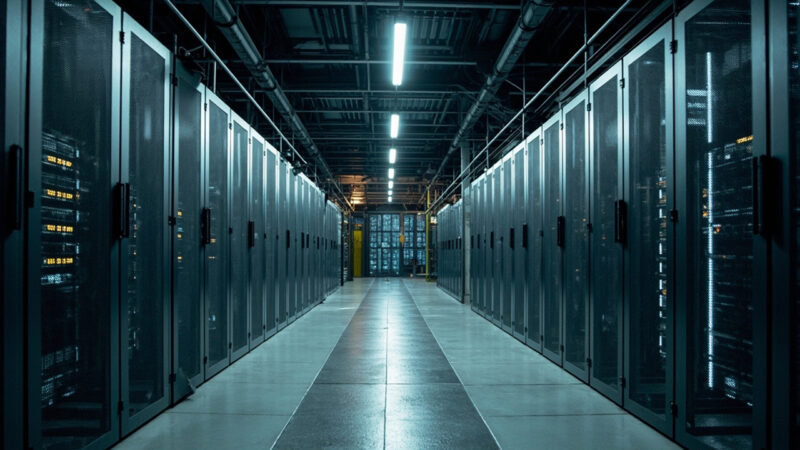
- Server Layout: The physical distribution of servers must optimize space and energy efficiency. A good design maximizes air circulation and reduces energy consumption, often separating cold and hot aisles.
- Network Infrastructure: A fast and secure network is necessary for internal and external connectivity. This implies the use of switches, routers, and firewalls. The network infrastructure must be redundant to ensure that the service is not affected if a component fails.

Common design mistakes:
Many data center projects fail due to poor planning. These are some common mistakes you should avoid:
- Not considering the Total Cost of Ownership (TCO): It is a mistake to focus only on initial construction costs. Operating and maintenance expenses (OpEx) and energy costs must be included to have a complete and realistic long-term financial model.
- Miscalculating the construction cost: Budget requests are usually too low, which leads to delays and project problems.
- Setting incorrect design criteria: Not all organizations need the highest level of redundancy (Tier 3 or 4). Oversizing the infrastructure is a waste of capital and increases operating and energy costs. Design criteria must be based on business objectives and the real risk profile.
- Choosing the location before the design criteria: Selecting a site without having defined the design requirements is a common mistake. The location must meet the specific needs of the data center in terms of energy, connectivity, and geographic risks.
- Planning space only for IT equipment: The considerable space required for mechanical and electrical equipment, as well as offices and preparation areas, is often forgotten. Spatial design must consider all components.
- Designing a «dead end»: Although modular designs are important to save capital, flexibility is key. Systems must be able to expand without interruptions, adapting to future changes in density or business growth.
- Not properly understanding Energy Use Efficiency (PUE) and thermal management: Many underestimate heat and operating cost. This can significantly affect economic viability and become a real nightmare. The associated calculations and costs must be thoroughly understood to avoid misunderstandings and unforeseen expenses.
- Overly complex designs: Simplicity is key. More equipment and components mean more points of failure, higher risk of human error, higher construction and operation and maintenance costs. A simple and easy-to-maintain design is more reliable and cost-effective.
Proper planning and a holistic TCO approach are essential to build a data center that meets performance objectives and current and future business needs.

Want to master this?
Noxtel Academy →