Data Centers in Mexico: The Honest 2026 Guide
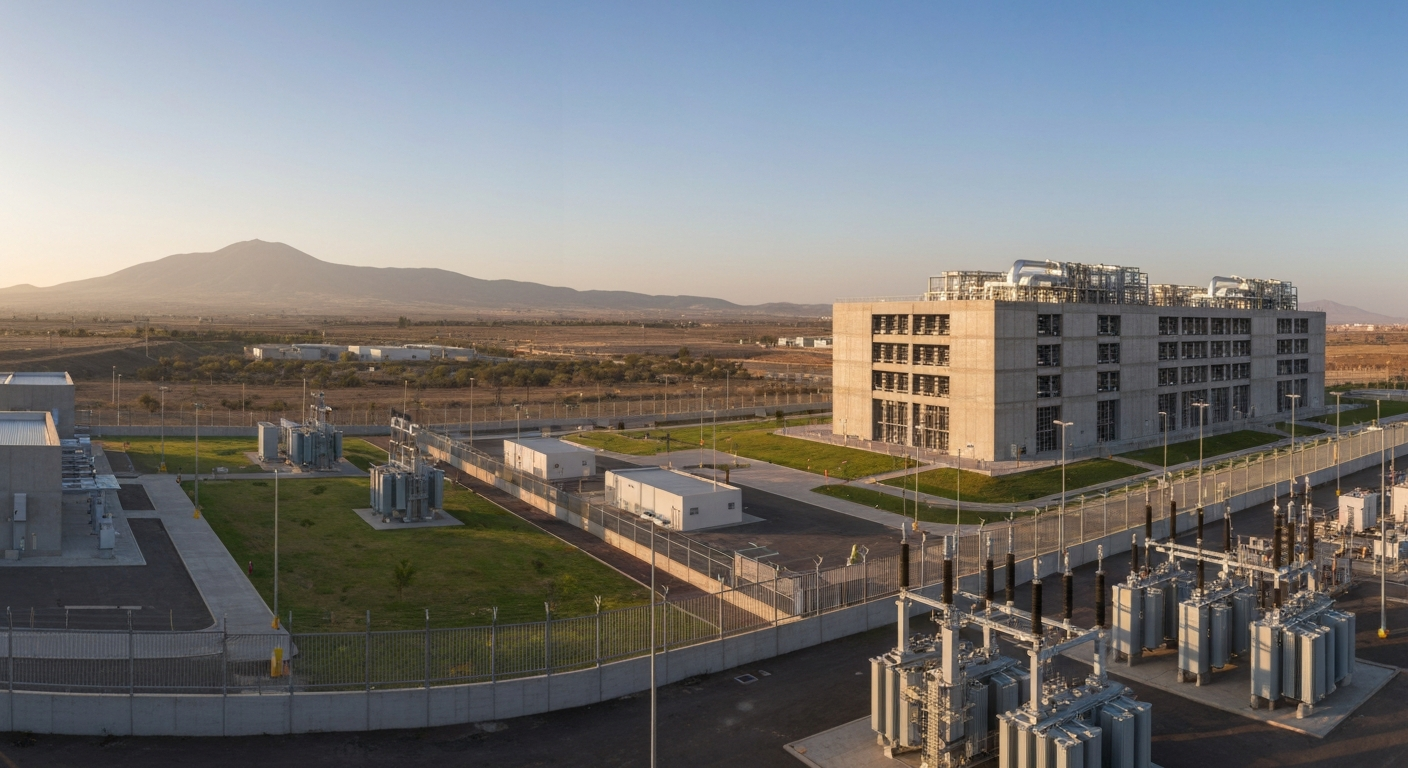
In Mexico, the data center market ceased to be a purely technical decision and became a financial, regulatory, and operational continuity decision. Between 2018 and 2025, the country went from having a dozen relevant colocation operators to more than 40 facilities distributed mainly in Querétaro, Monterrey, and Mexico City, with new extensions in Guadalajara and Mérida. This means that the Mexican buyer is no longer choosing between “the sole provider” but among an entire category of options, and most lack a methodology for comparison.
This guide is an operational map. It does not intend to replace an RFP (Request For Proposal) or a site study, but rather to organize the criteria that separate a serious provider from one that merely has a polished room with a logo.
Overview 2026: who is operating in Mexico
The Mexican ecosystem can be grouped into four layers:
- Global operators with local presence: Equinix operates in Monterrey and Querétaro since its acquisition of three sites in 2020, with a consolidated presence in the Bajío corridor.
- Strong regional operators: KIO Networks maintains the largest national footprint with sites in Querétaro, Mexico City, Monterrey, and Guadalajara, in addition to operations in Guatemala and Panama.
- Carrier-linked operators: Triara (part of Telmex) operates from Querétaro with Tier III redundancy; Megacable operates its own sites linked to its fiber network; Cirion has infrastructure in Mexico and LATAM.
- Boutique and edge operators: Ascenty (Brazilian with presence in Querétaro), Grupo Salinas (internal data center for its businesses), and smaller local operators focused on edge computing and corporate backup.
This distribution is relevant because it defines the type of SLA (Service Level Agreement) each client can negotiate. A global operator offers geographical redundancy, but its price per kW (kilowatt) is usually 15-25% above the regional average. A regional operator like KIO offers competitive pricing and national coverage, but its ecosystem of interconnected carriers depends more on the city.
The seven criteria that separate a serious provider from an improvised one
Before discussing price, it is advisable to filter candidates by seven objective criteria. Any provider that cannot respond in writing to these seven points is excluded from the process, regardless of how much they lower the cost.
- Uptime Institute (UI) Tier Certification: Tier III is the minimum floor for 24/7 operation with concurrent maintainability; Tier IV requires total component duplication (2N) plus fault isolation. Ask for a copy of the certificate, not a promise.
- Documented electrical design: N+1 redundancy (one extra component for each active block) or 2N, UPS (Uninterruptible Power Supply) capacity in kVA (kilovolt-amperes), autonomy in minutes at full load, diesel generation capacity in hours.
- Precision cooling with redundancy: how many chillers and CRAC (Computer Room Air Conditioning) units operate, what is the free cooling strategy (utilization of outside air to reduce mechanical load) when external temperature allows, and what happens if a module fails.
- Connectivity and available carriers: number of physically present carriers (not resold), cross-connect points (meet-me rooms), availability of direct peering with Tier 1 operators.
- Verifiable regulatory compliance: ISO 27001 (information security management), SOC 2 (audited controls for services), ISO 22301 (business continuity), and compliance with the Federal Law on Protection of Personal Data Held by Private Parties (LFPDPPP) if you handle personal data.
- Growth capacity without relocation: maximum density per rack today and in 36 months. If your project will go from 8 kW per rack to 25 kW per rack in three years, the site must be able to support it without relocating you.
- Audit and right of visit: a clause that allows you to enter the site with your own auditor or security team at least once a year, without more than 72 hours’ notice.
The real cost calculation: what the RFP doesn’t show you
The monthly kW price that appears in the initial quote is the most visible variable but the least decisive. The total cost is built with five blocks:
- Billed energy (actual PUE, not promised): PUE (Power Usage Effectiveness) is the ratio between the total energy entering the site and the energy reaching the IT equipment. A PUE of 1.4 is standard; 1.6 is already deficient. Ask for the actual PUE measured in the last year, not the design PUE.
- Cross connects and carriers: each cross connection between your rack and a carrier is charged separately. In a site with six carriers, a redundant architecture requires twelve cross connects before powering a single server.
- Move-in fee: many operators charge a one-time installation fee per rack or per contracted kW. This is usually negotiable.
- Remote hands services: how many hours per month are included, what is the cost per additional hour, and whether the personnel are certified for specific tasks such as changing UPS modules or reconfiguring a PDU (Power Distribution Unit).
- Exit and portability clause: cost for early contract termination, required notice period, and whether you take your racks and cabling or they remain at the site.
Regulatory framework applicable to hosting in Mexico
The Mexican legal framework for data centers is fragmented and built in layers:
- Federal Law on Protection of Personal Data Held by Private Parties (LFPDPPP): applies to any operator handling personal data. It requires a privacy notice, administrative, technical, and physical security measures, and a data processing agreement clause if the operator acts as a processor.
- NOM-001-SEDE-2018 (Electrical Installations): governs the design and verification of electrical installations. It is mandatory in any commercial site.
- Provisions of the SHCP and SAT on electronic invoicing and safeguarding of receipts: any operator that processes CFDI (Digital Tax Receipt via Internet) for your company must comply with availability and backup requirements.
- Sectoral regulation: if you operate in the financial, health, or energy sectors, there are additional layers (CNBV, COFEPRIS, CRE) that specify data redundancy and residency.
A provider that cannot demonstrate verifiable compliance with the first three layers is not an option, regardless of their price.
Five questions that expose the provider in the first meeting
Before signing an NDA (Non-Disclosure Agreement) or issuing an RFP, there are five questions that the pre-sales team must answer without hesitation. If the answer is “we’ll check” for more than two, keep looking.
- What is your average monthly PUE measured over the last 12 months, and what was the worst month?
- How many documented critical failures have they had, and how were they resolved? Ask for the post-mortem report of the last one.
- What is the actual transfer time from UPS to generator and the cold start time of the diesel generator?
- What happens to my data if the provider enters bankruptcy proceedings or changes ownership?
- Can I bring my own auditor without being charged for the visit?
What almost no one asks and ends up costing the project
There are three contract clauses that seem administrative but become the real battleground if something goes wrong:
- Exact definition of “availability”: is it measured by minute of downtime or by hour? Is scheduled maintenance excluded? Does scheduled maintenance require client approval?
- Real penalties for SLA non-compliance: if the maximum penalty is 10% of the monthly fee and downtime costs you ten times that, the provider’s incentive to comply is structurally low.
- Subrogation and portability: if the operator goes bankrupt or sells the site to a third party, what happens to your contract, physical equipment, and data? The clause must specify notice period, right to exit without penalty, and assistance with relocation.
Most decisions that seem technical are, in reality, contractual decisions. That’s why this guide doesn’t end with “evaluate the provider” but with “review the contract before the provider defines the terms for you”.
Sources
[1] Uptime Institute — Tier Classification System: https://uptimeinstitute.com/tiers/
[2] TIA — TIA-942 Telecommunications Infrastructure Standard for Data Centers: https://tiaonline.org/products/tia-942/
[3] INAI — National Institute for Transparency, Access to Information, and Personal Data Protection: https://www.gob.mx/inai
[4] KIO Networks — Presence in Mexico: https://kionetworks.com/
[5] Triara — Carrier-neutral data center in Mexico: https://www.triara.com/
[6] Wikipedia — Data center: https://en.wikipedia.org/wiki/Data_center
[7] Wikipedia — Colocation: https://en.wikipedia.org/wiki/Colocation
Want to master this?
Noxtel Academy →